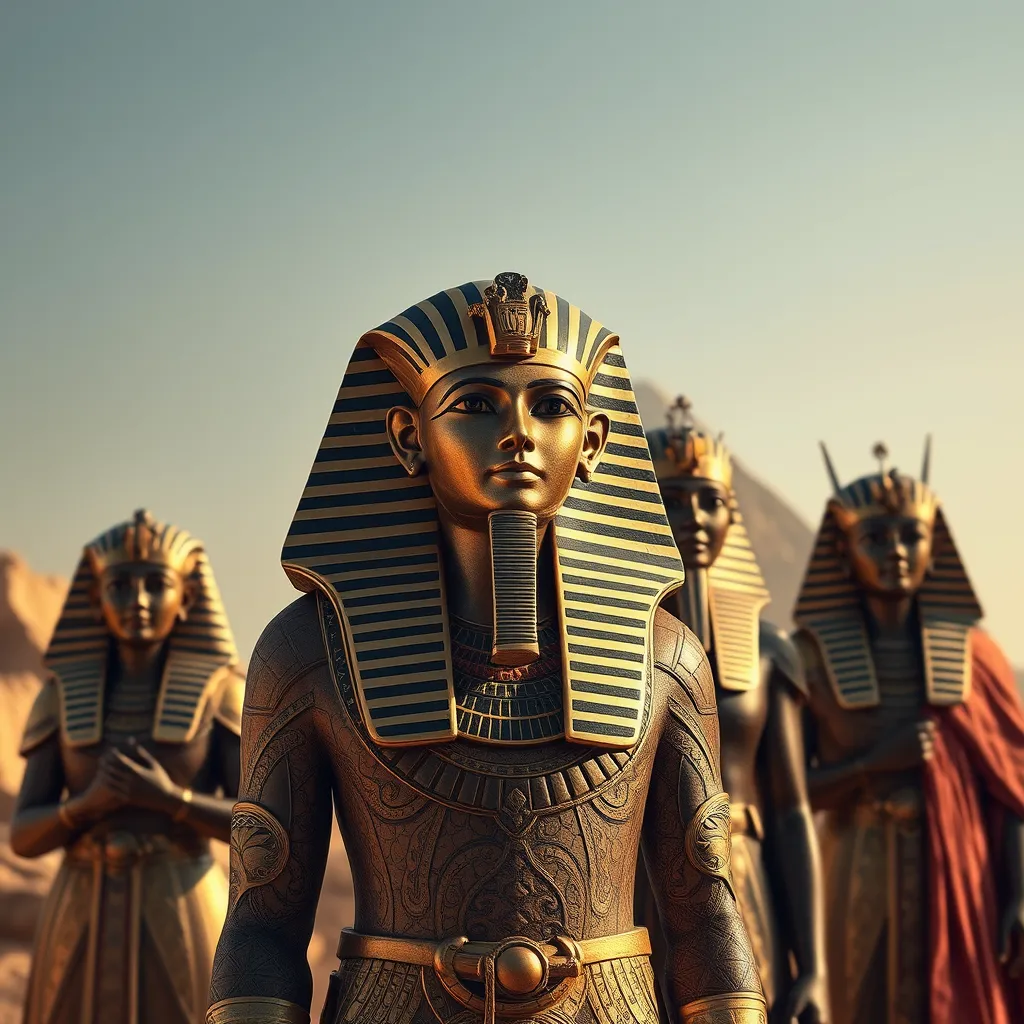
The Pharaoh’s Family: A Look at the Lives of Kings and Queens
I. Introduction
The Pharaoh’s family played a crucial role in ancient Egyptian society, serving as the epitome of power, culture, and religious significance. The lineage of the Pharaoh was not just a matter of familial relations but a pivotal factor in maintaining control over the vast and complex society of ancient Egypt. Understanding the dynamics of the royal family gives us insight into the intricate relationship between power, religion, and daily life in this ancient civilization.
II. The Role of the Pharaoh
A Pharaoh was not merely a king; he was the highest authority in ancient Egypt, embodying both political and religious leadership. His responsibilities included:
- Governing the land and making laws.
- Leading the military and ensuring national security.
- Overseeing the economy, including trade and agriculture.
- Conducting religious rituals and maintaining favor with the gods.
As a divine figure, the Pharaoh was seen as a mediator between the gods and the people. This divine status was crucial for legitimizing his rule and ensuring the prosperity of the kingdom.
III. The Pharaoh’s Consorts: Queens and Royal Wives
Queens held significant status in the royal court, often serving as advisors and political partners to the Pharaoh. The role of a queen could vary, but typically included:
- Providing royal heirs to ensure the continuity of the dynasty.
- Participating in religious ceremonies and state functions.
- Engaging in diplomatic relations with foreign nations.
Among the most famous queens in ancient Egypt were:
- Nefertiti: Renowned for her beauty and her role in promoting the worship of the sun god Aten.
- Hatshepsut: One of the few female pharaohs, she ruled effectively and expanded trade networks.
- Cleopatra: The last active ruler of the Ptolemaic Kingdom, known for her intelligence and political acumen.
IV. The Importance of Royal Offspring
Succession was a matter of utmost importance in ancient Egypt, with the birth of male heirs considered critical for the stability of the regime. The significance of royal offspring included:
- Securing the throne through direct lineage.
- Strengthening political alliances through marriage.
The upbringing and education of princes and princesses were meticulously designed to prepare them for their future roles. They were trained in:
- Leadership and governance.
- Military strategy and tactics.
- Religious practices and rituals.
V. Marriage and Alliances in the Royal Family
Marriage practices in ancient Egypt were often influenced by political needs. The royal family frequently engaged in:
- Sibling marriages to keep the bloodline pure.
- Political marriages to forge alliances with other powerful families or nations.
The impact of these marital arrangements was profound, often altering power dynamics within the kingdom and determining the future course of Egyptian history.
VI. The Lives of Royal Children
The daily lives of princes and princesses were filled with privilege but also responsibility. Their upbringing was characterized by:
- Luxurious living conditions, with access to the finest goods and education.
- Training that included physical education, arts, and governance.
As future leaders, royal children were groomed for their roles with a focus on:
- Understanding the complexities of governance.
- Learning the importance of diplomacy and maintaining alliances.
VII. The Legacy of Pharaohs and Their Families
The actions and decisions of royal families had a lasting impact on Egyptian history. Their contributions included:
- Architectural achievements, such as the construction of temples and pyramids.
- Advancements in art, literature, and science.
- Influence on the culture and religion that shaped Egyptian identity.
The legacy of the Pharaohs continues to captivate the world today, influencing modern perceptions of leadership, governance, and spirituality.
VIII. Conclusion
The Pharaoh’s family was not just a royal lineage; it was the heartbeat of ancient Egyptian civilization. Their roles, responsibilities, and relationships shaped the course of history, influencing everything from politics to culture. The enduring legacy of these kings and queens continues to resonate, reminding us of the complex interplay between power and society in one of history’s most fascinating civilizations.