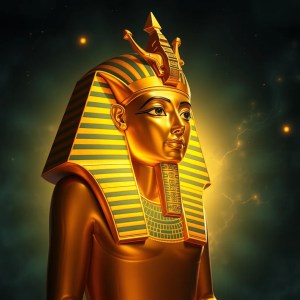
The Pharaoh’s Curse: Unmasking the Truth behind the Legends
I. Introduction
The Pharaoh’s Curse, often shrouded in mystery and intrigue, refers to the supposed supernatural consequences faced by those who disturb the resting places of ancient Egyptian royalty. This legend has captivated the imagination of many and has become a significant part of popular culture. The curse is often depicted as a vengeful force that punishes tomb raiders and archaeologists alike, leading to illness, misfortune, and even death.
Its cultural significance is profound; the curse embodies humanity’s fascination with the afterlife and the unknown. As we delve into this enigma, the purpose of this article is to explore the origins, impact, and modern interpretations of the Pharaoh’s Curse, shedding light on its historical roots and the psychological factors that perpetuate it.
II. Historical Context of the Pharaoh’s Curse
The legend of the Pharaoh’s Curse can be traced back to ancient Egyptian civilization, where burial practices were steeped in ritual and reverence. It was believed that the tombs were sacred spaces that required protection from those who would disturb the dead.
A. Origins of the legend in ancient Egypt
The concept of curses in ancient Egypt was not uncommon; inscriptions warning of dire consequences for tomb robbers were often found on sarcophagi and temple walls. These inscriptions served both as protective measures and as a reflection of the Egyptians’ beliefs about the afterlife.
B. Notable curses associated with specific tombs and pharaohs
- Tutankhamun: The most famous example, where a number of people involved in the discovery of his tomb faced untimely deaths.
- Seti I: His tomb was said to carry a curse that claimed the lives of those who entered.
- Other tombs: Various other pharaohs also had legends of curses attached to their burial sites.
C. The role of burial practices in ancient Egyptian culture
Burying the dead with care and respect was vital in ancient Egyptian culture, as it was believed to ensure a safe passage to the afterlife. Tombs were filled with valuable goods, and their sanctity was often protected by curses against intruders.
III. The Discovery of Tutankhamun’s Tomb
The discovery of Tutankhamun’s tomb in 1922 by Howard Carter marked a significant milestone in archaeology and Egyptology.
A. The archaeological significance of the tomb’s discovery in 1922
This tomb was one of the most well-preserved examples of ancient Egyptian burial practices, offering a wealth of artifacts that provided insight into the life and death of the young pharaoh.
B. The immediate aftermath and reports of misfortune
Shortly after the tomb’s opening, several individuals associated with the expedition experienced tragic and mysterious deaths. This fueled the belief in the curse and led to extensive media coverage.
C. Key figures involved and their experiences
- Howard Carter: The lead archaeologist who, despite surviving, faced significant personal loss and hardship.
- Lord Carnarvon: The financial backer of the expedition, who died shortly after the tomb’s discovery.
- Others: Various members of the team and journalists reported illnesses and misfortunes.
IV. Analyzing the Alleged Evidence of the Curse
While many have sensationalized the curse, a closer examination reveals a blend of coincidence, psychological factors, and scientific explanations.
A. Notable deaths and incidents linked to the curse
Some of the most notable incidents include:
- The death of Lord Carnarvon from an infected mosquito bite.
- The mysterious deaths of several team members within a short time frame.
B. Scientific examinations of the claims (e.g., mold, bacteria)
Modern scientists have investigated the tombs for harmful substances such as mold and bacteria that could cause health issues. Some have suggested that the tombs may contain pathogens that could lead to respiratory problems or infections.
C. Psychological factors contributing to belief in the curse
The power of suggestion and the influence of media can amplify fears and beliefs about the curse. Cognitive biases, such as confirmation bias, often lead individuals to attribute misfortunes to the curse rather than to logical explanations.
V. Cultural Impact and Media Representation
The Pharaoh’s Curse has permeated various facets of culture, shaping narratives in literature, film, and beyond.
A. The portrayal of the Pharaoh’s Curse in literature and film
Numerous books and movies have exploited the allure of the curse, often depicting it as a mystical and vengeful force. Examples include:
- The Mummy: A popular film series that dramatizes the curse as a central plot element.
- Various novels: Countless fictional works have drawn upon the theme of cursed tombs.
B. Influence on popular culture and tourism in Egypt
The curse has significantly boosted tourism in Egypt, drawing visitors to the country eager to explore its ancient history and the mystery of the pharaohs.
C. Myths vs. realities: How media shapes public perception
Media representation often blurs the lines between myth and reality, leading to a skewed understanding of ancient Egyptian culture and the true nature of archaeological findings.
VI. Modern Perspectives on the Curse
Contemporary archaeologists and historians approach the topic of the Pharaoh’s Curse with a critical lens, acknowledging both its historical context and the psychological factors at play.
A. Attitudes of contemporary archaeologists and historians
Many modern scholars dismiss the curse as a myth, focusing instead on the scientific aspects of archaeology and the importance of preserving cultural heritage.
B. The role of skepticism and critical thinking
Critical thinking encourages individuals to question sensationalized narratives and seek evidence-based explanations for events associated with the curse.
C. Ethics in archaeology: Balancing myth and reality
Ethical considerations in archaeology emphasize the need to respect ancient cultures while also addressing the myths that surround them. This balance is crucial in fostering a genuine understanding of history.
VII. Conclusion
In summary, the Pharaoh’s Curse is a fascinating intersection of history, legend, and human psychology. While its origins lie in ancient Egyptian burial practices and protective measures, the modern interpretation has been heavily influenced by media and cultural narratives.
The enduring fascination with the Pharaoh’s Curse highlights humanity’s need to make sense of the unknown and the mysteries of the past. As we continue to explore ancient Egyptian culture, it is essential to differentiate between myth and reality, allowing us to appreciate the complexities of history.
VIII. Further Reading and Resources
A. Recommended books and documentaries
- The Complete Gods and Goddesses of Ancient Egypt by Richard H. Wilkinson
- The Oxford History of Ancient Egypt by Ian Shaw
- Secrets of the Sphinx: The Truth Behind the Mysteries (documentary)
B. Online resources for exploring ancient Egyptian culture
C. Organizations and museums dedicated to Egyptian archaeology
- The Egypt Exploration Society
- The Egyptian Museum in Cairo
- The American Research Center in Egypt