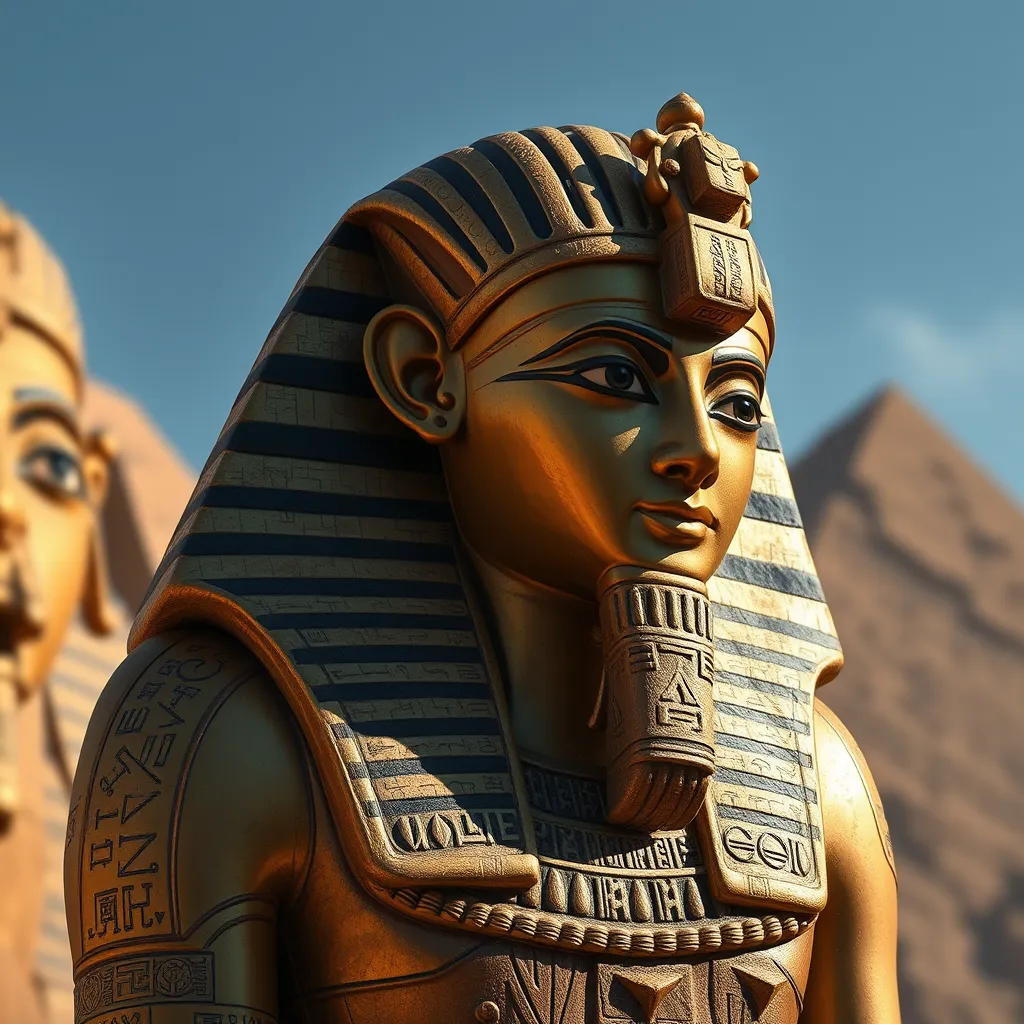
The Pharaoh’s Code: Uncovering the Mysteries of Ancient Egyptian Hieroglyphs
I. Introduction to Ancient Egyptian Hieroglyphs
Ancient Egyptian hieroglyphs are a fascinating writing system that combines logographic and alphabetic elements. They hold significant cultural and historical importance as a means of communication in ancient Egypt, providing insight into the lives, beliefs, and governance of one of the world’s oldest civilizations. This article aims to explore the origins, structure, and enduring influence of hieroglyphs, as well as the pivotal role of the Rosetta Stone in their decipherment.
II. The Origins of Hieroglyphs
The development of writing in ancient Egypt can be traced back to the early dynastic period, around 3100 BCE. Hieroglyphs emerged from earlier forms of pictorial representation, evolving into a sophisticated system that would dominate Egyptian writing for centuries.
The earliest examples of hieroglyphic writing can be found on pottery and tomb inscriptions, showcasing the Egyptians’ ability to convey complex ideas through simple symbols. This writing system was influenced by neighboring cultures, particularly the Sumerians and the Minoans, who contributed to the development of written language in the region.
III. Structure and Components of Hieroglyphs
Hieroglyphs are categorized into three main types: phonetic, ideographic, and determinative.
- Phonetic hieroglyphs: Represent sounds and are similar to letters in the alphabet.
- Ideographic hieroglyphs: Convey ideas or concepts directly through symbolic images.
- Determinative hieroglyphs: Provide context to the words and clarify meaning, often placed at the end of a word.
The significance of symbols and imagery in hieroglyphs cannot be overstated. Each symbol was carefully chosen to convey specific meanings and emotions, often reflecting the beliefs and values of ancient Egyptian society. Moreover, the context in which hieroglyphs were used plays a critical role in deciphering their meanings, as the same symbol can have different interpretations based on its placement and surrounding symbols.
IV. The Rosetta Stone: Key to Deciphering Hieroglyphs
The discovery of the Rosetta Stone in 1799 was a turning point in the understanding of hieroglyphs. This granodiorite stele inscribed with the same text in three scripts—hieroglyphic, Demotic, and Greek—provided the key to unlocking the secrets of ancient Egyptian writing.
The process of decoding hieroglyphs using the Rosetta Stone involved comparing the known Greek text with the hieroglyphs. Key figures like Jean-François Champollion played a significant role in this endeavor, ultimately deciphering the hieroglyphs in 1822. His work laid the foundation for modern Egyptology and opened the door to a deeper understanding of ancient Egyptian culture.
V. The Language of the Pharaohs: Grammar and Syntax
Ancient Egyptian grammar is both complex and intriguing. Basic grammar rules include the use of word order, gender distinctions, and the incorporation of tenses. For example, verbs typically follow a subject-object-verb structure, which is different from English syntax.
Common phrases in hieroglyphs often included religious invocations, such as “Hail to the gods”, and administrative records detailing goods and services. Over time, the language evolved, influenced by various dynasties and foreign contact, leading to distinct dialects and forms such as Middle Egyptian, Late Egyptian, and Coptic.
VI. Hieroglyphs in Context: Uses and Applications
Hieroglyphs served numerous purposes within ancient Egyptian society. They were prominently used in:
- Religious texts: Hieroglyphs adorned temples and tombs, inscribing prayers and spells to guide the deceased in the afterlife.
- Architectural and monumental art: Many monumental structures featured hieroglyphs that celebrated the achievements of pharaohs and recorded significant historical events.
- Daily life and administrative records: Hieroglyphs were used in papyri to document trade transactions, taxation, and agricultural practices.
VII. Modern Interpretations and Misconceptions
Despite their historical significance, several popular myths surround hieroglyphs. For instance, many people believe that hieroglyphs are purely pictorial, when in fact, they encompass a range of phonetic sounds and symbols.
Contemporary research and technological advancements, such as digital imaging and artificial intelligence, have enhanced our understanding of hieroglyphs, allowing Egyptologists to analyze inscriptions in greater detail. However, media representations often perpetuate misconceptions, presenting hieroglyphs as mystical or purely decorative without conveying their true linguistic complexity.
VIII. Conclusion: The Lasting Legacy of Hieroglyphs
The importance of hieroglyphs in understanding ancient Egyptian culture is immeasurable. They provide invaluable insights into religious beliefs, social structures, and daily life in ancient Egypt.
Ongoing research continues to unveil new discoveries in Egyptology, shedding light on previously misunderstood aspects of hieroglyphs and their applications. The enduring fascination with the mysteries of the Pharaoh’s code reflects humanity’s desire to connect with the past and understand the foundations of civilizations that shape our world today.