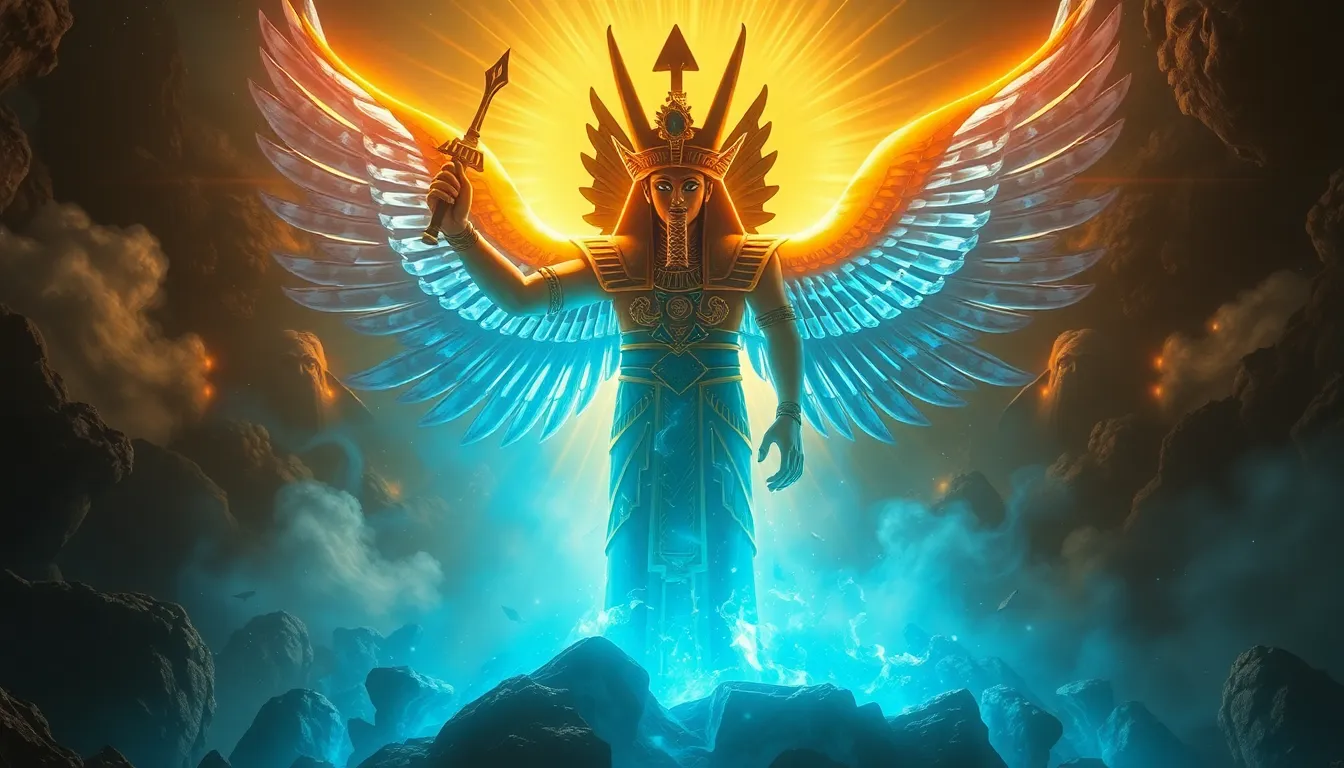
The Osirian Myth: Death and Resurrection of the Divine King
I. Introduction
The Osirian Myth is one of the most significant narratives in ancient Egyptian mythology, symbolizing the themes of death, resurrection, and the cyclical nature of life. Central to this myth is Osiris, the divine king whose story encapsulates the struggles between good and evil, order and chaos. This article aims to explore the characters involved, the events that unfold, the implications of Osiris’s death and resurrection, and the lasting legacy of this profound myth in ancient Egyptian religion.
II. The Characters of the Osirian Myth
A. Osiris: The Divine King
Osiris is portrayed as the god of the afterlife and resurrection. He embodies themes of fertility and renewal, often depicted as a mummified figure adorned with the Atef crown.
- Attributes and symbolism: Osiris is commonly represented in green, symbolizing rebirth and regeneration. He holds a crook and flail, symbols of kingship and governance.
- Role in the afterlife: Osiris presides over the judgment of the dead, determining the fate of souls in the afterlife.
B. Isis: The Devoted Wife
Isis is a powerful goddess known for her compassion and magical abilities. She plays a crucial role in the Osirian myth, showcasing the strength of love and devotion.
- Her significance and powers: As the goddess of motherhood and magic, Isis possesses the ability to heal and protect, making her an essential figure in the myth.
- Contributions to the resurrection of Osiris: With her magical skills, she searches for Osiris’s body and ultimately resurrects him, emphasizing the theme of loyalty.
C. Set: The Usurper Brother
Set, the god of chaos and disorder, is the antagonist of the Osirian myth. His jealousy and ambition lead him to commit heinous acts against his brother.
- Characteristics and motives: Set is often depicted with a unique animal head, symbolizing his chaotic nature. His desire for power drives him to betray Osiris.
- Impact on the myth and Osiris’s fate: Set’s actions catalyze the central conflict of the story, resulting in Osiris’s death and the ensuing quest for resurrection.
D. Horus: The Avenger
Horus, the son of Osiris and Isis, represents the rightful heir to the throne and the embodiment of kingship.
- His role in the myth: After Osiris’s resurrection, Horus avenges his father’s death by battling Set, restoring balance and order.
- Representation of kingship and legitimacy: Horus’s victory symbolizes the triumph of good over evil and the rightful claim to the throne of Egypt.
III. The Death of Osiris
A. The Plot by Set
The death of Osiris is a result of a carefully orchestrated plot by Set, who seeks to eliminate his brother and claim the throne for himself.
- The deception and murder: Set tricks Osiris into a coffin, sealing him inside and throwing it into the Nile, where he drowns.
- Symbolic meanings of death in the myth: Osiris’s death represents not only the end of his physical life but also the struggle between order and chaos.
B. The Consequences of Osiris’s Death
The death of Osiris has profound implications for Egypt, affecting both the land and its people.
- Impact on the land of Egypt: With Osiris dead, the land experiences turmoil and chaos, reflecting Set’s dominion.
- The balance between order (Ma’at) and chaos: Osiris’s death disrupts Ma’at, the concept of cosmic order, leading to widespread suffering.
IV. The Quest for Resurrection
A. Isis’s Journey
Determined to bring her husband back to life, Isis embarks on a perilous journey to find Osiris’s body.
- Search for Osiris’s body: Isis travels across Egypt, facing numerous challenges as she seeks the remains of her beloved.
- Use of magic and divine powers: Utilizing her magical abilities, she is able to overcome obstacles, highlighting her strength and resourcefulness.
B. The Role of Anubis
Anubis, the god of mummification and the afterlife, plays a pivotal role in the resurrection of Osiris.
- God of mummification and the afterlife: Anubis oversees the embalming process, ensuring Osiris is preserved for the afterlife.
- His involvement in Osiris’s resurrection: Anubis aids Isis in the resurrection process, symbolizing the importance of proper burial and rites.
V. The Resurrection of Osiris
A. The Transformation of Osiris
Osiris’s resurrection marks a significant transformation, altering his existence from a mortal king to a divine being.
- From a physical being to a divine entity: Osiris is reborn as the god of the underworld, embodying eternal life.
- Significance of resurrection in Egyptian belief: This event underscores the belief in life after death, reinforcing the idea that death is not the end.
B. Osiris as the Lord of the Underworld
Following his resurrection, Osiris assumes a vital role within the pantheon of Egyptian gods.
- His new role and responsibilities: Osiris becomes the ruler of the underworld, judging the souls of the deceased.
- The implications for the afterlife beliefs of Egyptians: His ascension reinforces the importance of living a righteous life to secure a favorable judgment after death.
VI. The Legacy of the Osirian Myth
A. Influence on Egyptian Religion
The Osirian myth has left a lasting impact on Egyptian religious practices and beliefs.
- Worship practices and rituals: Festivals such as the Osiris Mysteries celebrate his resurrection, reflecting the cyclical nature of life.
- The myth’s incorporation into funerary texts: The story of Osiris is often referenced in tomb inscriptions and the Book of the Dead, guiding the deceased in the afterlife.
B. Symbolism in Art and Literature
The Osirian myth has been a rich source of inspiration for Egyptian art and literature.
- Depictions of Osiris in temples and tombs: Artworks often depict Osiris in various forms, emphasizing his significance in the afterlife.
- The role of the myth in cultural identity: The story of Osiris becomes a cornerstone of Egyptian identity, symbolizing hope and the promise of rebirth.