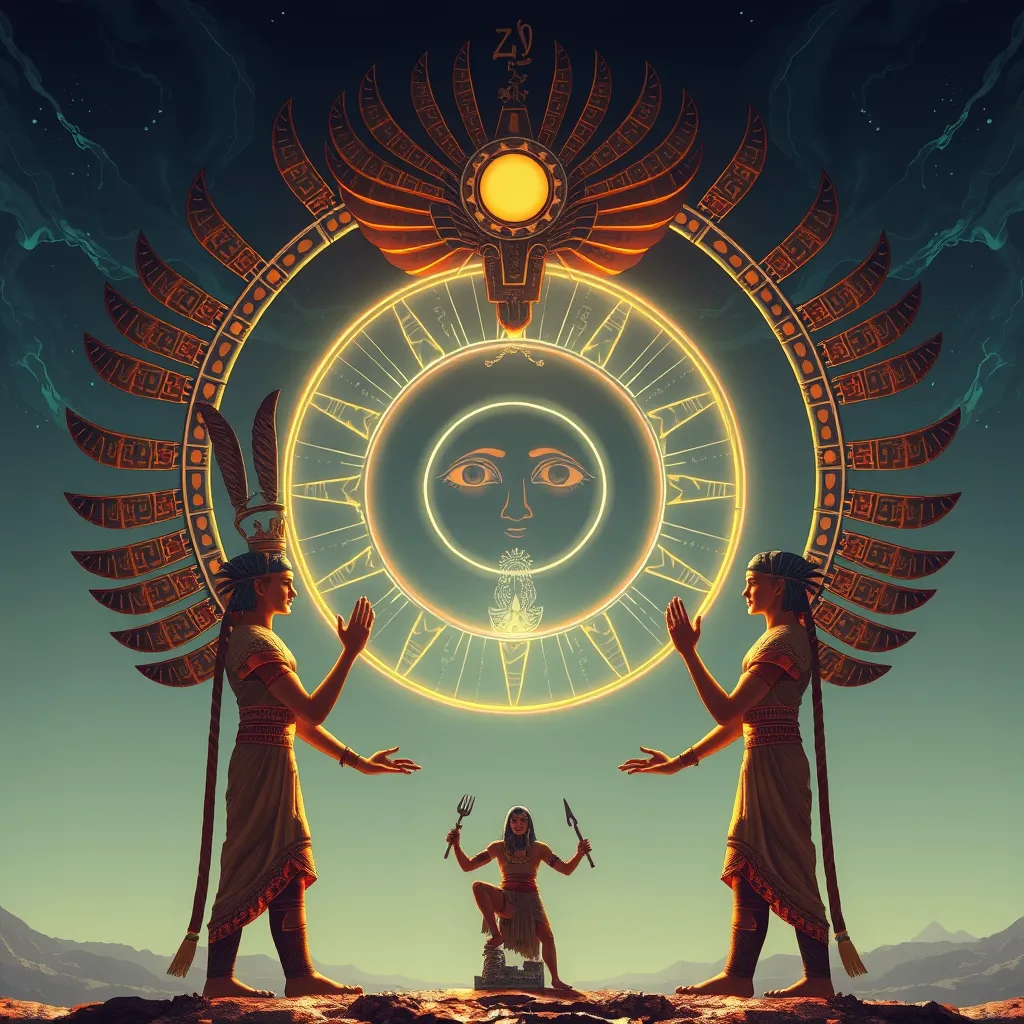
The Oracle of Ra: Reading the Future Through the Sun God
I. Introduction
The Oracle of Ra represents a fascinating intersection between ancient Egyptian spirituality and the quest for knowledge about the future. This oracle, deeply rooted in the reverence for Ra, the Sun God, served as a conduit through which ancient Egyptians sought divine guidance. Understanding the significance of Ra within the vast tapestry of Egyptian mythology provides insight into the cultural practices that centered around divination and prophecy.
Ra, as the embodiment of the sun, was not only a deity of light but also a symbol of knowledge and enlightenment. This article aims to explore the connection between Ra and future predictions, delving into the mythology surrounding this powerful god, the practices of oracles in ancient Egypt, and the modern interpretations of these ancient beliefs.
II. The Mythology of Ra
Ra is one of the most significant deities in ancient Egyptian mythology, often depicted with the head of a falcon and a sun disk encircled by a serpent. His origins can be traced back to the early dynastic periods of Egypt, where he was revered as a creator god. Ra’s attributes include:
- **Creator of Life:** Ra was believed to have created all living things.
- **God of the Sun:** His daily journey across the sky symbolized rebirth and renewal.
- **Protector of Pharaohs:** Ra was closely associated with the divine right to rule.
In the Egyptian pantheon, Ra held a paramount position, often merging with other gods such as Amun, becoming Amun-Ra, a symbol of ultimate power. The symbolism of sunlight also extended to knowledge, as the sun was thought to illuminate the darkness of ignorance, fostering enlightenment and understanding.
III. The Concept of Oracles in Ancient Egypt
Oracles played a crucial role in ancient Egyptian culture, serving as intermediaries between the divine and the mortal realms. They were consulted for guidance on various matters, from personal decisions to state affairs. The definition and purpose of oracles can be summarized as follows:
- **Divine Communication:** Oracles were seen as a means to receive messages from gods.
- **Guidance and Insight:** They offered advice on significant life choices or communal issues.
Different types of oracles existed, including:
- **Delphic Oracles:** Often consulted during crises.
- **Dream Interpretation:** Dreams were seen as messages from the gods.
- **Augury:** Observing the behavior of birds or other animals.
The reliance on these divine insights was deeply embedded in the societal fabric, influencing religion, politics, and daily life.
IV. The Oracle of Ra: Historical Accounts
Historical texts and inscriptions reveal much about the Oracle of Ra and its significance. Ancient Egyptian literature frequently references the Oracle, showcasing its importance in decision-making and governance. Notable figures associated with this oracle include:
- **High Priests of Ra:** These individuals played a central role in conducting rituals and interpreting divine messages.
- **Pharaohs:** Many rulers sought guidance from the Oracle of Ra before undertaking significant actions.
Rituals involved in consulting the Oracle were elaborate, often including:
- **Offerings to Ra:** Gifts were presented to gain favor.
- **Sacred Rites:** Ceremonies were performed to communicate with the divine.
- **Divination Practices:** Techniques such as casting lots or interpreting signs were utilized.
V. Methods of Divination Associated with Ra
The methods of divination associated with Ra were diverse and deeply rooted in the observation of natural phenomena. Some notable techniques include:
- **Sun-Based Divination:** The position and phases of the sun were believed to influence events.
- **Astrology:** Celestial events were interpreted to predict the future.
- **Nature Signs:** Observations of animals and environmental changes provided insights into divine will.
These methods were integral to maintaining harmony with the cosmos and understanding the will of the gods.
VI. Ra’s Influence on Decision-Making
Ancient Egyptians greatly relied on Ra’s guidance for governance and societal order. The Oracle of Ra influenced numerous significant decisions, including:
- **Military Campaigns:** Pharaohs would consult the Oracle before launching attacks.
- **Building Projects:** The construction of temples and pyramids was often preceded by divine consultations.
- **Agricultural Decisions:** Seasonal changes and crop planting were guided by omens interpreted from Ra’s movements.
Case studies of significant decisions reveal how Ra’s foresight shaped society and culture, instilling a sense of divine order in various aspects of life.
VII. Modern Interpretations of the Oracle of Ra
In recent years, there has been a revival of interest in ancient Egyptian spirituality, particularly regarding the Oracle of Ra. Contemporary practices inspired by this oracle include:
- **Meditation and Reflection:** Individuals seek to connect with Ra’s energy for personal enlightenment.
- **Astrological Practices:** Modern astrology often draws from ancient techniques, using the sun’s position for guidance.
- **Workshops and Retreats:** Many explore ancient wisdom through classes and gatherings focused on Egyptian spirituality.
The teachings of Ra, emphasizing knowledge, enlightenment, and the importance of the natural world, remain relevant in today’s quest for spiritual understanding.
VIII. Conclusion
The Oracle of Ra holds a significant place in the tapestry of ancient Egyptian spirituality, serving as a vital source of prophetic insight and guidance. The legacy of Ra endures, reflecting the human desire for understanding and connection with the divine. As modern seekers of wisdom explore ancient practices, the teachings of Ra continue to illuminate paths toward enlightenment. Readers are encouraged to delve into their own journeys, drawing from the wellspring of ancient wisdom that remains ever relevant in our search for meaning and understanding.