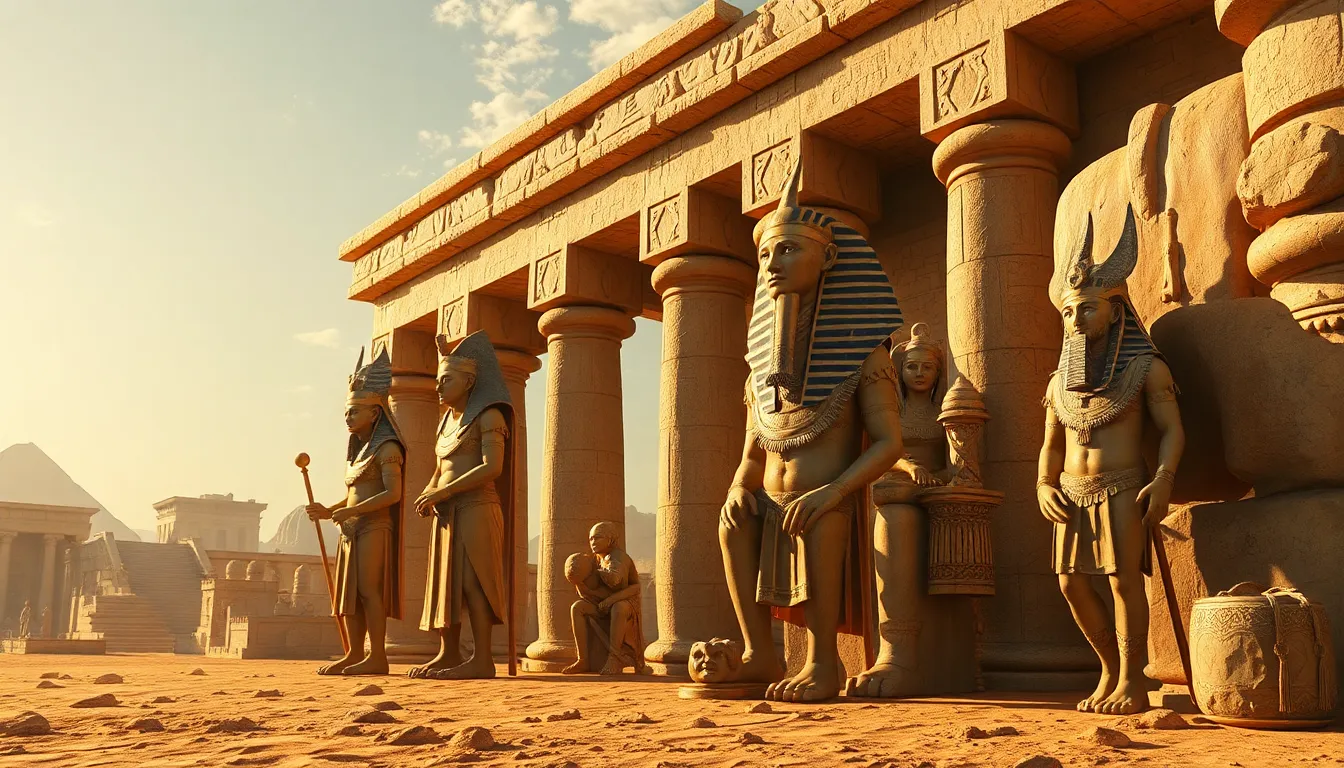
The Nomes of Egypt: A Cultural and Mythological Perspective
I. Introduction
The term “Nome” refers to the territorial divisions of ancient Egypt, which played a critical role in the administrative and cultural landscape of the civilization. Nomes were not only geographical units but also held significant mythological and cultural importance within the context of Egyptian society.
Understanding the Nomes of Egypt provides insight into the intricacies of ancient Egyptian civilization, highlighting how geography intertwined with mythology and daily life. This article aims to explore the historical, cultural, and mythological aspects of Nomes, shedding light on their lasting impact on Egyptian heritage.
II. Historical Overview of Nomes
A. Origin and evolution of the concept of Nomes
The concept of Nomes dates back to the early dynastic period of Egypt, around 3100 BCE. Initially, these divisions were practical, serving administrative functions as the state began to organize itself under a centralized authority. Over time, the Nomes evolved into distinct cultural regions, each with its own identity.
B. Number and geographic distribution of Nomes
Ancient Egypt was divided into 42 Nomes, with 22 located in Upper Egypt and 20 in Lower Egypt. Each Nome was centered around a capital city, which served as the administrative hub and a place of worship for local deities. The geographic distribution of Nomes often corresponded to natural features, such as the Nile River and surrounding desert areas.
C. Administrative and political significance of Nomes
Nomes were crucial for the administration of ancient Egypt. They facilitated local governance, taxation, and resource management. Each Nome was governed by a Nomarch, who acted as a regional leader and was responsible for enforcing the laws and policies of the Pharaoh.
III. The Structure of Nomes
A. Administrative hierarchy within Nomes
The administrative structure within each Nome was organized hierarchically. At the top was the Nomarch, followed by various officials who managed specific aspects of governance, such as agriculture, justice, and military organization. This hierarchy ensured efficient management of resources and local affairs.
B. Key figures: Nomarchs and their roles
Nomarchs were significant figures within their Nomes, often acting as both political leaders and religious authorities. They held considerable power, controlling local resources and representing their Nome in dealings with the Pharaoh and central government. Their influence extended to:
- Overseeing agricultural production
- Collecting taxes and tributes
- Maintaining law and order
- Leading religious ceremonies
C. Economic and agricultural significance of Nomes
The economy of ancient Egypt was predominantly agrarian, and each Nome had its own agricultural practices based on the local environment. The fertile land along the Nile allowed for the cultivation of crops, which were essential for sustenance and trade. Nomes developed specialized economic activities, such as:
- Grain production
- Textile manufacturing
- Craftsmanship and trade
IV. Cultural Significance of Nomes
A. Local customs and traditions associated with each Nome
Each Nome had its own unique customs and traditions, often linked to local deities and historical events. These customs were celebrated through various means, including storytelling, music, and dance, contributing to the rich tapestry of Egyptian culture.
B. Festivals and rituals unique to specific Nomes
Festivals played a vital role in the cultural life of each Nome, with events often centered around agricultural cycles and religious observances. Notable festivals included:
- The Wepet-Renpet (New Year) Festival
- The Opet Festival, celebrating the god Amun
- Local harvest festivals
C. Artistic representations of Nomes in ancient artifacts
Art and artifacts from ancient Egypt often depict the significance of Nomes, showcasing local deities, landscapes, and cultural practices. These representations provide valuable insights into the beliefs and daily lives of the people residing in each Nome.
V. Mythological Associations of Nomes
A. Deities linked to different Nomes
Each Nome was typically associated with a particular deity, who was believed to protect the region and its people. For example:
- Nome of Heliopolis – linked to the sun god Ra
- Nome of Thebes – associated with Amun
- Nome of Memphis – connected to Ptah, the creator god
B. Creation myths tied to specific geographical regions
Many creation myths in Egyptian mythology are linked to the Nomes, often explaining the origins of the world and the gods. These myths provided a sense of identity and purpose for the inhabitants of each Nome, reinforcing their connection to the divine.
C. Symbolism and mythology in Nome names
The names of the Nomes themselves often carry deep symbolic meanings, reflecting their geographical features, deities, or historical events. Understanding these names offers a glimpse into the mythology and cultural significance that each Nome held in ancient times.
VI. Nomes and the Afterlife
A. The role of Nomes in Egyptian funerary practices
Nomes played a critical role in funerary practices, as each Nome had its own burial customs and beliefs regarding the afterlife. Many people were buried in their home Nome, which influenced their journey to the afterlife.
B. Beliefs about the afterlife and their connection to Nomes
Egyptians believed that the afterlife was a continuation of life on earth, and the connection to one’s Nome was essential for ensuring a successful passage to the afterlife. This belief was reflected in the tomb designs and burial traditions that varied by Nome.
C. The significance of Nomes in the Book of the Dead
The Book of the Dead, a crucial funerary text, often references Nomes in its spells and rituals. These references highlight the importance of local deities and customs in guiding the deceased through the afterlife.
VII. Modern Perspectives on Nomes
A. Archaeological discoveries related to Nomes
Recent archaeological discoveries have shed light on the Nomes and their significance in ancient Egyptian civilization. Excavations have uncovered artifacts, inscriptions, and structures that reveal the socio-political and religious dynamics within each Nome.
B. Impact of Nomes on contemporary Egyptian identity
The legacy of the Nomes continues to influence contemporary Egyptian identity, with many modern towns and regions still reflecting the historical divisions of ancient times. Understanding this heritage fosters a deeper connection to Egypt’s rich cultural history.
C. Preservation of Nome-related heritage and culture
Efforts to preserve the historical and cultural heritage of the Nomes are ongoing, with various initiatives aimed at protecting archaeological sites and promoting local traditions. These efforts are essential for maintaining the connection between modern Egyptians and their ancient past.
VIII. Conclusion
In summary, the Nomes of Egypt were not just administrative divisions; they were integral to the cultural and mythological framework of ancient Egyptian society. Their historical significance, cultural practices, and mythological associations provide valuable insights into the complexities of ancient Egyptian life.
The enduring legacy of the Nomes continues to enrich our understanding of ancient Egypt, inviting further exploration into its fascinating history and mythology. As we delve deeper into the stories of the Nomes, we uncover the profound connections that ancient Egyptians had with their land, their deities, and their understanding of life and death.