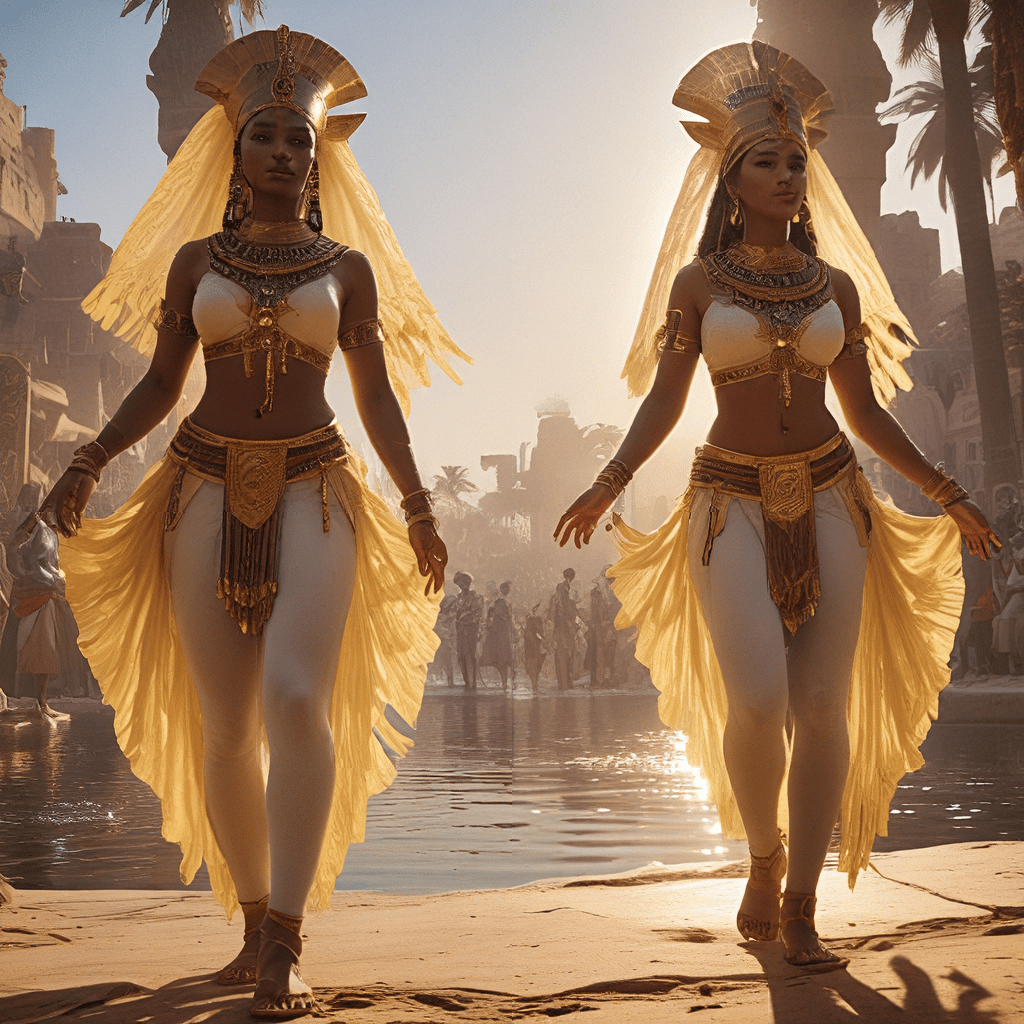
The Nile’s Rhythm: Exploring the Music and Dance of the Festival
The Nile River, a lifeblood for ancient Egypt, shaped not just the land but also the culture and traditions. Over centuries, the ebb and flow of the Nile inspired magnificent festivals, with music and dance as their vibrant heart. This article delves into the harmonious relationship between the Nile’s rhythm and the music and dance that celebrated its bounty.
1. The Lifeblood of Egypt: The Nile River’s Influence
The Nile River, a majestic ribbon of water snaking through the desert, was the core of ancient Egyptian civilization. Its annual flooding brought fertile soil, sustaining agriculture and ensuring prosperity. The Nile’s rhythm, a predictable cycle of inundation and recession, became deeply intertwined with the lives of Egyptians, influencing their calendar, their religion, and their art.
The Nile symbolized life, fertility, and the power of nature. It was revered as a divine entity, associated with the god Hapy, who embodied the Nile’s abundant waters. The river’s influence permeated every aspect of Egyptian society, from its agricultural practices to its magnificent monumental architecture.
2. Festivals and Celebrations: Marking the Nile’s Cycle
The Nile’s predictable cycle gave rise to a calendar of festivals, each marking a significant stage in the river’s journey. These celebrations were a time for joy, gratitude, and a renewal of connection with the divine. The most important festival, the Festival of Opet, was dedicated to the Nile’s annual flooding and its bountiful gifts.
Festivals were a time for feasting, music, and dance. People from all walks of life came together to celebrate, offering their thanks to the gods for the Nile’s blessings. These gatherings were a testament to the interconnectedness of the people with their environment and their deities.
3. Music as a Divine Gift: The Role of Music in Egyptian Mythology
Music was considered a divine gift in ancient Egypt. It was believed to be a powerful tool that could connect humans to the gods. In myths and legends, music played a significant role in both creation and the afterlife.
The god Thoth, known for his wisdom and knowledge, was also the patron god of music, writing, and magic. He was said to have invented instruments and melodies that could soothe and inspire. Music was seen as a form of magic, capable of influencing both the physical and spiritual world.
4. Instruments of the Gods: Exploring the Instruments of Ancient Egypt
Ancient Egyptians used a variety of instruments, each with its distinct sound and purpose. Some of the most common instruments include:
- The Harp: A stringed instrument, often portrayed in artwork, symbolizing joy and celebration.
- The Lute: A long-necked stringed instrument, used in both religious and secular settings.
- The Flute: A wind instrument, known for its melodic and lyrical sound.
- The Sistrum: A handheld rattle, used in religious ceremonies to ward off evil spirits and invoke the favor of the gods.
These instruments were not just tools for entertainment but were also seen as sacred objects, imbued with divine power. The sounds they produced were believed to resonate with the cosmos and the gods.
5. Rhythms of the Afterlife: The Importance of Music in Funerary Rituals
Music played a vital role in Egyptian funerary rituals. It was believed that music could guide the dead on their journey through the afterlife and ensure a safe passage to the afterlife.
The Book of the Dead, a collection of spells and hymns for the deceased, includes passages that mention the importance of music in the afterlife. It was believed that if the deceased could recite these spells and perform the proper rituals, they could be reborn in a paradise-like realm.
6. Dance as a Form of Worship: The Expression of Joy and Praise
Dance was an integral part of Egyptian life, used to express joy, sorrow, and devotion. It was a way to honor the gods, celebrate life, and connect with the divine. Dance was a form of communication, conveying emotions and stories without words.
Ancient Egyptian dance involved a variety of movements, from graceful gestures to energetic rhythms. The dance was often accompanied by music and singing, creating a vibrant and immersive experience. The presence of dance in temple reliefs and paintings provides a glimpse into the importance of this art form in ancient Egyptian culture.
7. The Dance of the Gods: Depictions of Dancing in Temple Art and Reliefs
Ancient Egyptian art is a rich source of information about their music and dance traditions. Temple walls and tombs are adorned with intricate reliefs and paintings that depict scenes of dancing.
These depictions show dancers performing in religious ceremonies, festivals, and even in the afterlife. The presence of dance in these sacred spaces highlights the importance of this art form in expressing devotion and connecting with the divine.
8. The Festival of Opet: A Celebration of the Nile’s Bounty
The Festival of Opet, held annually in Thebes, was a magnificent celebration that honored the Nile’s fertility and its role in sustaining life. This festival involved a grand procession of priests, gods, and royalty, with music and dance as its central element.
The festival was a time for the people to come together and give thanks for the Nile’s blessings. It involved elaborate rituals, offerings, and celebrations, all centered around the theme of the Nile’s life-giving power. This festival reflected the deep reverence and gratitude that Egyptians held for the river that sustained them.
9. The Mysteries of the Music: Reconstructing Ancient Egyptian Music
While ancient Egyptians left behind evidence of their music, reconstructing their actual melodies and harmonies remains a challenge. Scholars have studied ancient texts, musical instruments, and artwork to piece together the puzzle of ancient Egyptian music.
Despite the challenges, researchers have been able to make significant progress in understanding ancient Egyptian music. Their research has revealed much about the rhythms, melodies, and instruments of this lost musical tradition.
10. Modern Echoes: The Legacy of Nile-Inspired Music and Dance
The legacy of ancient Egyptian music and dance lives on in modern Egypt and beyond. Elements of ancient rhythms and melodies can be found in Egyptian folk music, which continues to be performed today.
The influence of ancient Egyptian music and dance can also be seen in contemporary dance forms, such as belly dancing, which draws inspiration from ancient movements and rhythms. The enduring legacy of ancient Egyptian music and dance is a testament to the power of art to transcend time and inspire generations.