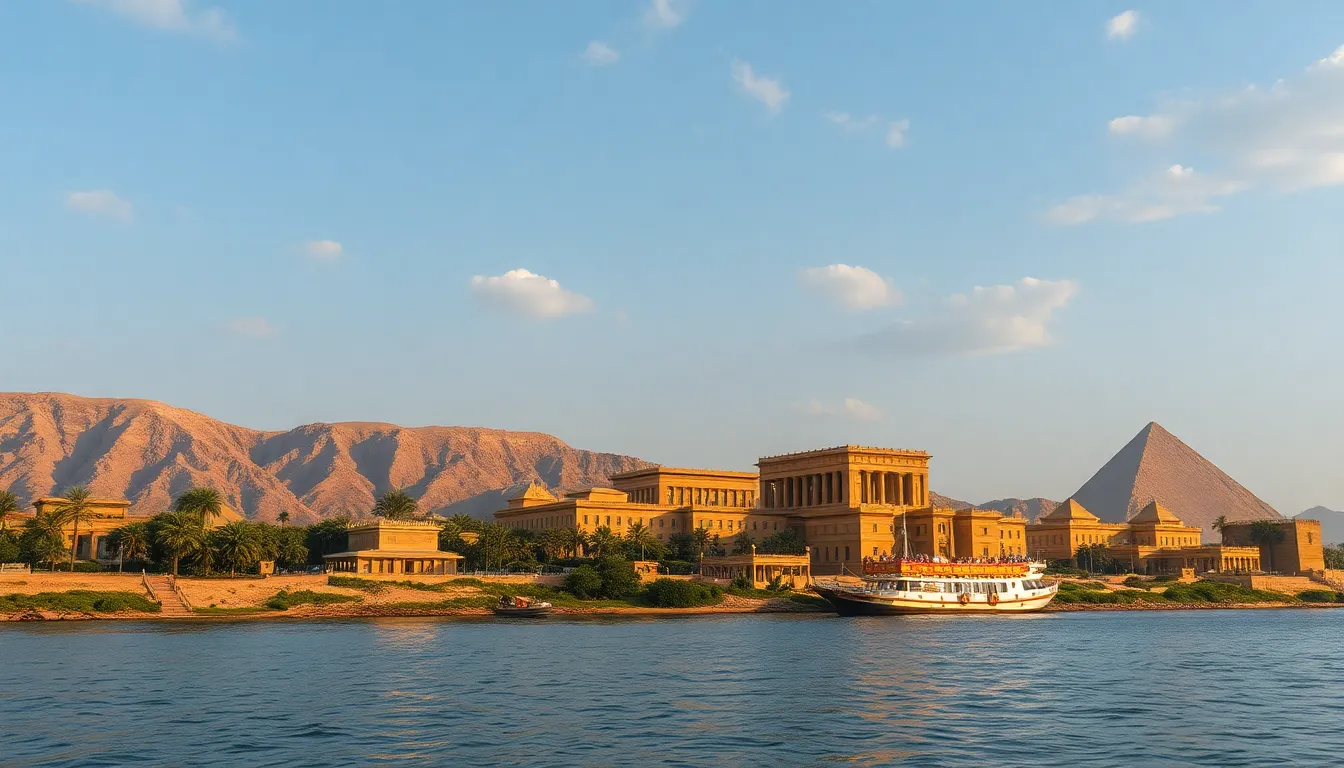
The Nile: A Source of Power for Pharaohs
I. Introduction
The Nile River, often referred to as the lifeblood of ancient Egypt, has played an indispensable role in the civilization’s history. Spanning over 4,100 miles, it is the longest river in the world, flowing through eleven countries before emptying into the Mediterranean Sea. For the ancient Egyptians, the Nile was much more than a waterway; it was a source of sustenance, a means of transportation, a religious symbol, and a powerful force that shaped the rise and fall of pharaohs and their dynasties.
The river’s annual flooding brought fertile soil to the otherwise arid landscape, allowing agriculture to flourish and enabling the pharaohs to consolidate their power. This article delves into the various aspects of the Nile’s significance, exploring how it became a cornerstone of ancient Egyptian civilization.
II. The Geographic Importance of the Nile
The Nile flows northward through northeastern Africa, originating from two major tributaries: the Blue Nile and the White Nile. The Blue Nile begins at Lake Tana in Ethiopia, while the White Nile starts at Lake Victoria in Uganda. As these tributaries converge in Sudan, they form the mighty Nile River, which then travels through Egypt, making its way to the Mediterranean.
The geographic course of the Nile has profound implications for Egypt’s climate and agriculture:
- Climate Regulation: The Nile influences the local climate, providing essential moisture that mitigates the heat of the desert.
- Floodplain Fertility: The river’s floodplain is enriched with silt, creating some of the most productive agricultural land in the region.
- Natural Barrier: The Nile serves as a natural barrier, protecting the civilization from invasions and facilitating internal unity.
III. Agricultural Abundance: The Lifeblood of the Pharaohs
The annual flooding of the Nile, known as the inundation, was a seasonal event that occurred between June and September. This flooding was crucial for agriculture, as it deposited nutrient-rich silt onto the fields, rejuvenating the soil for planting.
Key crops cultivated along the Nile included:
- Wheat: The primary staple food, providing sustenance for the population.
- Barley: Used for making bread and beer, both essential components of the Egyptian diet.
- Flax: Cultivated for its fibers, which were used to make linen, a key textile in ancient Egypt.
The economic implications of these crops were significant. A bountiful harvest meant increased wealth for the pharaohs, who could collect taxes from the surplus produce, fund monumental projects, and maintain their armies.
IV. Transportation and Trade: Connecting the Kingdom
The Nile served as a vital trade route, facilitating the movement of goods and resources throughout ancient Egypt. Boats laden with agricultural products, building materials, and luxury items traveled the river, connecting Upper and Lower Egypt.
Key aspects of the Nile’s role in transportation and trade included:
- Trade Networks: The river allowed for the establishment of extensive trade networks, enabling the exchange of goods with neighboring regions.
- Military Logistics: The Nile played a crucial role in military campaigns, allowing pharaohs to move troops and supplies efficiently.
- Cultural Exchange: Trade along the Nile facilitated the exchange of ideas and culture, enriching Egyptian civilization.
V. Religious Significance of the Nile
The Nile was deeply embedded in ancient Egyptian mythology and spirituality. It was revered as a divine gift from the gods, symbolizing life and fertility. The Egyptians personified the river in their pantheon, associating it with gods such as Hapi, the god of the inundation.
Rituals and ceremonies associated with the Nile included:
- The Wepet-Renpet Festival: Celebrated the onset of the inundation, marking the new year.
- Offerings to Hapi: Egyptians would offer sacrifices to the god of the Nile to ensure a bountiful flood.
- Funerary Rites: The Nile was also significant in burial practices, with the belief that its waters could aid in the journey to the afterlife.
VI. Architectural and Engineering Marvels
The Nile’s influence extended into the realm of architecture and engineering. The ancient Egyptians developed sophisticated irrigation systems and canals to manage the river’s waters, ensuring a steady supply for agriculture.
Moreover, monumental structures were often built in proximity to the Nile, including:
- Temples: Structures dedicated to the gods were constructed along the riverbanks, symbolizing the connection between the divine and the natural world.
- Tombs: The Valley of the Kings, situated near the Nile, housed the tombs of pharaohs, reflecting their belief in the river’s role in the afterlife.
- Pyramids: The proximity of the Nile facilitated the transport of massive stone blocks used in pyramid construction.
VII. The Decline of the Nile’s Influence
As centuries passed, environmental changes began to impact the Nile and, subsequently, ancient Egyptian civilization. Factors contributing to the decline of the Nile’s influence included:
- Climate Change: Shifts in climate patterns affected the annual flooding, leading to periods of drought.
- Overexploitation: Increasing demands for agricultural land and resources strained the river’s ecosystem.
- Foreign Invasions: As Egypt faced invasions, the stability provided by the Nile was undermined, leading to socio-political instability.
VIII. Conclusion
In conclusion, the Nile River was a multifaceted source of power for the pharaohs of ancient Egypt. Its geographic, agricultural, and economic significance shaped the dynamics of civilization, allowing pharaohs to consolidate their power and build a rich cultural legacy. The Nile was not just a river; it was a symbol of life and continuity that influenced every aspect of ancient Egyptian society. Today, the legacy of the Nile endures, reminding us of its vital role in one of history’s most remarkable civilizations.