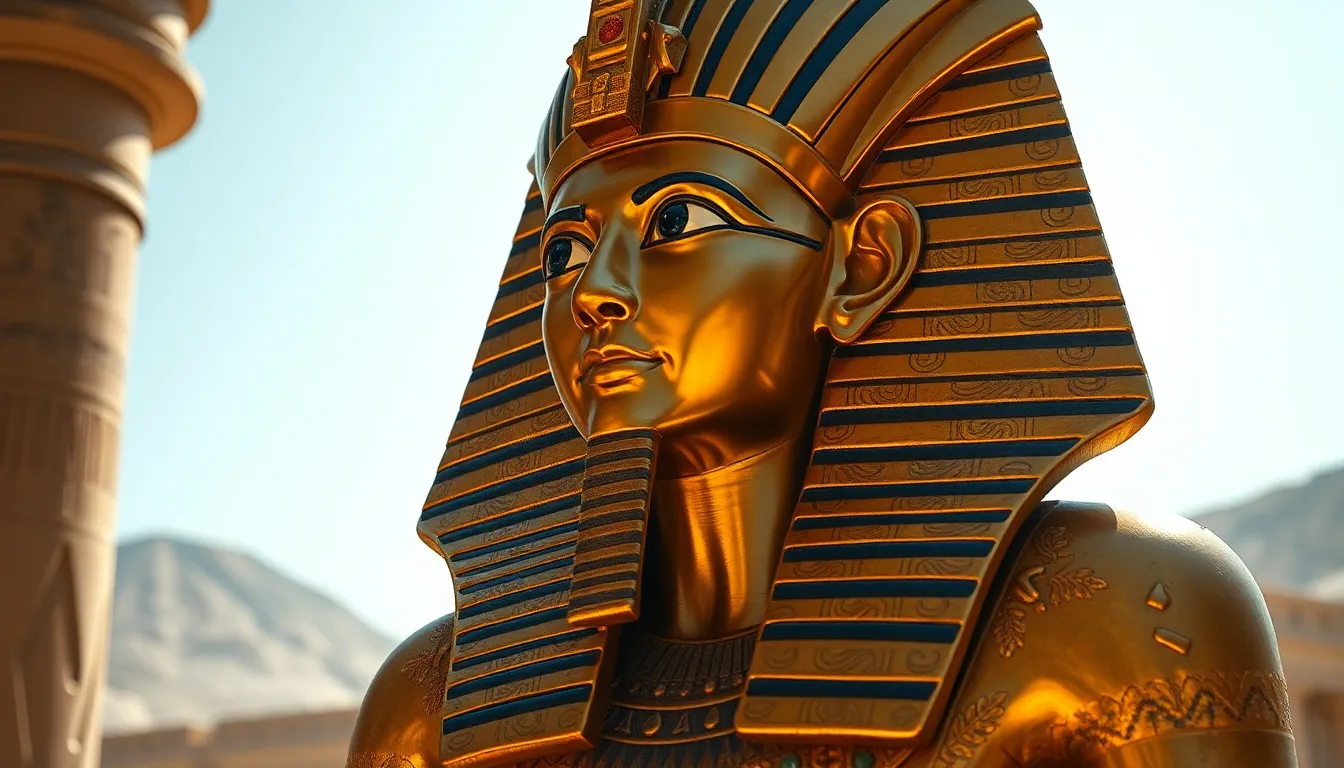
The Myths of Pharaoh Thutmose II’s Contributions to Egypt
I. Introduction
Thutmose II, a fascinating figure in Ancient Egyptian history, ruled during the 18th Dynasty, approximately from 1493 to 1479 BCE. His reign is often overshadowed by the more renowned Thutmose III, his stepson, yet the legacy of Thutmose II is imbued with numerous myths and misconceptions. Understanding these myths is crucial, as it allows us to discern the historical contributions of Thutmose II from the embellished narratives that have emerged over centuries.
This article aims to debunk common myths surrounding Thutmose II, shedding light on the realities of his reign and contributions to Ancient Egypt.
II. Historical Context of Thutmose II’s Reign
Thutmose II ascended to the throne in a period characterized by political intrigue and social transformation. His reign fell within the 18th Dynasty, a time considered the zenith of Ancient Egyptian power and culture.
- Timeline of Thutmose II’s rule: Circa 1493-1479 BCE
- Political and social landscape: This era was marked by military conquests, extensive trade networks, and cultural flourishing.
- Thutmose II’s lineage: He was the son of Thutmose I and a secondary wife, Hatshepsut, which positioned him uniquely in the royal hierarchy.
III. Myth 1: Thutmose II as the Sole Builder of Major Monuments
One of the prevalent myths about Thutmose II is that he was the sole architect behind several significant monuments and temples in Egypt.
While he did contribute to monumental construction, it is essential to examine the collaborative nature of such projects:
- Examination of temples and monuments: Thutmose II is credited with contributing to the Temple of Karnak and the construction of the Red Chapel.
- Collaboration with predecessors and successors: Many monuments were built or completed under the reigns of earlier and later pharaohs, including his father Thutmose I and his son Thutmose III.
- Role of architects and laborers: The construction of monumental architecture involved skilled laborers and architects, highlighting the collective efforts of the entire society rather than the achievements of a single ruler.
IV. Myth 2: Thutmose II’s Military Achievements Were Unmatched
Thutmose II is often portrayed as a great military leader, yet this narrative oversimplifies the complexities of warfare during his time.
To understand the military context, we can analyze:
- Military campaigns: Thutmose II led several campaigns into Nubia and Syria, but his military achievements were not as expansive as those of his son, Thutmose III.
- Comparison with military successes: Thutmose III is known for his extensive military conquests and is often referred to as one of Egypt’s greatest military commanders.
- Context of warfare: The military strategies and outcomes during Thutmose II’s reign must be understood within the broader context of 18th Dynasty military policies.
V. Myth 3: Thutmose II Was a Great Patron of the Arts
Another common myth is that Thutmose II was a significant patron of the arts, fostering an artistic renaissance during his reign.
However, a closer examination reveals:
- Artistic contributions: While there were some artistic outputs during his reign, they do not compare to the cultural achievements seen in other periods, particularly during the reign of Thutmose III.
- Comparison with other periods: The art produced under Thutmose II often reflects a continuity of styles rather than groundbreaking innovations.
- Role of the artistic community: Artists and craftsmen played crucial roles in shaping the aesthetics of the time, but their contributions were part of a long-standing tradition rather than a sudden upheaval.
VI. Myth 4: Thutmose II’s Religious Reforms Were Pioneering
Thutmose II is frequently credited with introducing significant religious reforms that shaped Ancient Egyptian spirituality.
However, the reality is more nuanced:
- Overview of religious practices: The religious landscape during Thutmose II’s reign was largely characterized by continuity rather than radical change.
- Examination of traditions: Many of the religious practices and deities worshipped during his rule were established long before his reign.
- Influence on subsequent developments: While Thutmose II may have participated in certain religious rituals, it was his successors who would have a more profound impact on religious reforms.
VII. The Legacy of Thutmose II: Reality vs. Perception
The myths surrounding Thutmose II have significantly shaped modern interpretations of his reign. It is vital to assess how these narratives have emerged:
- Impact of myths: These tales often romanticize Thutmose II’s contributions, leading to a skewed perception of his historical significance.
- Archaeological findings: Recent discoveries have provided a clearer picture of Thutmose II’s reign, allowing historians to reassess his contributions critically.
- Importance of evaluation: Critical examination of ancient sources and archaeological evidence is essential for accurate historical understanding.
VIII. Conclusion
In summary, the myths surrounding Thutmose II’s reign often overshadow the complexities of his actual contributions to Ancient Egypt. By separating myth from historical fact, we gain a clearer understanding of his role and legacy.
Recognizing the significance of critical evaluation in Egyptology not only enriches our knowledge but also invites further research and exploration into the intricacies of Ancient Egyptian history.