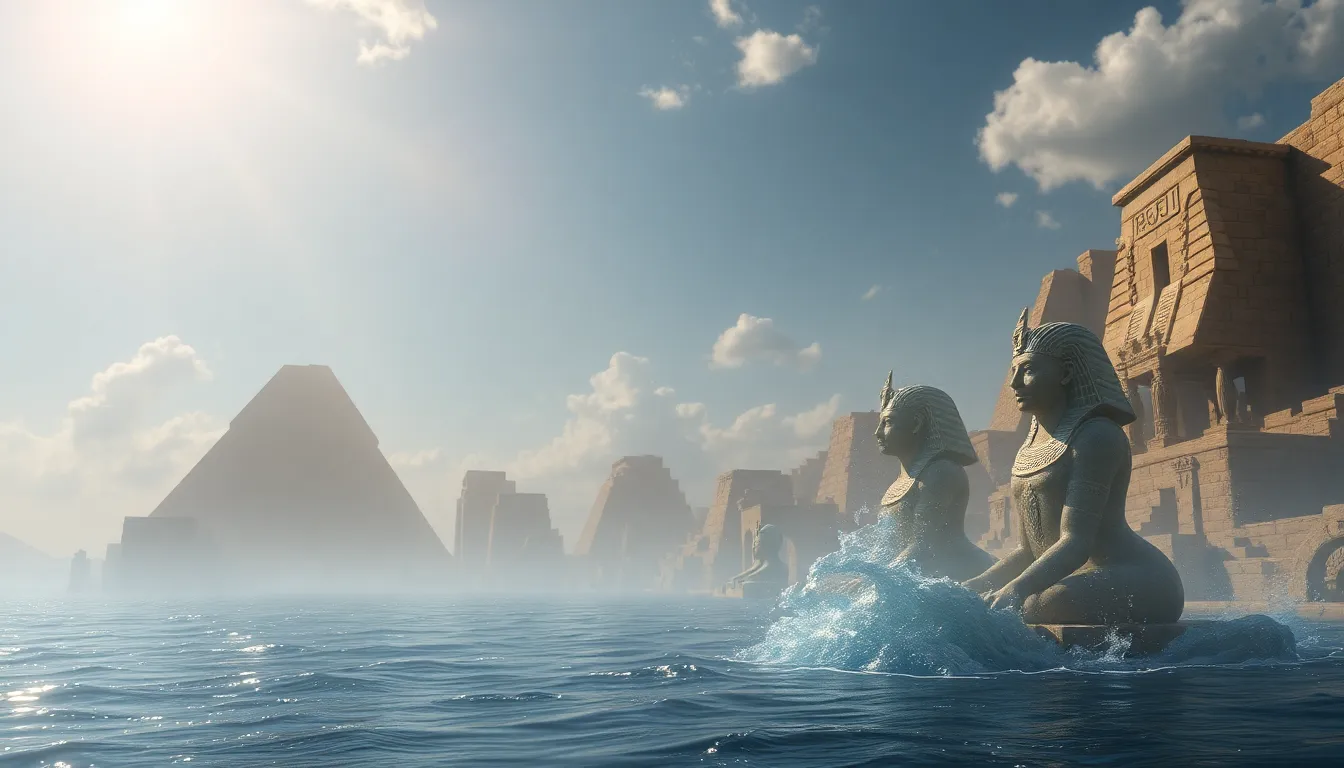
The Myths of Pharaoh Ramses III and the Mysterious Sea Peoples
I. Introduction
Ramses III, one of the most prominent pharaohs of Ancient Egypt, ruled during a time of great cultural and political significance. His reign, which lasted from 1186 to 1155 BCE, is often marked by military prowess and monumental construction projects. However, his legacy is intertwined with the enigmatic group known as the Sea Peoples, who challenged the stability of Mediterranean civilizations during this period.
This article aims to delve into the myths surrounding Ramses III and the Sea Peoples, exploring the historical context, their interactions, and the lasting impact of these narratives on our understanding of Ancient Egyptian history.
II. Historical Context of Ramses III
Ramses III ascended to the throne during the Twentieth Dynasty of Egypt, a time characterized by both prosperity and turmoil. His reign is often seen as the last great period of Ancient Egypt before the decline that would follow.
- Reign Overview: Ramses III ruled for over 30 years, during which he faced numerous challenges, including invasions and internal strife.
- Achievements: He is known for his extensive building projects, including the construction of the mortuary temple at Medinet Habu, which stands as a testament to his architectural vision.
- Political Landscape: The political environment of Ramses III’s reign was marked by the growing power of neighboring states and the threat of foreign invasions.
III. The Rise of the Sea Peoples
The Sea Peoples are a collective term used to describe various groups that invaded and settled in the Eastern Mediterranean region during the late Bronze Age. Their origins and motivations remain subjects of scholarly debate.
- Definition: The Sea Peoples are often depicted as a confederation of maritime raiders who disrupted trade routes and threatened coastal cities.
- Theories of Origin: Some theories suggest that they originated from areas in the Aegean, while others propose connections to the central Mediterranean or even the Levant.
- Impact: Their invasions led to the collapse of several prominent civilizations, altering the political landscape of the Mediterranean.
IV. Ramses III and the Sea Peoples: The Battle of the Delta
The confrontation between Ramses III and the Sea Peoples culminated in a series of battles, most notably the Battle of the Delta. This conflict was pivotal in determining the fate of Egypt and the invaders.
- Key Events: Tensions escalated as the Sea Peoples launched raids along the Egyptian coast, prompting Ramses III to mobilize his forces.
- Battle Description: Historical records, including inscriptions at Medinet Habu, depict a fierce battle where Ramses III’s forces successfully defended Egypt against the invading sea raiders.
- Military Strategies: Ramses III employed innovative tactics, utilizing chariots and infantry to outmaneuver the Sea Peoples, ultimately leading to a decisive Egyptian victory.
V. Myths and Legends Surrounding Ramses III
Ramses III’s triumphs have been romanticized in Egyptian literature and art, contributing to a rich tapestry of myths that have emerged over the centuries.
- Portrayal in Literature: He is often depicted as a heroic figure, a mighty warrior who single-handedly defended his nation against overwhelming odds.
- Myth Analysis: The myths surrounding Ramses III reflect the values and ideals of Ancient Egyptian society, emphasizing bravery, divine favor, and the importance of the pharaoh in maintaining cosmic order.
- Comparison with Other Pharaohs: Unlike other rulers, Ramses III’s legacy is particularly shaped by his military encounters, contrasting with the more monumental legacies of predecessors like Ramses II.
VI. Theories on the Defeat of the Sea Peoples
The defeat of the Sea Peoples by Ramses III is a significant event in Egyptian history, with various theories proposed regarding its implications.
- Archaeological Evidence: Excavations have uncovered artifacts and remnants that support the accounts of the battles, providing insight into the strategies employed.
- Role of Ramses III: The pharaoh’s leadership is seen as a turning point in the decline of the Sea Peoples, marking a moment of resurgence for Egyptian power in the region.
- Broader Context: Ramses III’s victories are critical in understanding the eventual fragmentation and decline of the Bronze Age civilizations in the Eastern Mediterranean.
VII. The Lasting Impact of Ramses III and the Sea Peoples
The legacies of Ramses III and the Sea Peoples extend far beyond their immediate historical context, influencing future generations and shaping cultural narratives.
- Influence on Successors: Ramses III set a precedent for military strategy that subsequent pharaohs would emulate as they faced their own challenges.
- Sea Peoples’ Legacy: The mythos of the Sea Peoples persists in historical narratives, symbolizing chaos and the fragility of civilization.
- Cultural Implications: The myths surrounding Ramses III and the Sea Peoples reflect broader themes of conflict, resilience, and the human condition in the face of adversity.
VIII. Conclusion
This exploration of Ramses III and the Sea Peoples illuminates the intricate relationship between myth and history. The tales of Ramses III’s valor and the Sea Peoples’ menace continue to resonate, shaping our understanding of an ancient world filled with drama and intrigue.
As we reflect on the substantial impact of these figures, it becomes clear that myths are not merely stories; they are the lenses through which we interpret the complexities of human history. Ramses III and the Sea Peoples remain significant not only for their historical actions but also for the enduring narratives that define them.