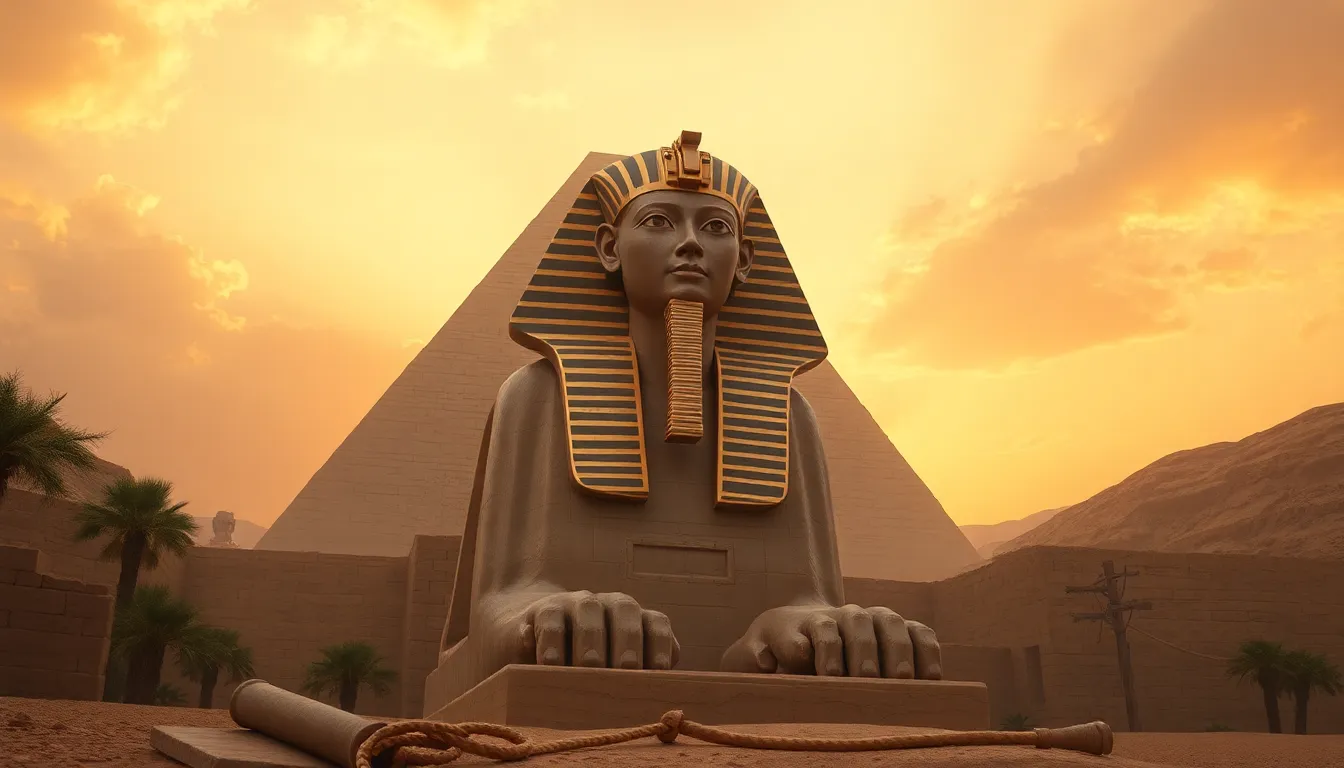
The Myths of Pharaoh Khufu’s Leadership Style
I. Introduction
Pharaoh Khufu, also known as Cheops, is one of the most recognized figures of ancient Egypt, primarily due to his association with the Great Pyramid of Giza. His reign during the Fourth Dynasty of the Old Kingdom marked a significant period in Egyptian history, characterized by remarkable architectural achievements and the consolidation of pharaonic power. However, many myths and misconceptions surround his leadership style, often painting him in an unflattering light. This article aims to debunk these myths and present a more nuanced understanding of Khufu’s governance.
II. Historical Context of Khufu’s Reign
The Old Kingdom of Egypt, often referred to as the “Age of the Pyramids,” lasted from approximately 2686 to 2181 BCE. It was a time of great stability, economic prosperity, and monumental construction. Khufu ascended to the throne around 2589 BCE and is best known for commissioning the Great Pyramid, which remains one of the Seven Wonders of the Ancient World.
Khufu’s reign was not only marked by the construction of this grand monument but also by advancements in various aspects of Egyptian civilization, including art, religion, and administration. The Great Pyramid itself served as a testament to Khufu’s organizational skills and vision, reflecting the complexities of ancient Egyptian society.
III. Myth 1: Khufu was a Ruthless Tyrant
Many historical narratives portray ancient leaders, including Khufu, as tyrannical figures who ruled through fear and oppression. This perception arises from a common understanding of tyranny, where power is maintained through harshness and cruelty. However, evidence suggests that Khufu’s governance was more complex.
- Records indicate that Khufu implemented effective administrative systems, delegating authority to trusted officials.
- He maintained a network of local governors who played crucial roles in managing resources and overseeing construction projects.
- Khufu’s pyramid project, while ambitious, was likely a source of employment and economic stimulation for many workers.
IV. Myth 2: Khufu’s Leadership was Solely Authoritarian
While it is true that ancient Egyptian pharaohs wielded significant power, their leadership was often characterized by collaboration and consensus-building. Khufu’s decision-making processes were not purely authoritarian; rather, they involved consultation with various advisers and skilled laborers.
In ancient Egypt, the concept of Maat, representing order and balance, influenced governance. Khufu’s leadership style likely reflected these principles, as he sought to maintain harmony within his kingdom.
V. Myth 3: Khufu Disregarded the Welfare of His People
A common myth suggests that Khufu prioritized his monumental ambitions over the welfare of his citizens. However, evidence reveals that he contributed to the well-being of his people through various initiatives.
- Khufu’s reign saw the establishment of public works that improved irrigation and agricultural productivity.
- He is believed to have organized feast days and celebrations that fostered community spirit and provided for the populace.
- Archaeological evidence points to organized labor practices that ensured fair treatment and compensation for workers involved in pyramid construction.
VI. Myth 4: Khufu Acted Alone in Pyramid Construction
One of the most pervasive myths is that Khufu single-handedly directed the construction of the Great Pyramid. In reality, the project required vast resources, planning, and collaboration among skilled laborers, architects, and engineers.
The workforce behind the pyramid comprised:
- Seasonal laborers who worked during the Nile’s inundation, when agricultural activities were minimal.
- Skilled craftsmen and builders who contributed their expertise to the project.
- Support staff, including cooks and labor organizers, who ensured the well-being of the workers.
This collaborative effort highlights Khufu’s ability to mobilize and manage a large workforce, showcasing his leadership beyond mere authority.
VII. The Legacy of Khufu’s Leadership
Khufu’s reign left a lasting impact on subsequent pharaohs and Egyptian society as a whole. His monumental achievements set a precedent for future rulers, emphasizing the importance of architectural grandeur as a means of demonstrating divine authority.
Moreover, the myths surrounding Khufu’s leadership have influenced modern perceptions of ancient rulers. By exploring these myths, we can better appreciate the complexities of Khufu’s reign and the sophisticated nature of ancient Egyptian governance.
VIII. Conclusion
This article has explored and debunked several myths surrounding Pharaoh Khufu’s leadership style, revealing a more nuanced and multifaceted ruler than often portrayed. Khufu was not merely a tyrant or an authoritarian figure; instead, he was a leader who understood the importance of collaboration, community welfare, and effective administration.
Understanding Khufu’s true legacy is essential for a comprehensive historical perspective on ancient Egypt, allowing us to appreciate the complexity of its rulers and the societies they governed.