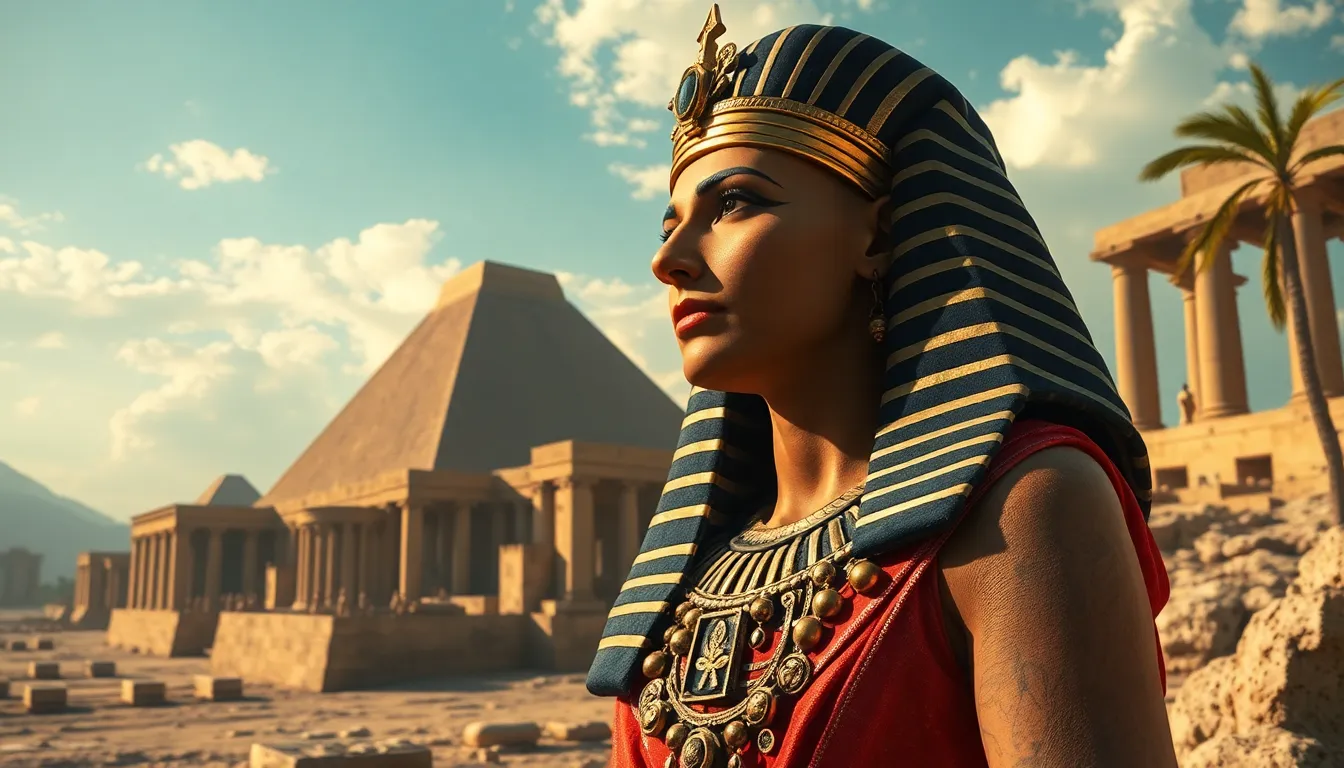
The Myths of Pharaoh Cleopatra’s Influence on Rome
I. Introduction
Cleopatra VII, the last active ruler of the Ptolemaic Kingdom of Egypt, is a figure of immense historical significance. Her reign marked the end of an era for ancient Egypt and the beginning of Roman dominance in the region. Cleopatra is often romanticized in popular culture as a beautiful seductress, captivating powerful men such as Julius Caesar and Mark Antony. However, the purpose of this article is to debunk several myths surrounding her influence on Rome and to present a more nuanced view of her legacy.
II. Historical Context: Cleopatra and the Ptolemaic Dynasty
Cleopatra ascended to the throne in 51 BC and ruled alongside her brother Ptolemy XIII, later becoming the sole ruler of Egypt. Her reign was marked by political intrigue, economic challenges, and the constant threat of Roman intervention. During her time, Rome was experiencing significant political upheaval, leading to civil wars and power struggles that would ultimately reshape the Mediterranean world.
- Cleopatra’s reign and role in Egypt: She was a skilled diplomat and a shrewd politician who sought to protect her kingdom’s sovereignty.
- Political landscape of Rome: Influential figures like Julius Caesar and Pompey were vying for power, leading to a fragile political environment.
- Relationship dynamics: Cleopatra’s relationships with Roman leaders were as much about political alliances as they were about personal connections.
III. Myth 1: Cleopatra as a Seductress
One of the most pervasive myths about Cleopatra is that she was merely a seductress who used her beauty to manipulate powerful men. This narrative undermines her intelligence and political savvy. Historical accounts, such as those by Plutarch and Dio Cassius, reveal that Cleopatra was well-educated, fluent in several languages, and adept at navigating the treacherous waters of political alliances.
- Political acumen: Cleopatra was not just a pawn; she was a ruler who understood the importance of strategic alliances.
- Intellectual prowess: Her education included philosophy, astronomy, and mathematics, showcasing her capabilities beyond mere physical allure.
- Impact on legacy: The portrayal of Cleopatra as a seductress has overshadowed her achievements and contributions as a leader.
IV. Myth 2: Cleopatra’s Sole Influence over Julius Caesar and Mark Antony
Another common misconception is that Cleopatra exerted sole influence over Julius Caesar and Mark Antony, manipulating them for her own gain. In reality, both men had their own ambitions that aligned with Cleopatra’s goals.
- Political motivations: Cleopatra sought to secure her throne and maintain Egypt’s independence, while Caesar and Antony aimed to expand their power.
- Mutual ambition: Their relationships were complex partnerships rather than one-sided manipulations.
- Puppet master misconception: This myth simplifies the intricate political dynamics at play, reducing Cleopatra to a mere figurehead.
V. Myth 3: Cleopatra’s Role in the Fall of the Roman Republic
The narrative that Cleopatra played a pivotal role in the fall of the Roman Republic is often exaggerated. While she was involved in Roman politics, many other factors contributed to the Republic’s decline.
- Factors leading to decline: Internal strife, civil wars, and the ambitions of leaders like Caesar and Pompey were crucial to the Republic’s fate.
- Exaggerated involvement: Cleopatra’s influence was significant, but not singularly responsible for the Republic’s collapse.
- Roman propaganda: Much of the narrative surrounding Cleopatra was shaped by Roman historians who sought to vilify her and diminish her role.
VI. Cleopatra’s Cultural Impact on Rome
Beyond her political maneuvers, Cleopatra’s reign significantly influenced Roman culture. The exchange of ideas and customs between Egypt and Rome enriched both societies.
- Cultural exchange: Cleopatra’s court became a center of learning and culture, attracting scholars, artists, and philosophers.
- Influence on art and literature: Roman art and literature began to incorporate Egyptian themes, reflecting Cleopatra’s legacy.
- Religious impact: The worship of Egyptian deities, particularly Isis, began to spread within Roman culture, showcasing Cleopatra’s lasting influence.
VII. The Enduring Myths: Cleopatra in Modern Media
Modern representations of Cleopatra often perpetuate the myths surrounding her life and legacy. Films, literature, and art have frequently depicted her as a mere seductress rather than a formidable leader.
- Media representations: Many films, such as the 1963 adaptation starring Elizabeth Taylor, emphasize her beauty over her intelligence.
- Inaccurate portrayals: Literature often romanticizes her relationships at the expense of her political achievements.
- Implications for historical understanding: These portrayals shape public perception and hinder a true understanding of her influence.
VIII. Conclusion
In summary, the myths surrounding Cleopatra’s influence on Rome often overshadow her true legacy. By debunking these myths, we can appreciate her as a skilled politician, a cultural icon, and a significant historical figure. Understanding Cleopatra through a historical lens allows us to recognize her contributions to both Egyptian and Roman history. We encourage further exploration of her life and impact, urging a more nuanced view of this remarkable queen.