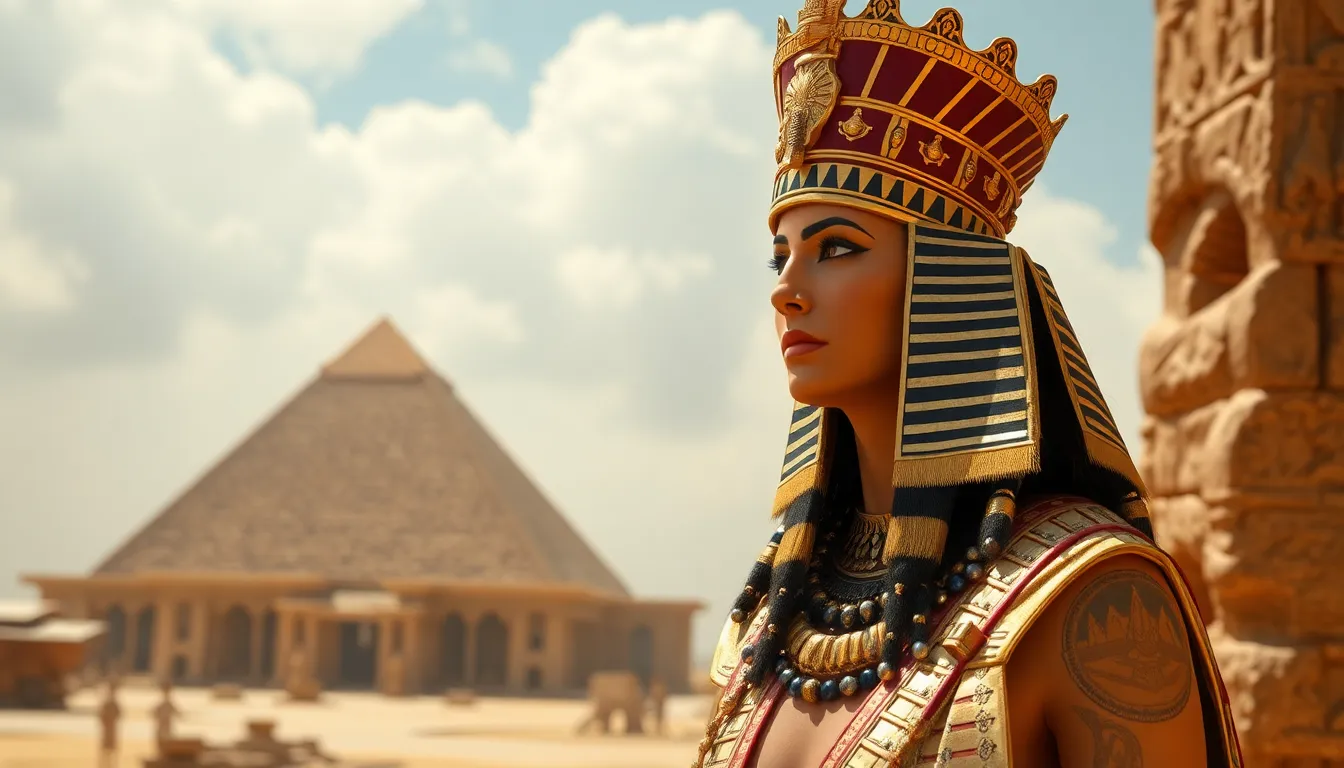
The Myths of Pharaoh Cleopatra’s Cultural Impact
I. Introduction
Cleopatra VII, the last active ruler of the Ptolemaic Kingdom of Egypt, is one of history’s most fascinating figures. Her reign marked a pivotal moment in the ancient world, where the political landscape of Egypt was interwoven with that of Rome. Cleopatra’s historical significance goes beyond her political maneuvers; her image has been romanticized and sensationalized in popular culture, leading to a myriad of myths and misconceptions about her life and legacy.
The purpose of this article is to explore and debunk the myths surrounding Cleopatra’s cultural impact, providing a clearer understanding of her true legacy and relevance in both ancient and modern contexts.
II. Historical Context of Cleopatra’s Reign
A. Brief biography of Cleopatra VII
Cleopatra VII was born in 69 BC in Alexandria, Egypt. She belonged to the Ptolemaic dynasty, which was of Macedonian Greek origin. She ascended the throne in 51 BC, initially co-ruling with her younger brother Ptolemy XIII. Cleopatra was known for her intelligence, political insight, and multilingual abilities, speaking several languages fluently.
B. The political landscape of Egypt and its significance in the ancient world
During Cleopatra’s reign, Egypt was a significant cultural and economic center. The political landscape was marked by tensions with Rome, which was expanding its influence throughout the Mediterranean. Cleopatra’s reign came at a time when Egypt was caught between the ambitions of powerful Roman leaders, including Julius Caesar and Mark Antony.
C. Cleopatra’s role as a ruler and diplomat
Cleopatra was not just a figurehead; she was a skilled diplomat. She forged alliances with powerful Roman leaders, which were crucial for her kingdom’s survival and prosperity. Her ability to navigate complex political waters demonstrated her astuteness as a ruler.
III. The Myth of Cleopatra as a Seductress
A. Analysis of the portrayal of Cleopatra in literature and film
One of the most enduring myths about Cleopatra is that of her as a seductress, a femme fatale who used her beauty to manipulate powerful men. This image has been perpetuated through literature, such as Shakespeare’s “Antony and Cleopatra,” and various films, including the iconic 1963 movie starring Elizabeth Taylor.
B. The impact of this myth on perceptions of female power
The portrayal of Cleopatra as a seductress has profound implications for how female power is perceived. It often reduces women in positions of authority to mere objects of desire, overshadowing their intelligence and capabilities. This stereotype has persisted, affecting how women in leadership are viewed in contemporary society.
C. Contrast with historical accounts of her intelligence and political acumen
Contrary to the seductive image, historical accounts emphasize Cleopatra’s political intelligence and strategic acumen. She was educated, well-versed in diplomacy, and capable of ruling effectively. Her alliances with powerful Romans were not merely romantic; they were politically motivated decisions to safeguard her kingdom.
IV. Cleopatra’s Cultural Patronage
A. Her contributions to the arts and education in Alexandria
Cleopatra was a patron of the arts and education, particularly in Alexandria, which was a hub of knowledge and culture. She supported scholars, artists, and philosophers, contributing to the intellectual vibrancy of her time.
B. The blending of Greek and Egyptian cultures during her reign
Under Cleopatra’s rule, there was a significant blending of Greek and Egyptian cultures. She embraced her Egyptian heritage while also promoting Hellenistic traditions, which enriched the cultural landscape of her kingdom.
C. Lasting effects of her patronage on subsequent generations
- Encouragement of literary and scientific advancements
- Support for artistic expressions that combined various cultural elements
- Influence on the cultural identity of Alexandria and beyond
V. The Myth of Racial Identity
A. Discussion of Cleopatra’s ethnicity and ancestry
The question of Cleopatra’s racial identity has sparked much debate. As a member of the Ptolemaic dynasty, she was of Greek Macedonian descent. However, she also embraced Egyptian culture, which has led to varying interpretations of her identity.
B. The implications of her identity on modern discussions of race
Cleopatra’s mixed heritage has implications for contemporary discussions on race and identity, challenging the often simplistic narratives surrounding historical figures. Her legacy serves as a reminder that identity is complex and multifaceted.
C. The impact of racial myths in contemporary culture
The myths surrounding Cleopatra’s racial identity continue to influence modern portrayals and discussions. These myths can reinforce stereotypes and hinder a nuanced understanding of historical figures.
VI. Cleopatra’s Influence on Fashion and Beauty Standards
A. Examination of Cleopatra’s image in ancient art and modern interpretations
Cleopatra has been depicted in various forms of art throughout history, each interpretation reflecting the era’s beauty standards. Ancient coins, sculptures, and paintings often depicted her with distinct features that became emblematic of beauty.
B. The legacy of her style and beauty in fashion history
Cleopatra’s image has influenced fashion throughout the ages, with her iconic styles inspiring designers and artists. Her use of cosmetics, jewelry, and elaborate hairstyles set trends that resonated through centuries.
C. Misconceptions surrounding beauty ideals and their origins
The romanticization of Cleopatra’s beauty often oversimplifies the complex nature of beauty ideals. The idea that beauty is synonymous with power can distort historical narratives, overshadowing the multifaceted nature of her contributions to culture and politics.
VII. The Legacy of Cleopatra in Modern Media
A. The portrayal of Cleopatra in films, books, and other media
Cleopatra’s legacy continues to thrive in modern media, with numerous films, television shows, and books depicting her life. Each representation often reflects the cultural values and beliefs of the time it was created.
B. How these representations shape public perception
These portrayals significantly shape public perception of Cleopatra, often reinforcing myths and romanticized narratives. The ongoing fascination with her story highlights the importance of critical engagement with historical representations.
C. The ongoing fascination with her story in contemporary culture
Cleopatra remains a symbol of intrigue and mystery, captivating audiences with her complex life story. This fascination is indicative of broader themes of female empowerment, political maneuvering, and cultural identity.
VIII. Conclusion
In summary, Cleopatra VII is a figure shrouded in myth, whose true legacy is often obscured by sensationalized narratives. Her intelligence, political acumen, and cultural contributions are integral to understanding her impact on history.
It is crucial to distinguish fact from fiction when examining Cleopatra’s legacy. By doing so, we can appreciate her true cultural impact and relevance today, recognizing her as a powerful ruler and a complex individual who navigated the intricate dynamics of her time.
Cleopatra’s story is not just one of beauty and seduction; it is a testament to the power of a woman who shaped an era and continues to inspire generations.