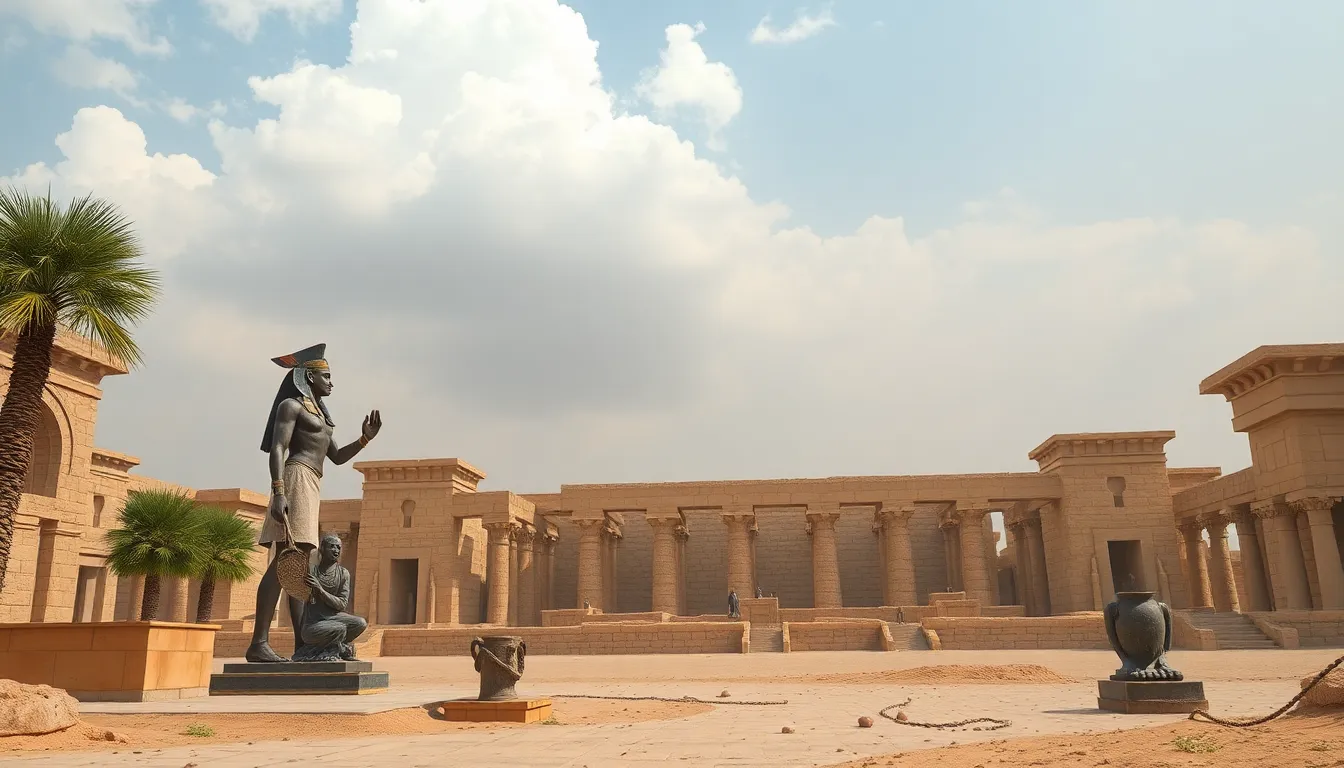
The Myths of Pharaoh Akhenaten’s Religious Reforms
I. Introduction
Akhenaten, one of ancient Egypt’s most controversial pharaohs, ruled during the 18th Dynasty, approximately from 1353 to 1336 BCE. His reign is often characterized by a radical departure from traditional religious practices, primarily through the promotion of worship centered on the sun disk, Aten. This shift in religious focus is of great importance as it not only transformed spiritual life in Egypt but also had profound implications for the socio-political landscape of the time.
This article aims to debunk common myths surrounding Akhenaten’s religious changes, particularly the misconceptions that have emerged over centuries regarding his role as a reformer and a monotheist.
II. Historical Context of Akhenaten’s Reforms
To understand Akhenaten’s religious reforms, it is essential to examine the context in which they occurred. Prior to Akhenaten, the religious landscape in Egypt was characterized by polytheism, with a multitude of gods and goddesses worshiped across various temples. Major deities such as Amun, Ra, and Osiris played central roles in the spiritual and daily lives of the Egyptians.
The socio-political landscape during Akhenaten’s reign was also complex, marked by both internal and external pressures. The rise of the Amarna period saw a shift in power dynamics, not only within Egypt but also in its relations with neighboring regions.
Aten worship was introduced as a state religion, emphasizing the worship of the sun disk as the sole god, thereby challenging the traditional pantheon.
III. Myth 1: Akhenaten Was the First Monotheist
One of the most persistent myths surrounding Akhenaten is that he was the first monotheist. To address this, it is essential to clarify the distinction between monotheism and henotheism:
- Monotheism: The belief in a single, all-powerful god.
- Henotheism: The worship of one god without denying the existence of others.
Evidence suggests that Akhenaten practiced henotheism rather than true monotheism. While he elevated Aten above all other gods, he did not entirely eradicate the worship of other deities. Inscriptions and archaeological findings indicate that polytheistic practices continued both during and after his reign.
Furthermore, comparisons with other ancient religions, such as the worship of Yahweh in Israel, reveal different contexts and developments in religious thought.
IV. Myth 2: Akhenaten’s Reforms Were Universally Accepted
Another common misconception is that Akhenaten’s religious reforms were embraced by all Egyptians. The reality is quite different:
- The traditional priests and temples held significant power and influence, which was threatened by Akhenaten’s reforms.
- Evidence of resistance can be found in various artifacts and texts that reflect dissent against the imposition of Aten worship.
- The impact of these reforms on Egyptian society was divisive, leading to a cultural rift that affected art, politics, and daily life.
Many Egyptians clung to their traditional beliefs, leading to a complex relationship with the new religious order.
V. Myth 3: Akhenaten Completely Abolished Other Deities
Contrary to the belief that Akhenaten abolished the worship of all other deities, examination of temple records and inscriptions reveals a different picture:
- Evidence shows that other gods were still worshiped during Akhenaten’s reign, albeit to a lesser extent.
- Some temples dedicated to traditional deities continued to function, indicating that while Akhenaten promoted Aten, he did not eradicate older religious practices.
- The complexity of Akhenaten’s religious policies suggests a more nuanced approach rather than outright abolition.
VI. Myth 4: Akhenaten’s Reforms Were Unique in Ancient History
While Akhenaten’s reforms were indeed significant, they were not entirely unique in the context of ancient history. Similar shifts can be observed in other cultures:
- Reformative leaders such as Zoroaster in Persia and Josiah in Israel also attempted to centralize worship and redefine religious practices.
- Other ancient cultures, such as the Hittites and the Babylonians, experienced shifts in worship that mirrored some aspects of Akhenaten’s reforms.
- Cultural exchange played a crucial role in the development of religious practices, and Akhenaten’s reforms can be seen as part of a broader trend of religious evolution in the ancient world.
VII. The Legacy of Akhenaten’s Religious Reforms
The legacy of Akhenaten’s religious reforms is complex, with both short-term and long-term effects on Egyptian religion:
- In the short term, Akhenaten’s reforms led to a significant cultural transformation, particularly in art and architecture, as seen in the unique style of Amarna art.
- Long-term effects included a backlash against Atenism following Akhenaten’s death, leading to a restoration of traditional polytheistic practices.
- Historical interpretations of Akhenaten have evolved, with modern scholars recognizing his influence on later religious thought, including potential connections to the development of monotheistic religions.
VIII. Conclusion
In summary, the myths surrounding Akhenaten’s religious reforms reveal a great deal about both the man himself and the complexities of ancient Egyptian religion. By debunking these myths, we gain a clearer understanding of Akhenaten’s impact on his society and the significance of his legacy.
Understanding Akhenaten’s true impact encourages further research and exploration into the fascinating world of ancient Egyptian religion, highlighting the intricate tapestry of beliefs that shaped one of history’s most intriguing civilizations.