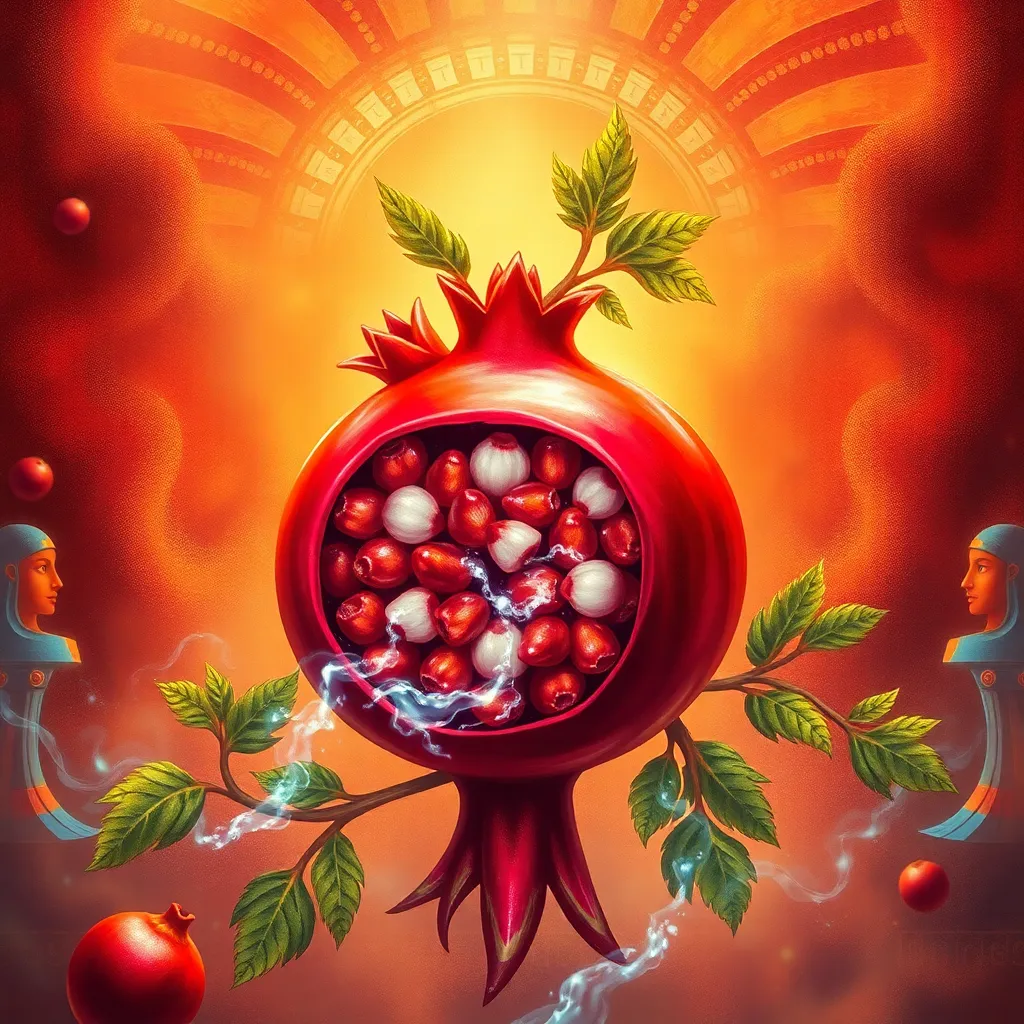
The Mythology of the Sacred Pomegranate in Egypt
I. Introduction
The pomegranate, with its vibrant red hue and jewel-like seeds, has captured the imagination of many cultures throughout history. Its significance spans across various civilizations, symbolizing life, death, and rebirth. In ancient Egypt, the pomegranate held a unique and profound role, embodying themes of fertility, creation, and the afterlife.
This article explores the multifaceted symbolism of the pomegranate within Egyptian mythology, examining its historical context, associations with deities, and representations in art and funerary practices.
II. The Pomegranate: A Symbol of Life and Fertility
In ancient Egypt, the pomegranate was more than just a fruit; it was a powerful symbol of life and fertility. The fruit’s many seeds were often interpreted as a metaphor for abundance and regeneration.
Historically, pomegranates were cultivated in Egypt as early as the 3rd millennium BCE. Archaeological evidence suggests that they were a staple in the diet of ancient Egyptians and were also associated with various cultural practices.
- Fertility: The pomegranate was often linked to the goddess Hathor, who represented motherhood and fertility.
- Cycle of Life: The fruit’s ability to produce numerous seeds made it a symbol of the cyclical nature of life, death, and rebirth.
III. The Pomegranate in Egyptian Creation Myths
Pomegranates also feature in various creation myths that explain the origins of the world and humanity. These myths often highlight the fruit’s role in the cycle of creation and destruction.
For instance, some interpretations suggest that the pomegranate represents the primordial chaos from which the ordered universe emerged. Its seeds symbolize the potential for life that springs from chaos, aligning with the Egyptian belief in rebirth and regeneration.
- The Creation of the World: In some myths, the pomegranate is tied to the emergence of the first gods from chaos, reflecting the fruit’s life-giving properties.
- Symbolic Interpretations: The act of planting pomegranate seeds is viewed as a metaphor for creation, suggesting that life springs from the earth.
IV. Deities and the Pomegranate
The pomegranate played a significant role in the worship of several Egyptian deities, particularly Hathor, who was often depicted with pomegranates or associated with their symbolism.
Hathor, the goddess of love, beauty, and motherhood, was often revered as a protector of women and children. The pomegranate, in her context, represented fertility and the nurturing aspects of motherhood.
- Hathor: Rituals involving pomegranates were common in her temples, where offerings were made to invoke her blessings for fertility and prosperity.
- Osiris and Isis: The pomegranate was also connected to the myth of Osiris and Isis, symbolizing resurrection and the eternal cycle of life.
V. The Pomegranate in Funerary Practices
Pomegranates were not only symbols of life but also played a crucial role in funerary practices. Their presence in tombs and burial rituals highlighted their association with the afterlife and resurrection beliefs.
In ancient Egyptian funerary customs, the pomegranate was often included in offerings to the deceased, symbolizing the hope for rebirth and eternal life in the afterworld.
- Burial Rituals: Pomegranates were placed in tombs as offerings to ensure a prosperous afterlife.
- Tomb Art: Artistic depictions of pomegranates were common in tomb paintings, emphasizing their significance in the journey after death.
VI. Artistic Representations of the Pomegranate
The pomegranate has been a recurring motif in ancient Egyptian art and architecture. Its vibrant representation can be found in various forms, from hieroglyphics to elaborate mosaics.
Artists often portrayed the pomegranate in a way that highlighted its beauty and symbolic significance, using it as a decorative element that conveyed deeper meanings.
- Hieroglyphics: Pomegranates were used in hieroglyphic inscriptions, often symbolizing fertility and abundance.
- Mosaics and Reliefs: Pomegranate motifs adorned temples and tombs, showcasing the fruit’s importance in both life and death.
VII. The Pomegranate’s Legacy in Ancient Egyptian Culture
The influence of the pomegranate extended beyond mythology and religion; it significantly impacted agriculture and cuisine in ancient Egypt.
Pomegranates were cultivated for their nutritional value and were a popular ingredient in various dishes, highlighting their importance in Egyptian cuisine.
- Agriculture: The cultivation of pomegranates contributed to the agricultural diversity of ancient Egypt.
- Festivals and Celebrations: Pomegranates were often featured in festivals, symbolizing abundance and the joy of life.
VIII. Conclusion
The pomegranate in ancient Egyptian mythology is a rich symbol of life, fertility, and resurrection. Its multifaceted role in creation myths, worship of deities, funerary practices, and artistic representations underscores its significance in Egyptian culture.
As we reflect on the enduring legacy of the pomegranate, we recognize its relevance not only in ancient beliefs but also in contemporary interpretations of life and rebirth. The pomegranate continues to inspire, reminding us of the interconnectedness of life and the sacredness of nature.