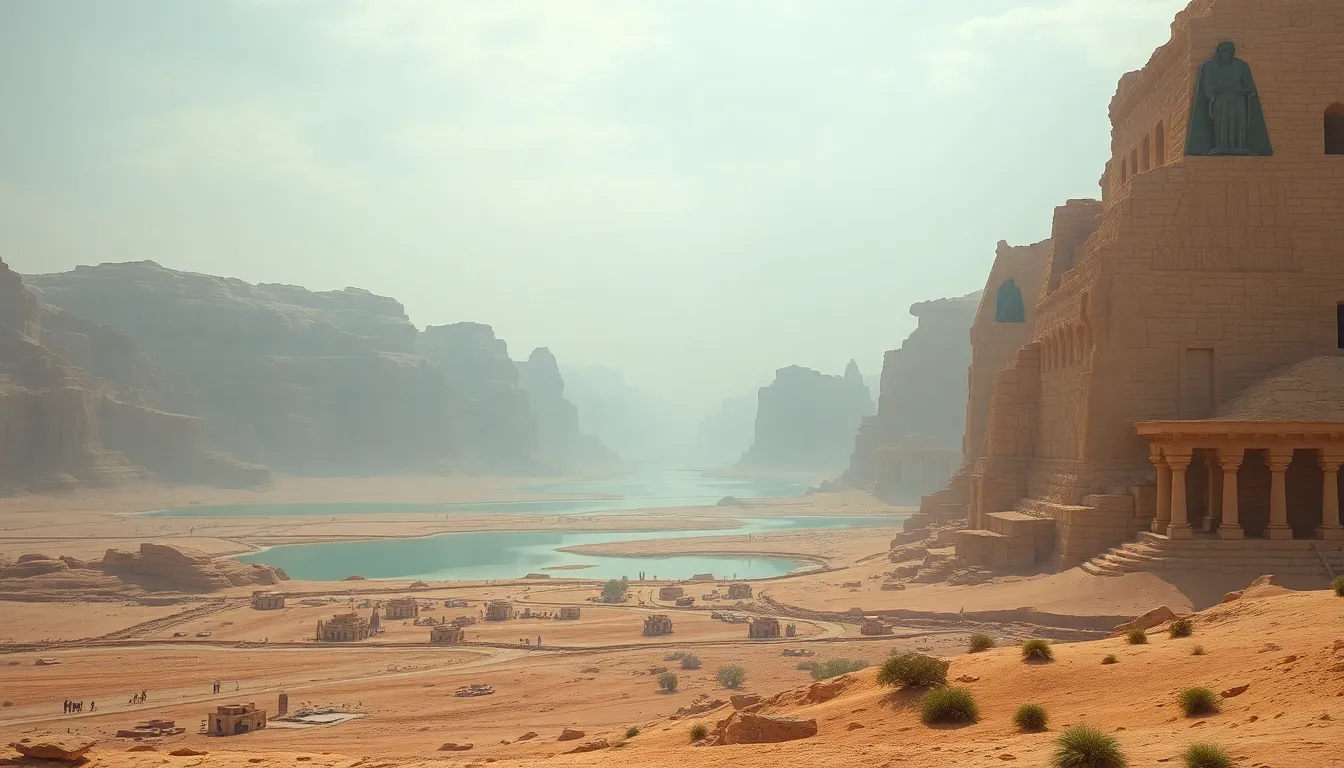
The Mythical Landscape of the Faiyum Oasis: An Exploration
I. Introduction to the Faiyum Oasis
The Faiyum Oasis, located southwest of Cairo, Egypt, is a remarkable geological and cultural treasure. Nestled between the Libyan Desert to the west and the Nile River to the east, it holds a unique position in both the geography and history of ancient Egypt.
Historically, Faiyum has been inhabited since prehistoric times, serving as a vital agricultural center due to its fertile lands and abundant water resources. The oasis has always been significant for its natural beauty, but it also plays a crucial role in Egyptian mythology, often associated with various deities and legends.
II. The Natural Wonders of the Faiyum Oasis
A. Unique geographical features
The Faiyum Oasis is characterized by its varied landscapes, including:
- Rolling sand dunes
- Lush farmland
- Rich wetlands
One of the most notable features of the oasis is the presence of Lake Qarun, a large saltwater lake that is the largest in Egypt. This lake not only enhances the beauty of the oasis but also supports a unique ecosystem.
B. Flora and fauna of the region
The biodiversity in the Faiyum Oasis is remarkable. The region is home to:
- Various species of birds, including pelicans and herons
- Unique plant life, such as papyrus and date palms
- Wildlife including gazelles and foxes
This rich biodiversity has made the oasis a critical area for conservation and ecological studies.
C. The role of Lake Qarun in the ecosystem
Lake Qarun is not just a geographical feature; it is essential for the ecosystem of the Faiyum Oasis. It serves as:
- A habitat for numerous aquatic species
- A source of irrigation for surrounding farmlands
- A recreational area for locals and tourists alike
The lake has been revered in local culture and mythology, often seen as a symbol of life and sustenance.
III. Historical Significance of the Faiyum Oasis
A. Ancient settlements and archaeological findings
Archaeological excavations in the Faiyum Oasis have revealed a wealth of information about ancient Egyptian civilization. Notable findings include:
- Ruins of ancient temples and settlements
- Artifacts such as pottery, tools, and sculptures
- Evidence of early agricultural practices
These discoveries provide insight into the daily lives of the oasis’s ancient inhabitants and their connection to the surrounding environment.
B. The oasis in the era of the Pharaohs
During the time of the Pharaohs, the Faiyum Oasis was an essential agricultural hub. It contributed significantly to:
- The production of crops such as wheat and barley
- Trade routes connecting the Nile with the desert
- The establishment of towns like Crocodilopolis, dedicated to the worship of the crocodile god Sobek
The oasis thrived under various dynasties, serving as a retreat for rulers and a center for cultural exchange.
C. Contributions to agriculture and trade
The fertile lands of the Faiyum Oasis enabled the ancient Egyptians to develop advanced agricultural techniques, including:
- Shaduf irrigation systems
- Crops rotation and cultivation
- Fish farming in Lake Qarun
This agricultural wealth allowed the oasis to become an integral part of Egypt’s economy, facilitating trade and interaction with neighboring regions.
IV. Mythology and Folklore Surrounding the Faiyum Oasis
A. Deities associated with the oasis
The Faiyum Oasis is steeped in mythology, particularly concerning the worship of deities such as:
- Sobek: The crocodile god, symbolizing fertility and protection
- Horus: The falcon-headed god, associated with kingship and the sky
- Osiris: The god of the afterlife, often linked to resurrection and fertility
These deities were central to the spiritual life of the inhabitants, influencing festivals and rituals.
B. Legends and stories from local culture
Local folklore is rich with tales that reflect the significance of the oasis and its deities. Stories often include themes of:
- Creation myths related to the Nile and fertility
- Legends of heroic figures who protected the oasis
- Folklore explaining natural phenomena, like the rise and fall of Lake Qarun
These stories serve to connect the people of Faiyum to their land and heritage.
C. The impact of myths on the region’s identity
The myths and legends of the Faiyum Oasis play a pivotal role in shaping the cultural identity of its inhabitants. They foster:
- A sense of belonging and community among the locals
- Preservation of traditions and practices over generations
- Attraction for tourists interested in ancient history and spirituality
Mythology remains a cornerstone of the oasis’s cultural fabric.
V. The Faiyum Oasis in Art and Literature
A. Representation in ancient Egyptian art
Ancient Egyptian art frequently depicted scenes from the Faiyum Oasis, showcasing:
- Fertility and agricultural practices
- Images of deities like Sobek
- Daily life in the oasis, including fishing and farming
These artworks not only serve as historical records but also as expressions of reverence for the natural world.
B. Influences on modern literature and art
The Faiyum Oasis continues to inspire modern artists and writers who draw upon its rich history and mythology. Themes of:
- Nature and spirituality
- Resilience and survival
- Cultural heritage and identity
are prevalent in contemporary works, reflecting the oasis’s enduring legacy.
C. The oasis as a muse for poets and writers
Throughout history, poets and writers have found inspiration in the Faiyum Oasis. Its breathtaking landscapes and rich cultural narratives have led to:
- Poems celebrating the beauty of nature
- Stories reflecting the struggles and triumphs of its people
- Artistic expressions that connect the past with the present
The oasis remains a source of creativity and inspiration for many.
VI. Modern-Day Significance and Preservation Efforts
A. Tourism and its economic impact
Today, the Faiyum Oasis is a popular destination for tourists seeking to explore its historical and natural wonders. Tourism contributes significantly to the local economy by:
- Providing jobs and income for local residents
- Supporting businesses that cater to visitors
- Encouraging the preservation of cultural and natural heritage
However, sustainable tourism practices are essential to protect the oasis’s delicate ecosystem.
B. Conservation initiatives for the environment and heritage
Efforts to conserve the Faiyum Oasis include:
- Restoration of archaeological sites
- Protection of natural habitats and wildlife
- Community engagement in heritage preservation
These initiatives aim to balance the needs of tourism while safeguarding the oasis’s unique environment and cultural heritage.
C. Challenges faced by the Faiyum Oasis today
The Faiyum Oasis faces several challenges, including:
- Environmental degradation from overexploitation of resources
- Climate change impacting water levels and biodiversity
- The necessity for sustainable development practices to support local communities
Addressing these challenges is critical for the oasis’s future sustainability.
VII. Cultural Practices and Traditions of the Faiyum Oasis
A. Local customs and traditions
The people of the Faiyum Oasis maintain a rich tapestry of customs