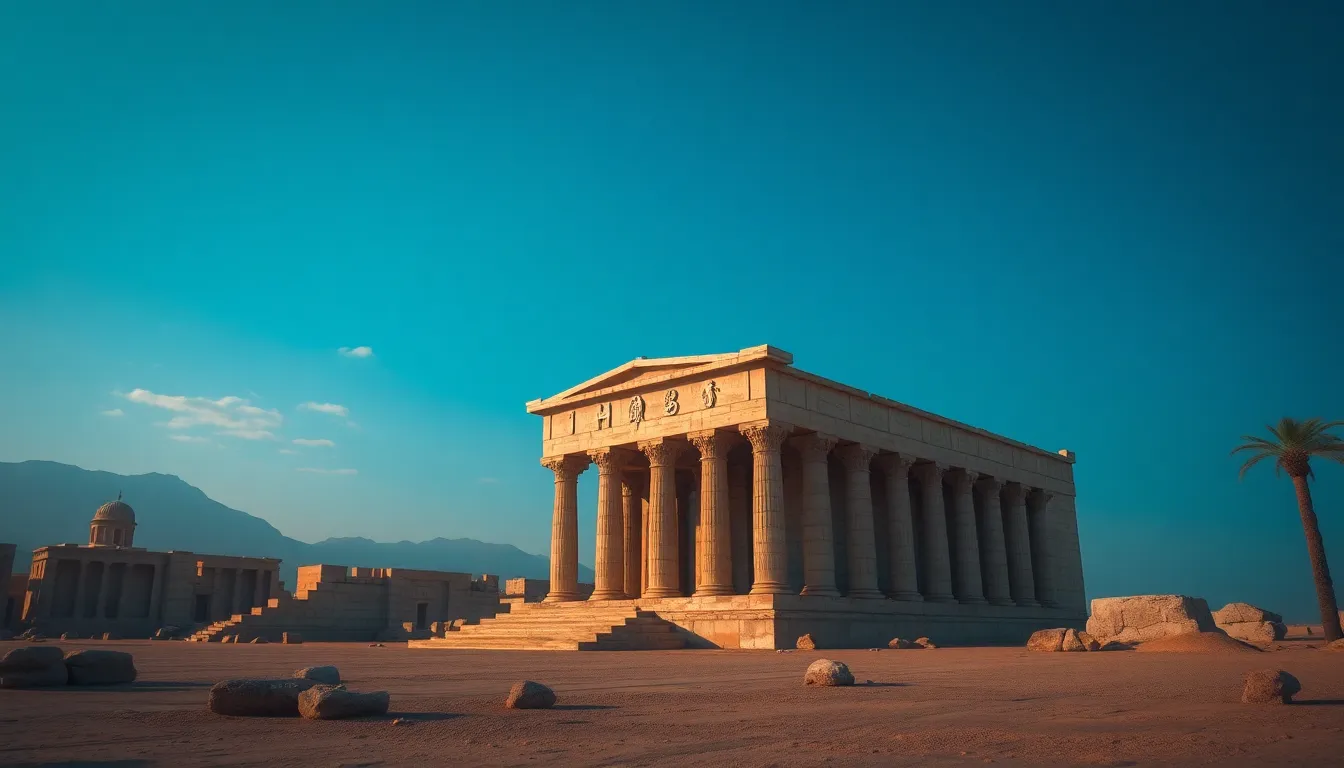
The Mythical Geography of the Temple of Philae
I. Introduction
The Temple of Philae, situated on Philae Island in Lake Nasser, is one of the most iconic and important religious sites in ancient Egypt. Renowned for its stunning architecture and rich historical significance, the temple served as a major center of worship for the goddess Isis. The allure of Philae extends beyond its physical beauty; it is steeped in mythology and ancient cultural practices, making it a fascinating subject of study.
This article aims to explore the mythical geography of the Temple of Philae, examining its historical context, geographical setting, the deities associated with it, and the myths and legends that have shaped its legacy.
II. Historical Context of the Temple of Philae
The Temple of Philae was constructed during the Ptolemaic period, around the 4th century BCE, and continued to be expanded and renovated under Roman rule. Its architectural features are a testament to the artistic and engineering prowess of the ancient Egyptians.
- Construction and Architectural Features: The temple complex is characterized by grand columns, intricate hieroglyphics, and beautifully crafted reliefs that depict various deities and scenes from mythology.
- Role in Ancient Egyptian Religion: Primarily dedicated to Isis, the temple served as a pilgrimage site where worshippers sought her blessings, particularly in matters of fertility and healing.
- Relocation Due to the Aswan Dam: The completion of the Aswan Dam in the 1960s led to the flooding of Philae Island. To preserve the temple, UNESCO initiated a massive relocation project, moving the entire complex to higher ground.
III. The Mythical Landscape of Philae
The Temple of Philae is not only an architectural marvel but also a site imbued with mythological significance. Its geographical setting plays a crucial role in its spiritual ambiance.
- Description of the Temple’s Geographical Setting: The temple is located on an island in the Nile, surrounded by beautiful landscapes that enhance its mystical aura. Its proximity to the river, a lifeline of ancient Egypt, adds to its sacredness.
- Connection to the Nile and Its Significance: The Nile was viewed as a divine entity, and its annual flooding was essential for agriculture. The temple’s location symbolizes the connection between the earthly and divine realms.
- Surrounding Islands and Their Mythological Narratives: Nearby islands, such as Bigeh and the island of Philae, are steeped in myths, including tales of divine encounters and the creation of the world.
IV. Deities Associated with the Temple
The Temple of Philae is primarily associated with the goddess Isis, but it also honors several other deities integral to ancient Egyptian mythology.
- Isis: The Central Goddess of Philae: Isis was revered as the goddess of magic, motherhood, and fertility. She is often depicted in the temple’s reliefs and was believed to have protective powers.
- Osiris and Their Mythological Relationship: Isis was the wife of Osiris, the god of the afterlife. Their relationship embodies themes of resurrection and eternal life, which were central to ancient Egyptian beliefs.
- Other Deities Worshipped at the Temple: The temple complex also included shrines dedicated to other important deities such as Horus, the falcon god, and Hathor, the goddess of love and joy.
V. Sacred Spaces within the Temple Complex
The Temple of Philae consists of several key structures, each imbued with symbolic meanings and significance in the context of ancient rituals.
- Key Structures and Their Symbolic Meanings: The temple features various structures, including the Great Temple of Isis, which symbolizes resurrection and fertility.
- The Significance of Sacred Lakes and Gardens: The sacred lakes within the temple complex were believed to be places of purification and healing, enhancing the spiritual experience of visitors.
- Ritual Pathways and Their Connection to Mythology: The pathways leading to the temple were designed to guide pilgrims through a journey of spiritual awakening, often mirroring the mythological journeys of the gods.
VI. Myths and Legends Surrounding Philae
The temple is steeped in numerous myths and legends that highlight its importance in ancient Egyptian culture.
- Creation Myths Linked to the Temple: The temple is associated with creation myths, particularly those involving the goddess Isis and the rebirth of Osiris after his death.
- Stories of Pilgrimage and Divine Encounters: Many pilgrims traveled to Philae seeking divine intervention for personal issues, believing that the goddess would grant them blessings.
- The Transformation of Myth into Cultural Practices: The myths surrounding the temple influenced various cultural practices, including festivals and rituals that honored the deities.
VII. Modern Interpretations and Preservation Efforts
Today, the Temple of Philae remains a crucial site for archaeological research and cultural tourism.
- Archaeological Discoveries and Their Significance: Ongoing excavations have uncovered artifacts that provide insight into ancient Egyptian life and religious practices.
- The Role of Tourism in Preserving the Temple: As a UNESCO World Heritage site, the temple attracts tourists, which helps fund preservation efforts and raises awareness of its historical significance.
- Interpretation of Philae’s Mythology in Contemporary Culture: Modern interpretations of Philae’s mythology continue to inspire artists, writers, and scholars, keeping the ancient stories alive.
VIII. Conclusion
The Temple of Philae is a remarkable testament to ancient Egyptian spirituality and mythology. Its mythical geography, rich history, and profound connection to the divine provide a deeper understanding of the beliefs that shaped ancient Egyptian civilization.
As we explore the enduring legacy of Philae, it becomes evident that this sacred site is more than just a historical monument; it is a bridge to understanding the complexities of ancient beliefs and practices. We invite you to further explore Philae and appreciate its significance in the tapestry of Egyptian mythology.