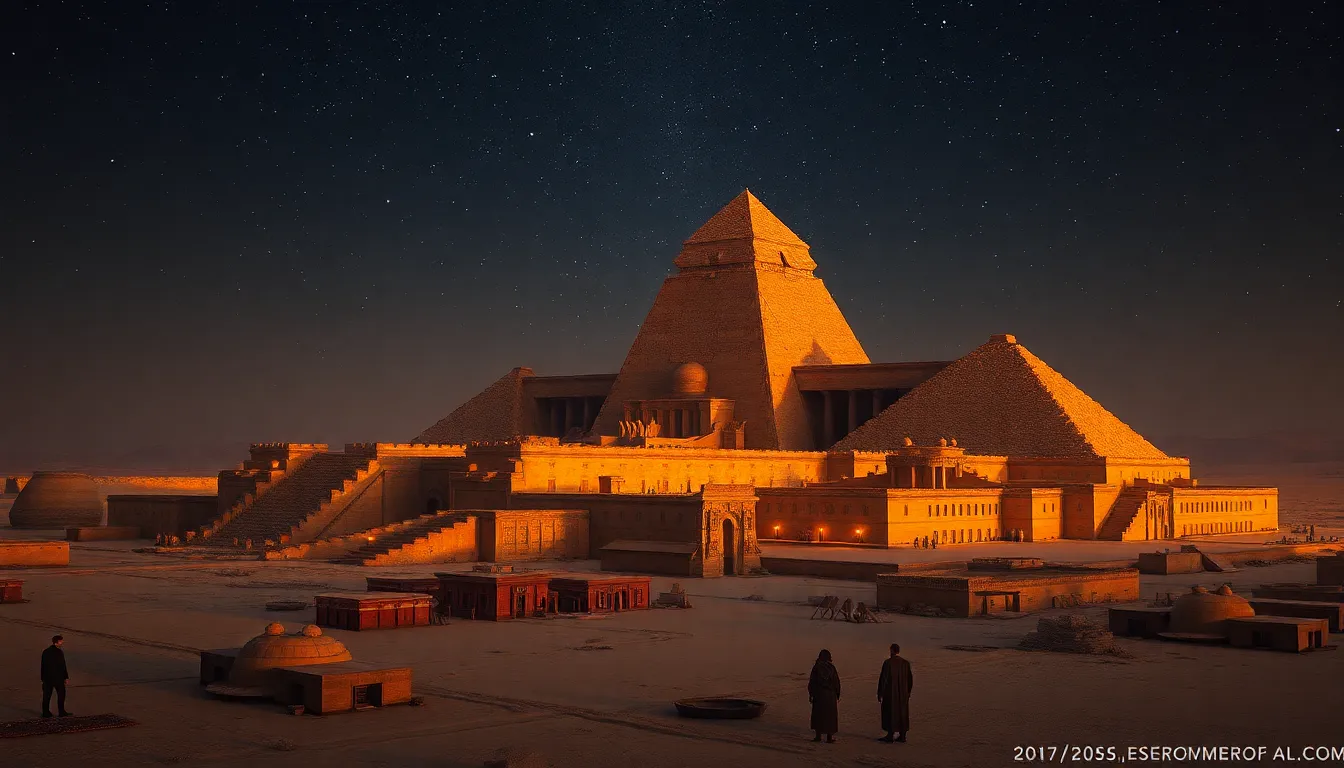
The Mythical Geography of the City of Saqqara
I. Introduction
Saqqara, located just southwest of Cairo, is one of the most significant archaeological sites in Egypt. Known primarily for its vast necropolis and the iconic Step Pyramid of Djoser, Saqqara serves as a testament to the rich tapestry of ancient Egyptian civilization. This article delves into the mythical geography of Saqqara, exploring how ancient cultures intertwined their beliefs with the land.
The concept of mythical geography in ancient cultures refers to the way physical spaces are imbued with spiritual and mythological significance. In Egypt, the landscape was not merely a backdrop for human activity but a living part of their mythology, interwoven with the stories of gods, the afterlife, and the cosmos. This article aims to explore the myths and realities of Saqqara, shedding light on its historical context, religious significance, and the enduring legacy it holds in the collective memory of humanity.
II. Historical Context of Saqqara
Saqqara’s origins as an ancient burial ground date back to the early Dynastic Period, around 3100 BCE. It served as the necropolis for the ancient capital of Memphis and was the site of significant royal and elite burials. The establishment of Saqqara marked the beginning of the Egyptian practice of monumental tomb construction, which would evolve over millennia.
Key historical figures associated with Saqqara include:
- Djoser: The pharaoh who commissioned the Step Pyramid, the first monumental stone building in history.
- Imhotep: The architect of the Step Pyramid, revered as a deity of wisdom and medicine.
- Subsequent dynasties: Many rulers from the Third Dynasty through the Late Period contributed to the site’s significance.
Throughout various periods of Egyptian history, Saqqara evolved from a simple burial ground to a complex religious landscape, reflecting changes in belief systems, artistic expressions, and architectural advancements.
III. The Pyramids and Their Symbolism
The Step Pyramid of Djoser is a marvel of ancient architecture, consisting of six stacked mastabas that create a stepping effect. This pyramid not only initiated the age of pyramid construction but also symbolized the pharaoh’s divine connection to the gods and the afterlife.
Pyramids in ancient Egypt served several roles:
- As monumental tombs for pharaohs and elite individuals.
- As symbols of the pharaoh’s power and divine status.
- As gateways for the soul to ascend to the afterlife.
In Saqqara’s landscape, the pyramids are more than just tombs; they represent a physical manifestation of the journey to the afterlife and the eternal nature of the soul.
IV. The Sacred Animals and Their Mythical Representations
In Egyptian mythology, animals held significant power and were often associated with various deities. Sacred animals such as the ibis and the jackal were revered and played essential roles in the religious practices of the ancient Egyptians.
Animal cults flourished in Saqqara, with dedicated temples and burial sites for revered species. Some notable examples include:
- The Ibis: Associated with Thoth, the god of wisdom and writing.
- The Jackal: Linked to Anubis, the god of mummification and the afterlife.
These animals contributed to Saqqara’s mythical geography, embodying spiritual ideals and serving as intermediaries between the divine and the mortal realms.
V. Temples and Ritual Spaces
Saqqara is home to several key temples, including the Serapeum, a sacred site dedicated to the worship of the Apis bull, a manifestation of the god Ptah. Temples in Saqqara were not just places of worship but also served as centers for ritual practices and community gatherings.
The relationship between sacred spaces and mythical beliefs is deeply intertwined:
- Temples acted as conduits for divine energy and communication.
- Rituals performed within these spaces were believed to ensure the favor of the gods and a successful afterlife.
Ritual practices linked to the geography of Saqqara often included offerings, prayers, and ceremonies designed to honor the gods and support the souls of the deceased on their journey to the afterlife.
VI. The Underworld and the Journey of the Soul
The Duat, or the Egyptian underworld, is a central theme in ancient Egyptian mythology. Saqqara is often depicted as a gateway to the Duat, where the deceased would navigate through trials to reach eternal life.
Depictions of the journey of the soul can be found in the tombs and inscriptions throughout Saqqara. These artworks illustrate the challenges faced by the deceased, as well as the protection offered by deities like Anubis and Osiris. The significance of Saqqara lies in its role as a spiritual landscape that reflects the Egyptians’ beliefs about death and the afterlife.
VII. Archaeological Discoveries and Their Implications
Recent archaeological discoveries in Saqqara have unveiled new insights into ancient Egyptian beliefs and practices. Excavations have revealed:
- Well-preserved tombs with intricate hieroglyphs and artifacts.
- Evidence of animal cults and burial practices related to sacred animals.
- Ritual spaces that highlight the religious significance of the site.
These findings reshape our understanding of Saqqara’s mythical geography, demonstrating the complex interplay between myth and reality in ancient Egypt. The intersection of myth and archaeology offers a deeper appreciation of how the ancient Egyptians viewed their world and their place within it.
VIII. Conclusion
Saqqara’s mythical geography is a fascinating exploration of how ancient Egyptians integrated their beliefs into the landscape. From the monumental pyramids to the sacred animals and temples, Saqqara serves as a rich tapestry of mythology and history.
The enduring legacy of Saqqara continues to captivate modern audiences, reminding us of the profound connections between culture, spirituality, and geography. As we explore and preserve Saqqara, we honor its historical and mythical importance as a site that offers invaluable insights into the ancient world.