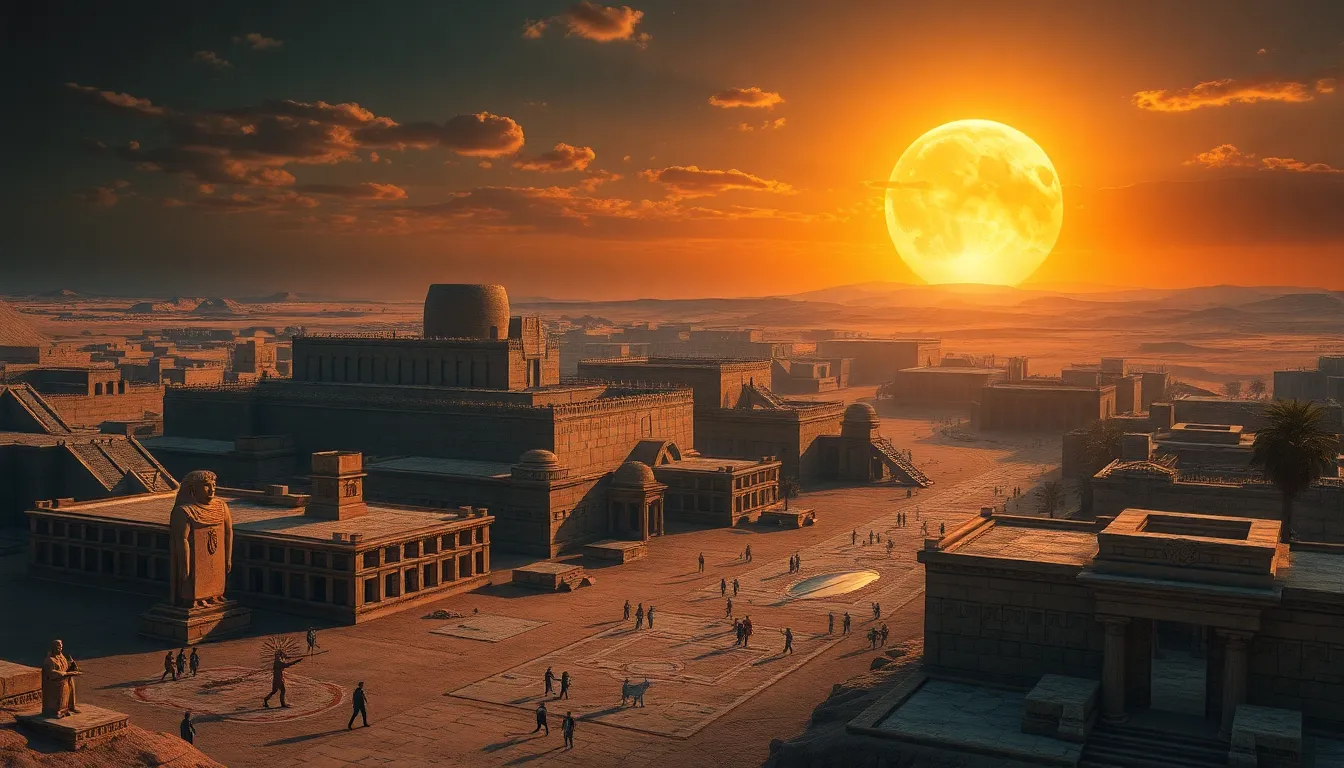
The Mythical Geography of the City of Dendera
I. Introduction
Dendera, an ancient city situated on the west bank of the Nile in Upper Egypt, holds a significant place in the historical and mythological landscape of ancient Egyptian civilization. Known for its magnificent temples and rich cultural heritage, Dendera serves as a testament to the religious beliefs and practices of the Egyptians. This article aims to explore the mythical geography of Dendera, uncovering the layers of meaning and symbolism that define this iconic location.
The exploration of Dendera’s mythical geography reveals the intertwining of history and mythology, showcasing how landscapes, architecture, and celestial phenomena contributed to the city’s spiritual identity. Through examining key themes such as the Temple of Hathor, sacred landscapes, and the Dendera Zodiac, we gain insight into the cultural significance of this ancient city.
II. The Historical Context of Dendera
The ancient Egyptian civilization flourished along the Nile River, with its geography profoundly influencing its development. Dendera, known as Iunet in ancient times, was a vital city within this civilization, serving as a center for religious practices and mythological narratives.
Dendera played a crucial role in the worship of Hathor, the goddess of love, beauty, music, and motherhood. The city’s temples were not only places of worship but also hubs for cultural and economic activities. Additionally, notable figures such as the Ptolemaic rulers contributed to the city’s grandeur, leaving behind intricate carvings and inscriptions that narrate its historical significance.
III. The Temple of Hathor: A Center of Mythical Power
The Temple of Hathor, one of the most well-preserved temples in Egypt, stands as a symbol of the city’s religious importance. Its architectural design showcases the grandeur and complexity of ancient Egyptian architecture, featuring vast halls, intricate columns, and beautifully decorated ceilings.
Hathor, often depicted as a cow goddess or a woman with cow horns, was associated with fertility and joy. The temple served as a site for various rituals and ceremonies, including the famous festival of Hathor, where music, dance, and offerings celebrated her divine presence. The rituals performed here were believed to ensure the fertility of the land and the prosperity of the people.
IV. Sacred Landscapes and Their Symbolism
The geographical features surrounding Dendera were deeply intertwined with its mythology. The Nile River, often referred to as the “giver of life,” was central to the city’s existence. It provided water for agriculture, which was essential for sustaining life and supporting the economy.
- Natural Features: The mountains surrounding Dendera were considered sacred, embodying the presence of gods and goddesses.
- Agricultural Significance: The fertility of the land, attributed to the annual flooding of the Nile, was celebrated through various mythological narratives, reinforcing the connection between nature and divinity.
These landscapes not only shaped the daily lives of the Denderites but also influenced their beliefs and practices, creating a rich tapestry of mythology that linked the physical and spiritual realms.
V. The Zodiac of Dendera: Celestial Connections
The Dendera Zodiac, discovered in the ceiling of the temple of Hathor, is a remarkable artifact that illustrates the ancient Egyptians’ understanding of astronomy and astrology. This celestial map depicts various zodiac signs and their associated constellations, emphasizing the importance of the cosmos in Denderite culture.
The astrological significance of the Dendera Zodiac provides insight into how the ancient Egyptians viewed their relationship with the heavens. Each zodiac sign was believed to influence human destiny and was associated with specific deities and mythological stories.
The influence of the zodiac extended beyond astrology; it became a part of Dendera’s cultural identity, symbolizing the connection between the earthly realm and the divine.
VI. Myths and Legends Associated with Dendera
Dendera is rich in myths and legends that have shaped its identity throughout history. The stories of Hathor and her divine interactions with both gods and mortals are central to Dendera’s mythology. One prominent myth involves the journey of Hathor to the underworld to rescue her son, Horus, emphasizing themes of motherhood and protection.
The role of mythology in Dendera not only served to explain natural phenomena but also reinforced social and cultural values. Comparatively, Dendera’s myths share similarities with other ancient mythologies, highlighting universal themes of creation, life, and death.
VII. Dendera in Modern Culture and Popular Imagination
In contemporary culture, Dendera continues to inspire artists, writers, and filmmakers. Its iconic imagery and rich history have been portrayed in various forms of media, drawing attention to its mythical heritage.
- Art and Literature: Modern artists have reinterpreted the themes of Dendera in their works, blending ancient motifs with contemporary perspectives.
- Media Portrayal: Documentaries and films often highlight Dendera’s architectural marvels and its significance in ancient mythology, captivating audiences worldwide.
- Tourism: Dendera’s temples attract tourists from around the globe, fostering a renewed interest in ancient Egyptian culture and history.
Efforts to preserve Dendera’s mythical heritage are crucial for future generations, ensuring that its stories and significance endure in the collective memory of humanity.
VIII. Conclusion
The mythical geography of Dendera presents a fascinating tapestry of history, religion, and culture. Understanding Dendera’s significance in ancient mythology offers invaluable insights into the beliefs and practices of the people who inhabited this remarkable city.
As we explore the various aspects of Dendera’s mythical landscape, we recognize the importance of preserving its heritage for future research and exploration. The stories of Dendera continue to resonate, reminding us of the enduring power of mythology in shaping human experience.
Future research directions may include deeper archaeological studies and the exploration of Dendera’s influence on neighboring cultures, further enriching our understanding of this ancient civilization.