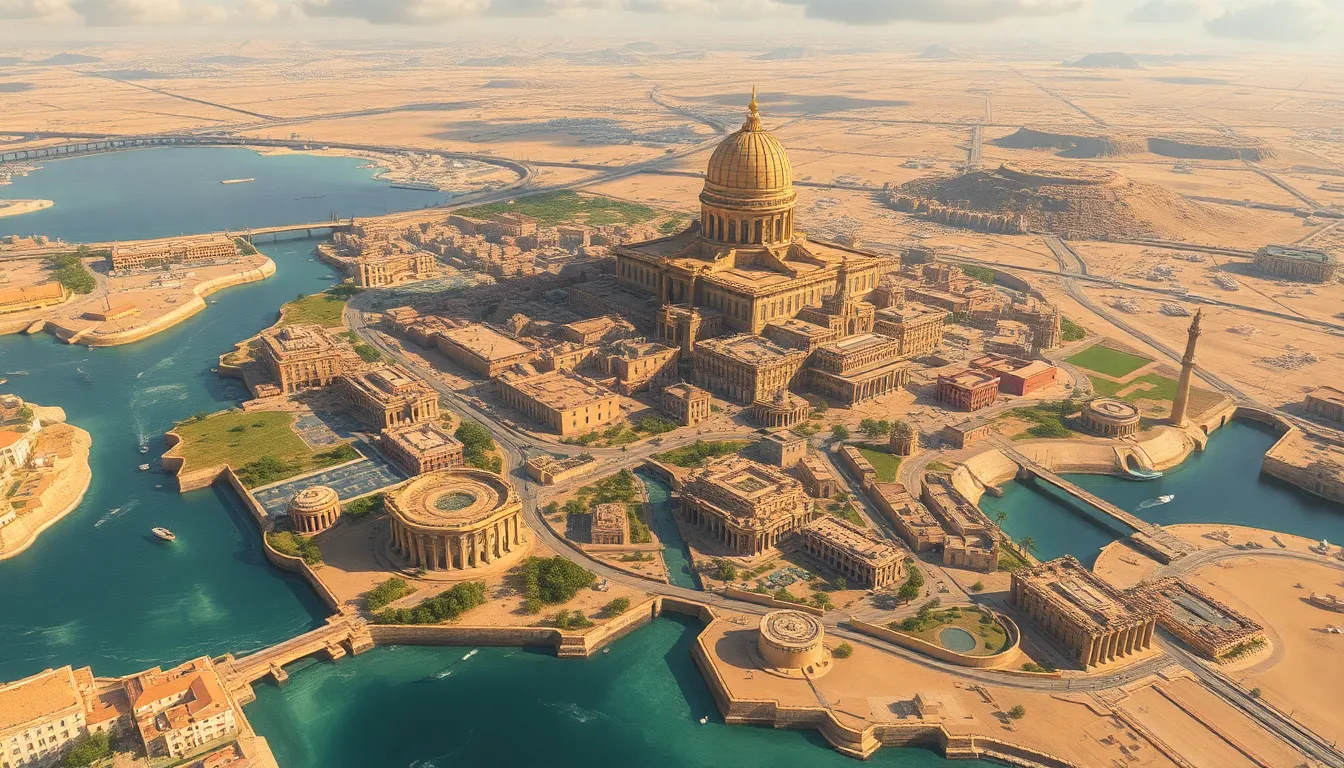
The Mythical Geography of the City of Alexandria
I. Introduction
Alexandria, founded in 331 BC by Alexander the Great, stands as one of the most significant cities in ancient history. Known for its rich cultural heritage and intellectual advancements, it served as a melting pot of ideas and beliefs. Beyond its historical importance, Alexandria’s geography is steeped in mythology, where the lines between reality and myth often blur. This article aims to explore the blend of myth and reality in the geographical narrative of Alexandria, revealing how these elements coexist and influence one another.
II. Historical Context of Alexandria
The city of Alexandria was established during a period of expansion and cultural exchange. Its founding by Alexander the Great marked the beginning of a new era for the region, as it quickly evolved into a bustling metropolis.
- Founding of the city: Alexander envisioned Alexandria as a hub for trade and culture, strategically located by the Mediterranean Sea.
- Key historical events: The city played a pivotal role in the Hellenistic period, particularly through the reign of the Ptolemies and the establishment of the Library of Alexandria.
- Cultural hub: Alexandria became renowned for its diverse population, attracting scholars, scientists, and philosophers from across the Mediterranean.
III. The Symbolism of Alexandria in Ancient Mythology
Alexandria’s identity was shaped significantly by both Greek and Egyptian mythology, intertwining the city’s narrative with ancient beliefs.
- Connections to Greek mythology: The city’s very name is a tribute to Alexander the Great, who is often associated with heroic myths and legends of conquest.
- Influence of Egyptian mythology: The city’s geography was also marked by significant Egyptian deities, with temples dedicated to gods like Serapis and Isis, blending Hellenistic and local traditions.
- Myths associated with Alexander: Numerous legends emerged about Alexander’s divine parentage and his quest for knowledge, which were reflected in the city’s layout and monuments.
IV. The Library of Alexandria: A Beacon of Knowledge
The Library of Alexandria symbolizes the quest for knowledge and understanding in the ancient world. It was not just a building but a representation of the collective intellectual heritage of humanity.
- Significance of the Library: It housed countless scrolls and texts, making it the largest library of the ancient world and a center for scholars.
- Myths surrounding its creation: There are many legends regarding its founding, including the belief that it was designed to collect all the world’s knowledge.
- Geographical role: Strategically located near the harbor, the Library was accessible to travelers and scholars, making it a central feature of Alexandria’s landscape.
V. The Pharos of Alexandria: More Than Just a Lighthouse
The Pharos of Alexandria, one of the Seven Wonders of the Ancient World, served as a significant landmark and symbol of the city’s maritime prowess.
- Historical significance: Built on the small island of Pharos, this lighthouse stood approximately 100 meters tall and guided sailors safely into the busy harbor.
- Myths and legends: Various stories surround the Pharos, including tales of its architect, Sostratus, and supernatural events that were said to occur during storms.
- Symbol of navigation: Beyond its practical use, the Pharos became a symbol of enlightenment and guidance, representing Alexandria’s role as a beacon of knowledge and culture.
VI. The Geographical Layout of Alexandria: Reality vs. Myth
The urban planning of Alexandria reflects a blend of practical design and mythical significance, illustrating how geography and mythic narratives shape each other.
- Urban planning: The city was meticulously laid out in a grid pattern, with wide streets and public spaces that facilitated commerce and social interaction.
- Mythical aspects: Many streets and landmarks were named after significant figures and events from mythology, embedding these tales into the very fabric of the city’s geography.
- Influence of myths: The myths surrounding the city’s founders and heroes influenced its architectural choices, as monuments and temples echoed the legends of the past.
VII. The Cultural Legacy of Alexandria’s Mythical Geography
Alexandria’s unique geographical and mythical landscape has left a lasting cultural legacy, inspiring countless works of literature and art.
- Impact on literature and art: The city has been depicted in various artistic forms, from ancient texts to modern films, showcasing its enduring allure.
- Modern interpretations: Contemporary scholars and artists continue to explore the myths of Alexandria, interpreting them in new and innovative ways.
- Ongoing fascination: The mythical geography of Alexandria remains a subject of interest, drawing tourists and researchers alike to its historical and mythical sites.
VIII. Conclusion
In summary, the city of Alexandria represents a fascinating intersection of myth and reality, where historical significance and legendary narratives coalesce. The exploration of its mythical geography reveals how these elements have shaped the city’s identity and cultural legacy.
Ultimately, Alexandria stands not only as a testament to human achievement but also as a reminder of the power of myth in shaping our understanding of history and geography. The enduring legacy of Alexandria continues to captivate the imagination, reminding us of the rich tapestry of stories that define our past.