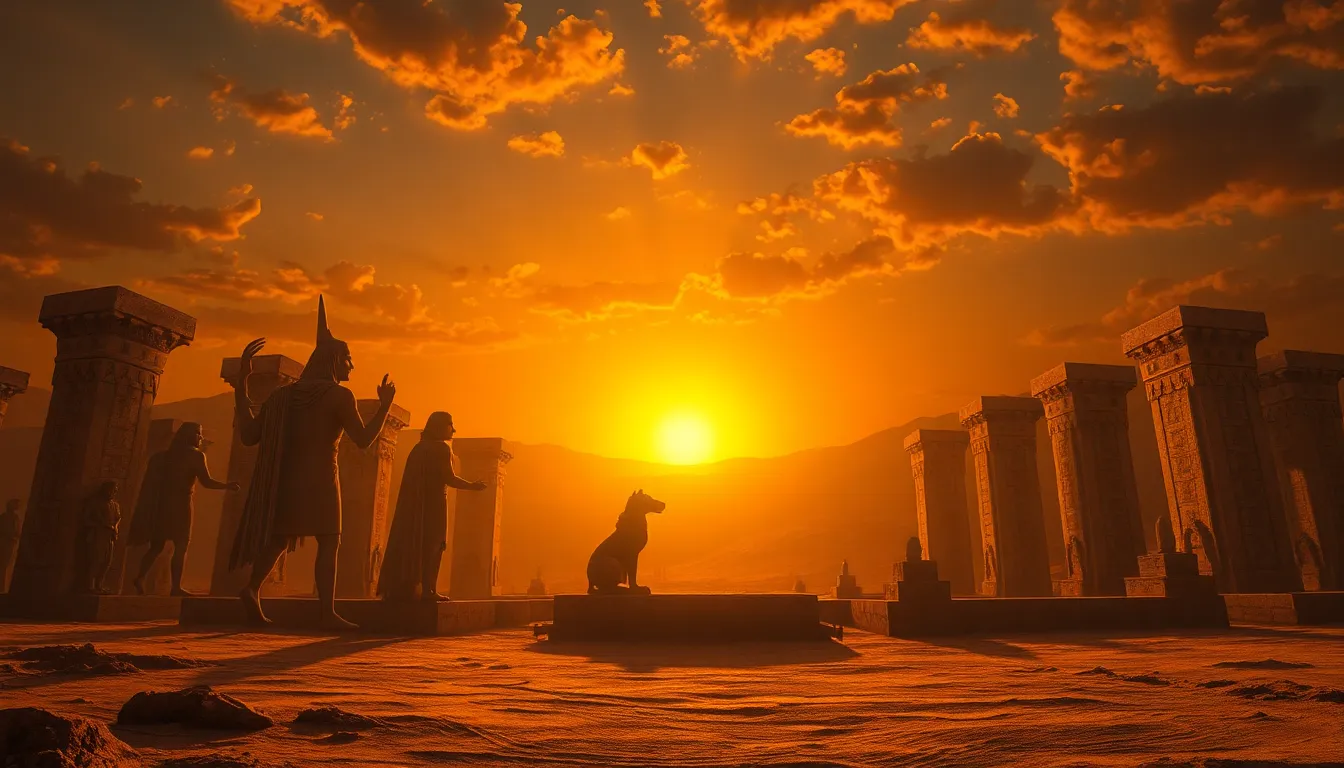
The Mythical Cycle of Retribution: Egyptian Stories That Endure
I. Introduction
Egyptian mythology is a rich tapestry of stories, gods, and beliefs that formed the foundation of ancient Egyptian culture. It encompasses a wide array of narratives that not only explain the world around them but also convey profound moral lessons. Among these narratives, the theme of retribution stands out, illustrating the consequences of one’s actions and the quest for balance between order and chaos.
This article delves into the concept of retribution within Egyptian stories, highlighting its significance and exploring key myths that embody this theme. Through examining these narratives, we gain insights into the ancient Egyptians’ understanding of justice, morality, and the cyclical nature of life and death.
II. The Nature of Retribution in Egyptian Mythology
Retribution in Egyptian mythology is deeply intertwined with the concepts of justice and moral order. It signifies not only punishment for wrongdoing but also the restoration of balance within the cosmos.
A. Definition and Cultural Importance of Retribution
Retribution is defined as the act of punishing someone for their wrongdoings, often viewed as a necessary means to restore cosmic order. In Egyptian culture, this idea is crucial; it reflects their understanding of the universe’s balance, known as Ma’at.
B. Key Themes and Motifs Associated with Retribution
- Betrayal and vengeance
- Justice versus chaos
- Resurrection and renewal
- Divine judgment
C. The Balance Between Justice and Chaos
The Egyptians believed that the universe functioned best when order prevailed. Retribution served as a mechanism to correct the disruptions caused by chaos, ensuring that harmony was restored in both the mortal and divine realms.
III. The Story of Osiris: Death and Resurrection
The myth of Osiris is one of the most well-known tales in Egyptian mythology, encapsulating the themes of death, betrayal, and resurrection.
A. Overview of the Osiris Myth
Osiris, the god of the afterlife, was betrayed by his brother Set, who killed him out of jealousy and desire for power. Set dismembered Osiris’s body and scattered the pieces across Egypt.
B. Themes of Betrayal and Vengeance
Isis, the devoted wife of Osiris, sought to find and reassemble her husband’s body. Her determination and love led to Osiris’s resurrection, emphasizing themes of loyalty and the consequences of betrayal.
C. The Role of Isis and the Cycle of Rebirth
Isis’s actions not only brought Osiris back to life but also established him as the ruler of the afterlife, reinforcing the belief in a cyclical nature of existence, where death is not the end but a transition to another form of life.
IV. The Tale of Set and Horus: Conflict and Justice
The rivalry between Set and Horus represents the struggle between chaos and order, further illustrating the theme of retribution in Egyptian mythology.
A. Background of Set and Horus’s Rivalry
Following Osiris’s death, Horus, the son of Osiris and Isis, sought to avenge his father and reclaim the throne from Set. Their battle became emblematic of the eternal struggle between good and evil.
B. The Symbolism of Their Battle in the Context of Order vs. Chaos
The conflict between Set and Horus symbolizes the larger battle between chaos (Set) and order (Horus). The outcome of their struggle was not only personal but also cosmic, reflecting the profound belief in the necessity of maintaining balance.
C. The Eventual Resolution and Restoration of Balance
Horus ultimately triumphed over Set, restoring order to Egypt and solidifying his role as the rightful ruler. This victory illustrates the idea that justice will prevail, and chaos will be subdued, a recurring theme in Egyptian mythology.
V. The Weighing of the Heart: Judgment in the Afterlife
One of the most significant aspects of Egyptian mythology is the concept of judgment in the afterlife, epitomized by the Weighing of the Heart ceremony.
A. Description of the Judgment Process in the Afterlife
In this process, the deceased’s heart is weighed against the feather of Ma’at, symbolizing truth and justice. If the heart is lighter than the feather, the individual is deemed worthy and granted passage to the afterlife.
B. The Significance of Ma’at and Moral Retribution
This judgment reflects the importance of living a life of virtue and integrity. Those who failed to uphold Ma’at faced dire consequences, often resulting in their souls being devoured by the monster Ammit.
C. The Enduring Legacy of the Concept of Divine Justice
The Weighing of the Heart remains a powerful symbol of moral retribution, emphasizing the necessity of justice in both this life and the next. It serves as a reminder of the values that governed ancient Egyptian society.
VI. Lesser-Known Myths of Retribution
While the tales of Osiris and Horus are well-known, Egyptian mythology is rich with lesser-known stories that also embody themes of retribution.
A. Exploration of Other Significant Myths Featuring Retribution
These myths often provide insight into the nature of divine justice and the consequences of actions:
- Sekhmet and the Destruction of Humanity: Sekhmet, the lioness goddess, was sent by Ra to punish humanity for their disobedience. Her wrath led to a near annihilation of the human race, reflecting the severe consequences of moral failings.
- The Tale of Ra and the Serpent Apep: Ra, the sun god, battled the serpent Apep each night, symbolizing the struggle against chaos and evil. Apep’s defeat represents the triumph of order over disorder, a vital aspect of Egyptian belief.
VII. The Impact of Egyptian Myths on Modern Culture
The themes of retribution found in Egyptian mythology continue to resonate in contemporary narratives across various mediums.
A. How Egyptian Stories of Retribution Influence Contemporary Narratives
Modern literature, film, and art often draw inspiration from these ancient tales, reflecting the timeless nature of their themes.
B. Examples in Literature, Film, and Art
- Movies like “The Mummy” and “Gods of Egypt” incorporate elements of Egyptian mythology, particularly the struggles between gods and the consequences of their actions.
- Literary works often explore themes of justice and vengeance, echoing the narratives of Osiris and Horus.
- Art inspired by ancient Egyptian motifs frequently highlights the moral lessons embedded in these myths.
C. The Ongoing Relevance of These Myths in Discussions of Morality and Justice
The enduring relevance of these myths in discussions of morality and justice serves as a testament to their profound impact on human culture and thought.
VIII. Conclusion
The cyclical nature of retribution in Egyptian mythology illustrates a complex understanding of justice and morality that continues to resonate with us today. The stories of Osiris, Horus, and the numerous other deities embody the belief that actions have consequences and that balance must be restored.
As we reflect on these ancient narratives, we are reminded of the timeless lessons they impart regarding the nature of justice, the importance of moral integrity, and the enduring struggle between order and chaos. We encourage further exploration into Egyptian mythology, as its rich stories offer valuable insights into the human experience and the moral dilemmas we face.