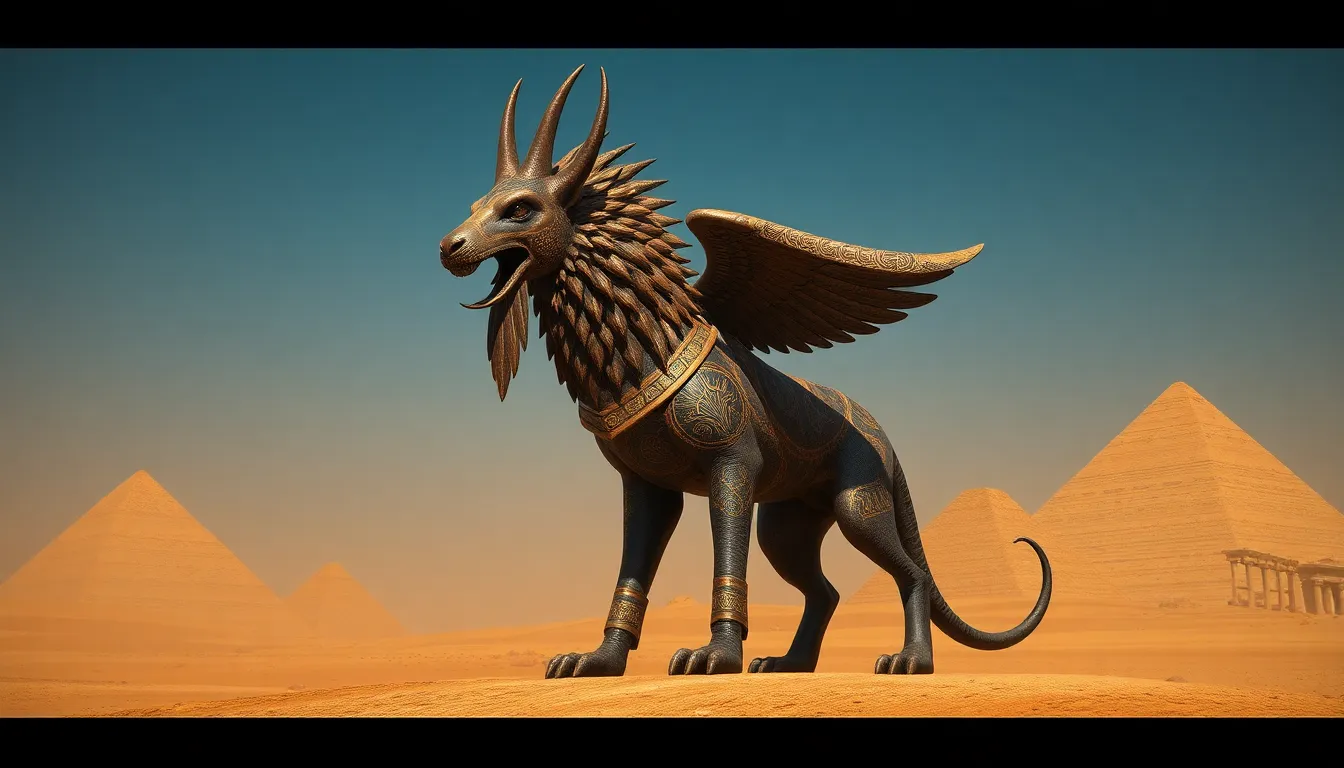
The Mythical Beasts of Egypt: Protective Creatures in Ancient Lore
I. Introduction to Egyptian Mythology
Egyptian mythology is a rich tapestry of beliefs that shaped the ancient civilization along the Nile River. With a pantheon of gods, goddesses, and mythical creatures, these narratives provided explanations for natural phenomena, human existence, and the afterlife. Central to these myths are the mythical beasts which served various roles, particularly as protectors.
Mythical creatures, often embodying the qualities esteemed by ancient Egyptians, were integral to cultural narratives, representing the society’s values, fears, and aspirations. This article explores the protective creatures of Egyptian lore, examining their roles and significance in the ancient world.
II. The Role of Mythical Beasts in Ancient Egypt
In the context of ancient Egyptian mythology, mythical beasts played a vital role in the concept of guardianship and protection. They were often envisioned as protectors of sacred spaces, deities, and the afterlife.
- Guardianship and Protection: Mythical creatures were guardians of the underworld, the tombs of pharaohs, and sacred temples.
- Embodiment of Values: These creatures reflected societal values such as bravery, loyalty, and the moral order.
- Human-Mythical Relationship: Egyptians believed in a reciprocal relationship with these beings, seeking their protection through rituals and offerings.
III. The Guardian of the Underworld: Ammit
Ammit, known as the “Devourer of the Dead,” is one of the most intriguing mythical beasts in Egyptian mythology. This creature has the body of a lion, the hindquarters of a hippopotamus, and the head of a crocodile.
Ammit played an essential role in the judgment of souls in the afterlife. During the Weighing of the Heart ceremony, the heart of the deceased was weighed against the feather of Ma’at, representing truth and justice. If the heart was found heavy with sin, Ammit would consume it, ensuring that the soul did not achieve eternal life.
Symbolically, Ammit represents the protection of the divine order, acting as a barrier against evil and chaos by ensuring that only the worthy could pass into the afterlife.
IV. The Protector of Pharaohs: Sphinx
The Sphinx, a creature with the body of a lion and the head of a human, has captivated imaginations for centuries. Originating in ancient Egypt, the Sphinx was often associated with the Pharaohs themselves.
As a guardian of sacred spaces, the Sphinx was typically positioned at the entrance of temples and tombs, serving not only as a protector but also as a symbol of strength and wisdom. Its enigmatic presence evoked awe and reverence among the people.
Cultural significance is abundant in the legends surrounding the Sphinx. It is featured in tales of riddles and challenges, most famously in the myth of Oedipus, which reflects on themes of knowledge and fate.
V. The Divine Felinity: Bastet
Bastet, the goddess of home, fertility, and childbirth, is often depicted as a lioness or as a woman with the head of a lioness or domestic cat. Her dual nature embodies both the nurturing and protective aspects of femininity.
As a protector, Bastet was revered by families and communities, who sought her blessings for safety, health, and fertility. Her worship included festivals and rituals that celebrated her protective qualities.
The reverence for Bastet extended beyond households; she was also associated with music, joy, and love, reinforcing the belief that protection could come from nurturing and positivity.
VI. The Serpent of Protection: Wadjet
Wadjet, depicted as a cobra, is another significant protective deity in Egyptian mythology. Known as the “Green One,” she represented the protective aspect of the desert and was considered a guardian of the Pharaoh and the nation.
The symbolism of Wadjet is profound, as the cobra was often associated with royalty. The image of a cobra on the Pharaoh’s crown signified divine protection and authority. Wadjet’s fierce nature as a protector of the land was celebrated in various rituals and iconography.
VII. Other Notable Mythical Protectors
In addition to the more well-known mythical beasts, several other creatures played protective roles in Egyptian mythology:
- Anubis: The jackal-headed god associated with mummification and the afterlife, Anubis was a protector of the deceased and guided them through the underworld.
- Sekhmet: The lioness goddess of war, Sekhmet was believed to protect against disease and evil, embodying both destruction and healing.
- Lesser-known Creatures: Various other creatures, such as the scarab beetle (Khepri) symbolizing rebirth, also held protective meanings in mythology.
VIII. Conclusion: The Legacy of Egyptian Mythical Beasts
The mythical beasts of ancient Egypt continue to captivate modern audiences, influencing literature, art, and popular culture. Their roles as protectors resonate through time, reflecting humanity’s enduring fascination with the supernatural.
Through stories of these creatures, we gain insights into the ancient Egyptians’ values and beliefs, revealing the importance of protection in their narratives. These mythical beings serve as reminders of the complexities of life and death, safety and danger, and the ever-present quest for understanding the mysteries of existence.
In conclusion, the protective creatures of Egyptian mythology not only shaped the ancient world but continue to inspire and intrigue those who seek to understand the rich tapestry of human belief and imagination.