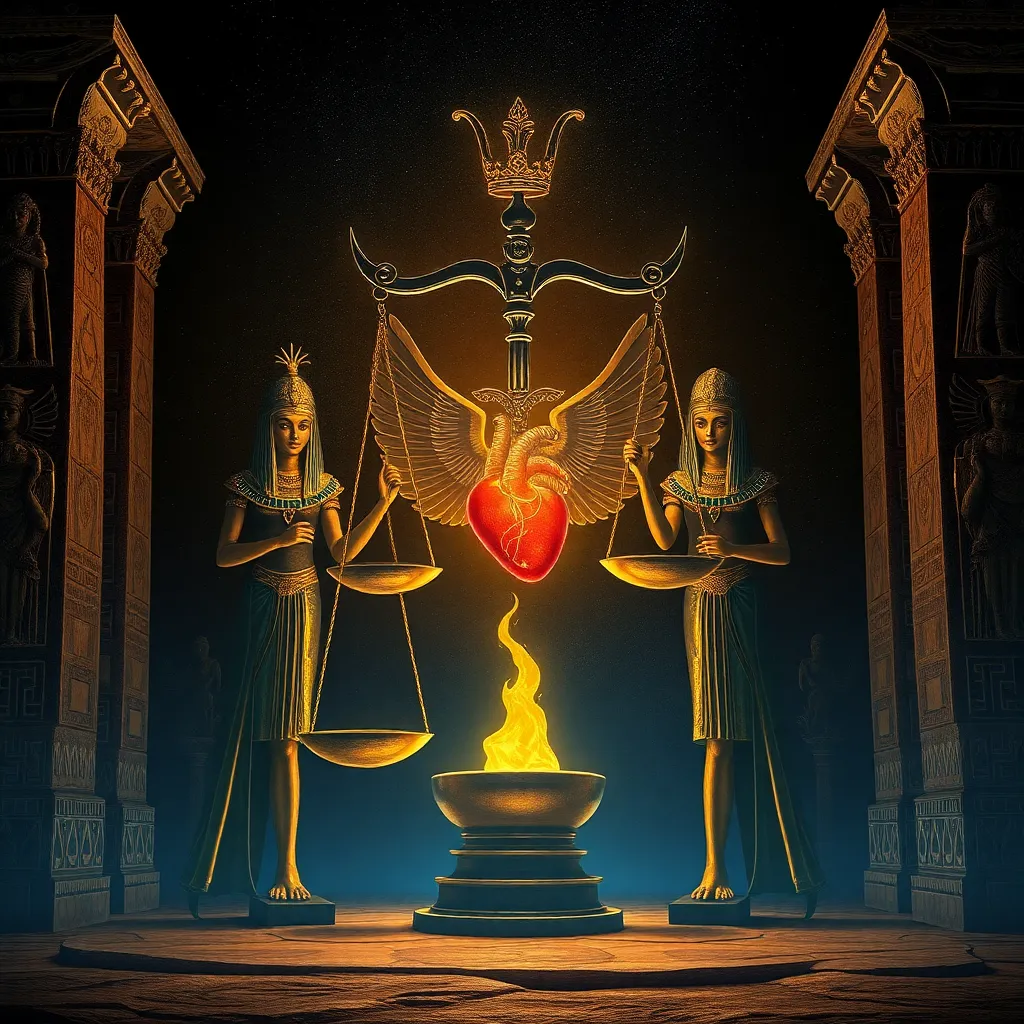
The Myth of the Weighing of the Heart: Justice in the Afterlife
I. Introduction
The Weighing of the Heart is one of the most significant and evocative myths in ancient Egyptian mythology, representing the ultimate judgment of a person’s soul after death. This ancient rite is deeply embedded in the beliefs surrounding justice and morality, showcasing how the ancient Egyptians viewed the consequences of one’s actions in life. This article aims to explore the themes and implications of this myth, delving into its cultural significance and the enduring legacy it holds.
II. Historical Context of Ancient Egyptian Beliefs
To fully understand the Weighing of the Heart, it’s essential to consider the broader historical context of ancient Egyptian religious beliefs and cosmology.
A. Overview of ancient Egyptian religion and cosmology
Ancient Egyptian religion was polytheistic, centered around a pantheon of gods and goddesses who governed various aspects of life and the afterlife. Their belief system was intricately connected to the natural world, with gods representing elements like the sun, the Nile, and fertility.
B. The role of the afterlife in Egyptian society
The afterlife was a fundamental aspect of ancient Egyptian culture. Egyptians believed in an eternal life beyond death, where one’s actions in life would determine their fate in the afterlife. This belief motivated extensive burial practices, including the construction of elaborate tombs and the use of funerary texts.
C. Key deities associated with the afterlife
- Osiris: The god of the afterlife, resurrection, and fertility who presided over the judgment of the dead.
- Anubis: The jackal-headed god associated with mummification and the protection of the dead, guiding souls to the afterlife.
- Ma’at: The goddess of truth, balance, and justice, whose feather was used in the weighing of the heart ritual.
III. The Weighing of the Heart Ritual
The Weighing of the Heart was a crucial part of the journey of the deceased in the afterlife, symbolizing the moral judgment of their life choices.
A. Description of the ritual process
During the ritual, the heart of the deceased was weighed against the feather of Ma’at, representing truth and justice.
1. The role of Anubis as the guide
Anubis played a vital role as the guide of souls, leading the deceased to the Hall of Two Truths, where the weighing occurred. He ensured that the process was conducted fairly and that the deceased was ready for judgment.
2. The use of the feather of Ma’at
The feather of Ma’at served as the measure of truth. If the heart weighed the same as the feather, it indicated that the deceased had lived a just and moral life.
B. Symbolism of the heart and feather
The heart was considered the seat of intelligence and emotion, embodying one’s true self. The feather, on the other hand, symbolized the concept of balance and truth. Together, they represented the fundamental principles of morality in ancient Egyptian belief.
C. Outcomes of the weighing: paradise vs. oblivion
- Paradise: If the heart was found to be lighter than or equal to the feather, the soul was granted passage to the Field of Reeds, a paradise where they could live in eternal peace.
- Oblivion: If the heart was heavier, it indicated a life of wrongdoing, and the soul would be devoured by Ammit, a fearsome creature, leading to eternal oblivion.
IV. Moral and Ethical Implications
The Weighing of the Heart reflects the societal values and ethics of ancient Egypt, providing insight into their moral framework.
A. Reflection of societal values and ethics in ancient Egypt
Justice and morality were paramount in ancient Egyptian society. The belief in accountability for one’s actions created a culture that emphasized ethical behavior and social responsibility.
B. The significance of personal conduct in life
The myth underscores the importance of personal conduct. Individuals were encouraged to live justly, as their actions would have direct consequences in the afterlife.
C. The role of the heart as a moral compass
The heart’s weighing symbolizes the idea that one’s conscience and moral choices would ultimately determine their fate, making it a powerful moral compass in the lives of the ancient Egyptians.
V. Interpretations and Variations of the Myth
The Weighing of the Heart has been interpreted and depicted in various ways throughout ancient Egyptian texts.
A. Differences in depictions across various texts
In texts like the Book of the Dead, the rituals and the details surrounding the weighing process are elaborated upon, showcasing the evolving interpretations of the myth over time.
B. Regional variations in beliefs and practices
Different regions of Egypt had their own interpretations and practices surrounding the afterlife and the Weighing of the Heart, reflecting local customs and beliefs.
C. Influence of the myth on other cultures and religions
The themes of judgment and morality found in the Weighing of the Heart have influenced various cultures and religions, echoing through the ages in concepts of divine judgment.
VI. Modern Perspectives on the Weighing of the Heart
Today, the Weighing of the Heart continues to resonate in discussions about justice and morality.
A. Relevance of the myth in contemporary discussions of justice and morality
The myth prompts reflection on contemporary values regarding justice, ethics, and the consequences of actions.
B. Comparisons with modern concepts of judgment in different cultures
Similar themes of judgment can be found in various religious and philosophical systems, highlighting a universal quest for justice.
C. The enduring legacy of the myth in popular culture
References to the Weighing of the Heart appear in literature, film, and art, illustrating its lasting impact on modern storytelling and ethical discussions.
VII. Critiques of the Myth
The Weighing of the Heart is not without its critiques, especially from philosophical and ethical standpoints.
A. Examination of the philosophical and ethical critiques
Critics argue that the binary outcomes of the weighing oversimplify the complexities of human morality and the human experience.
B. The role of fate versus free will in the myth
The balance of fate and free will is a significant point of discussion, questioning whether individuals have true agency in shaping their moral destinies.
C. Perspectives from modern psychology and ethics
Modern psychology provides insights into human behavior and morality, challenging the traditional views upheld by the Weighing of the Heart.
VIII. Conclusion
The myth of the Weighing of the Heart serves as a profound exploration of morality and justice in ancient Egyptian culture. It reflects the values of a society that placed immense importance on ethical conduct and accountability. In both ancient and modern contexts, the themes of justice and moral judgment remain relevant, inviting continuous reflection on our understanding of right and wrong. Ultimately, the myth’s enduring legacy enriches our understanding of morality and the complexities of the human experience.