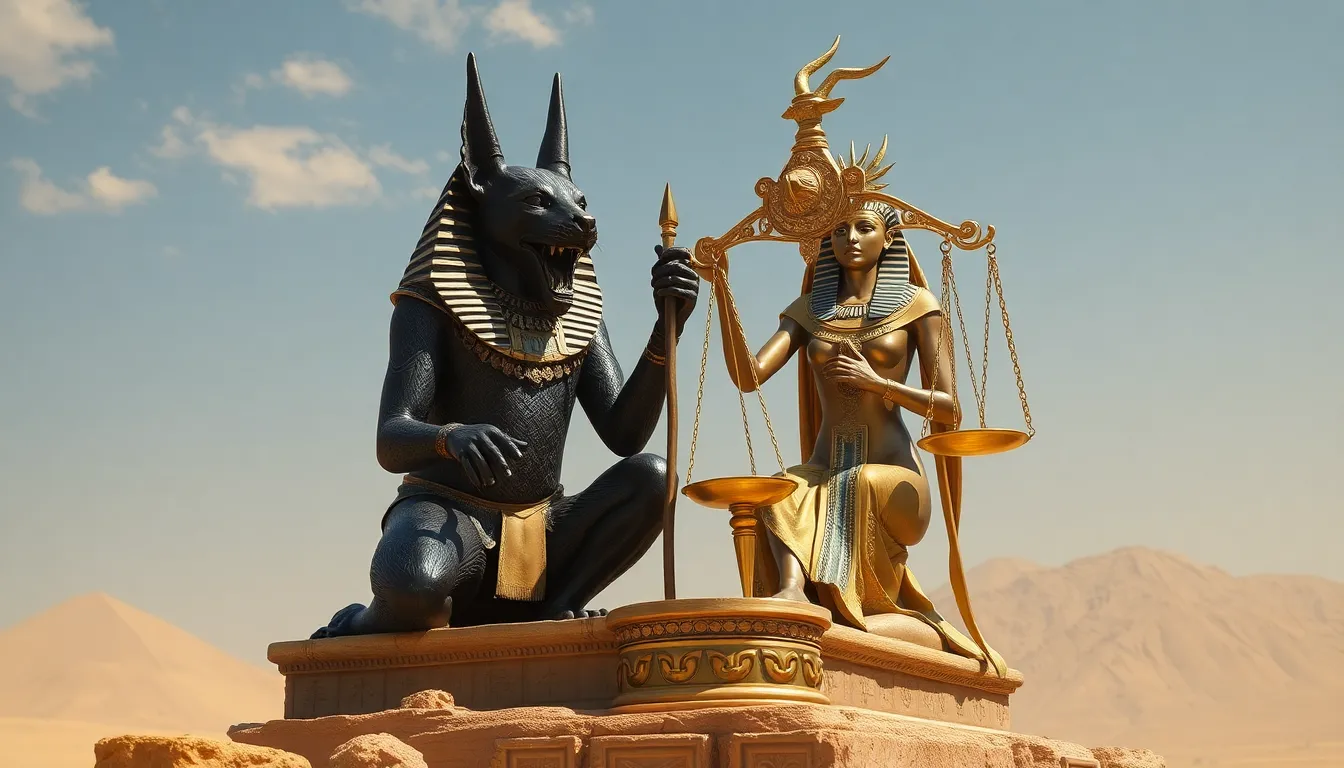
The Myth of the Weighing of the Heart: Anubis and Divine Justice
I. Introduction
Anubis holds a prominent place in ancient Egyptian mythology as the god of the afterlife and mummification. His role is not only to guide the souls of the deceased but also to ensure that the principles of justice are upheld in the afterlife. One of the most profound concepts associated with Anubis is the “Weighing of the Heart,” a pivotal ceremony that reflects divine judgment and moral integrity.
This article aims to delve into the myth of the Weighing of the Heart, exploring its significance and implications for divine justice in ancient Egyptian belief. Through Anubis, we will uncover how moral conduct was evaluated and the broader impact this had on society’s ethical standards.
II. The Role of Anubis in Egyptian Mythology
Anubis is often depicted as a jackal or as a man with a jackal’s head, symbolizing his connection to death and the afterlife. His primary responsibilities include:
- Guiding souls to the afterlife.
- Overseeing the mummification process to ensure the deceased are preserved for eternity.
- Protecting graves and tombs from desecration.
The symbolism of Anubis as a jackal is significant; jackals were commonly seen in cemeteries and were believed to guard the dead. This protective role made Anubis a vital figure in ensuring that the deceased would safely navigate the challenges of the afterlife.
III. The Weighing of the Heart Ceremony
The Weighing of the Heart is a ceremony that takes place in the Hall of Two Truths, where the heart of the deceased is weighed against the feather of Ma’at, the goddess of truth and justice. This ceremony holds immense significance as it determines the fate of the soul in the afterlife. Here’s how it unfolds:
- The heart, regarded as the seat of emotion and intellect, is placed on one side of the scale.
- The feather of Ma’at, representing truth and justice, is placed on the other side.
The outcome of this weighing determines whether the deceased lived a life of virtue or sin. If the heart is lighter than the feather, the soul is deemed worthy and is granted passage to the afterlife. Conversely, a heavier heart implies a life of wrongdoing, resulting in the soul being devoured by Ammit, a fearsome creature composed of a crocodile, lion, and hippopotamus.
IV. The Concept of Ma’at in Ancient Egyptian Belief
Ma’at embodies the concepts of cosmic order, truth, and justice in ancient Egyptian belief. She is not only a goddess but also represents the ethical and moral principles that governed the lives of Egyptians. The significance of Ma’at includes:
- Maintaining the balance of the universe and ensuring harmony.
- Providing a standard against which human behavior is measured.
- Influencing the legal and moral codes within society.
The relationship between Ma’at and divine justice is direct; the adherence to Ma’at’s principles ensures a just society. As such, Egyptians were encouraged to lead lives of honesty and integrity, as these qualities were essential for a favorable judgment after death.
V. The Judgment Process: What Happens After Death?
Upon death, the soul embarks on a perilous journey through the Duat, the Egyptian underworld. This journey involves several trials and encounters with various deities. Key aspects of the judgment process include:
- The soul’s arrival at the Hall of Two Truths, where Anubis oversees the weighing of the heart.
- The role of Osiris, the god of the afterlife, who presides over the final judgment.
- The consequences of the weighing: a light heart leads to eternal reward in the Field of Reeds, while a heavy heart results in punishment and annihilation.
This judgment process emphasizes the importance of moral integrity throughout life, as it directly impacts one’s fate in the afterlife.
VI. Interpretations and Symbolism of the Weighing of the Heart
The Weighing of the Heart has various interpretations across ancient texts and artifacts. The heart is symbolic of:
- The essence of a person’s character and moral decisions.
- Emotions, intellect, and the core of one’s being.
The feather of Ma’at symbolizes the ideals of truth and justice, serving as a reminder of the standards by which one is judged. The impact of this myth extends beyond individual judgment, influencing societal ethics and moral behavior throughout ancient Egyptian culture.
VII. The Legacy of Anubis and the Weighing of the Heart
The myth of Anubis and the Weighing of the Heart continues to resonate in modern discussions about justice and morality. Its influence can be seen in various forms of contemporary culture:
- Literature that explores themes of justice and moral dilemmas.
- Art that depicts Anubis and the afterlife, sparking interest in ancient beliefs.
- Media portrayals that reflect on the concepts of right and wrong.
As society grapples with questions of ethics and justice, the teachings of Anubis and Ma’at serve as a poignant reminder of the importance of personal morality.
VIII. Conclusion
In summary, Anubis and the Weighing of the Heart encapsulate the ancient Egyptian understanding of divine justice and moral accountability. The legacy of this myth extends beyond its historical context, prompting reflection on personal morality and ethical behavior today. As we consider the teachings of the ancients, we are encouraged to evaluate our own lives in light of these profound lessons on justice and integrity.