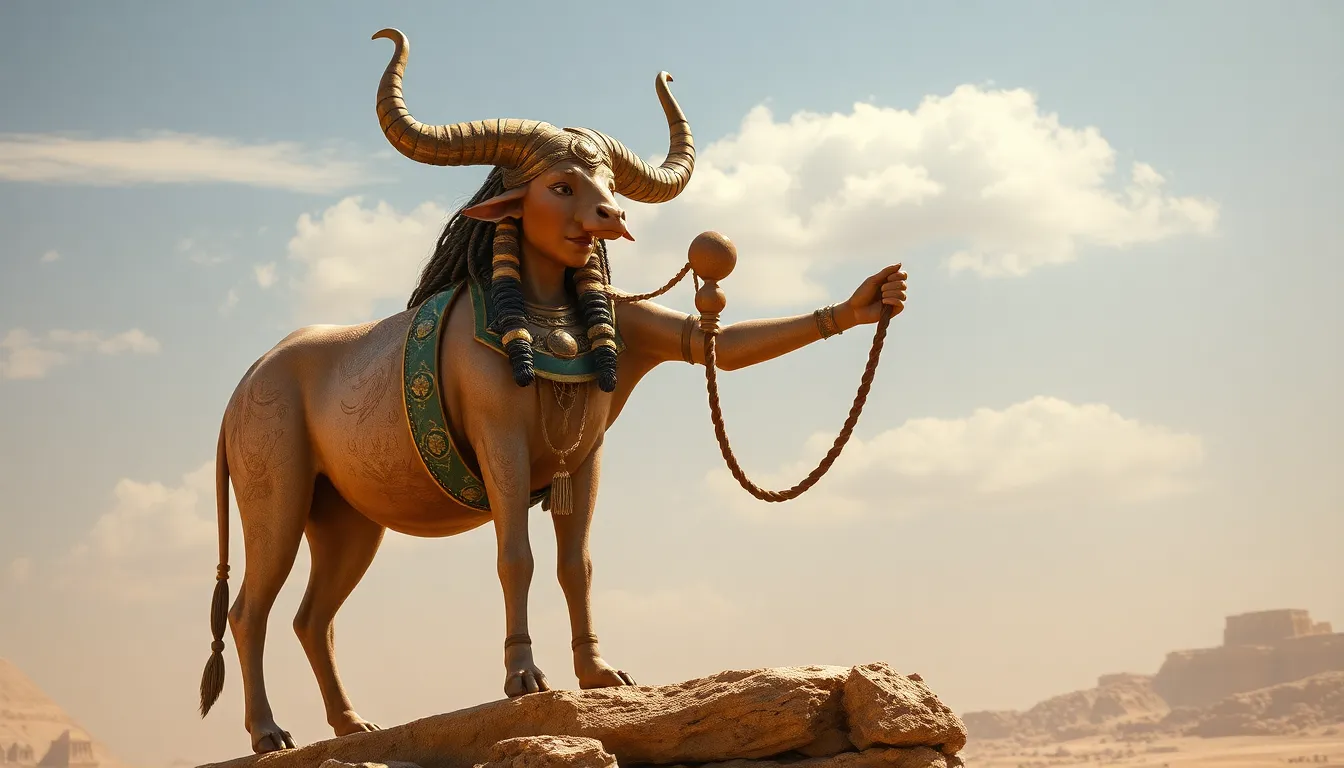
The Myth of the Sacred Cow: Hathor and Her Protective Powers
I. Introduction
Hathor, one of the most revered deities in ancient Egyptian mythology, embodies a multitude of aspects, including love, joy, music, and motherhood. Her significance extends beyond mere representation; she is a vital figure in the cultural and religious landscape of ancient Egypt. Central to her identity is the sacred cow, an emblem of fertility and sustenance that played a crucial role in the lives of the ancient Egyptians.
This article aims to explore the rich myth surrounding Hathor and her protective powers, delving into the historical context, symbolism, worship practices, and her legacy that continues to resonate in modern culture.
II. Historical Context of Hathor
Hathor’s origins trace back to the early dynastic periods of Egypt, where she was initially worshipped as a local goddess. Over time, her influence expanded, and she became one of the principal deities in the Egyptian pantheon. Her representations evolved, reflecting her roles as a goddess of love, motherhood, and fertility.
Key aspects of Hathor’s historical context include:
- Origins and Evolution: Hathor was originally associated with the sky and celestial bodies, often depicted as a cow or a woman with cow horns.
- Associations: She is closely linked to motherhood and fertility, celebrated for her nurturing qualities.
- Widespread Worship: As her worship spread, she became a universal figure, revered across various regions of Egypt.
III. The Symbolism of the Cow in Ancient Egypt
The sacred cow symbolizes more than just fertility; it represents a connection between the earthly and cosmic realms. In ancient Egyptian culture, the cow was revered for its nurturing qualities and strength.
Key symbolic elements include:
- Fertility and Sustenance: Cows were essential for agriculture and livestock, making them vital to the economy and sustenance of the people.
- Cosmic and Earthly Realms: The cow serves as a bridge between the material world and the divine, embodying the nurturing aspects of the earth.
- Duality: The cow represents both nurturing qualities and formidable power, reflecting the complex nature of femininity.

IV. Hathor’s Protective Powers
Hathor’s protective nature is a significant theme in her mythology. Various myths and stories illustrate her role as a guardian and protector, particularly for women and children.
Examples of her protective powers include:
- Mythological Narratives: In several myths, Hathor intervenes to protect her followers from harm, showcasing her fierce maternal instincts.
- Safeguarding Women and Children: She is often invoked during childbirth, symbolizing safety and support for mothers.
- Maternal Protection: Hathor embodies the archetype of the nurturing mother, providing emotional and spiritual support to her devotees.
V. Worship and Rituals Associated with Hathor
The worship of Hathor involved various rituals and practices aimed at invoking her protective powers. Temples dedicated to her became centers of worship and celebration.
Key aspects of her worship include:
- Sacred Sites: Temples such as the Temple of Hathor at Dendera served as significant pilgrimage sites for her followers.
- Rituals and Offerings: Devotees offered music, dance, and food to please Hathor and seek her blessings, particularly during childbirth and marriage.
- Festivals: Festivals celebrating Hathor often included joyous gatherings filled with music and dance, reflecting her associations with joy and love.
VI. Hathor in Art and Iconography
Hathor’s image is prevalent in ancient Egyptian art, where she is depicted in various forms that highlight her attributes. Artists often used specific symbols to convey her essence and powers.
Notable elements in her iconography include:
- Depictions: Hathor is frequently portrayed as a cow, a woman with cow horns, or holding a sistrum, a musical instrument associated with her.
- Symbolism: The cow horns and sun disk above her head signify her connection to the sky and the divine.
- Visual Culture’s Impact: These artistic representations helped shape the perception of Hathor’s powers and her role in the lives of the ancient Egyptians.
VII. The Legacy of Hathor in Modern Culture
Hathor’s legacy extends beyond ancient Egypt, influencing contemporary interpretations of femininity, motherhood, and spirituality. Her image continues to inspire various cultural expressions.
Key aspects of her modern legacy include:
- Contemporary Interpretations: Hathor’s nurturing and protective qualities resonate with modern ideals of femininity and motherhood.
- Modern Spirituality: She is often embraced in new age practices, symbolizing love, protection, and empowerment.
- Global Relevance: The sacred cow remains a significant symbol in various cultures, representing fertility and divine protection.
VIII. Conclusion
Hathor stands as a powerful figure in ancient Egyptian mythology, embodying the protective qualities of the sacred cow. Her significance as a goddess of motherhood, fertility, and music showcases the multifaceted nature of femininity in ancient beliefs.
As we reflect on the enduring myth of the sacred cow, it becomes clear that understanding these ancient beliefs offers valuable insights into the cultural and spiritual dimensions of human experience. The legacy of Hathor continues to resonate, reminding us of the timeless importance of protection, nurturing, and love in our lives.