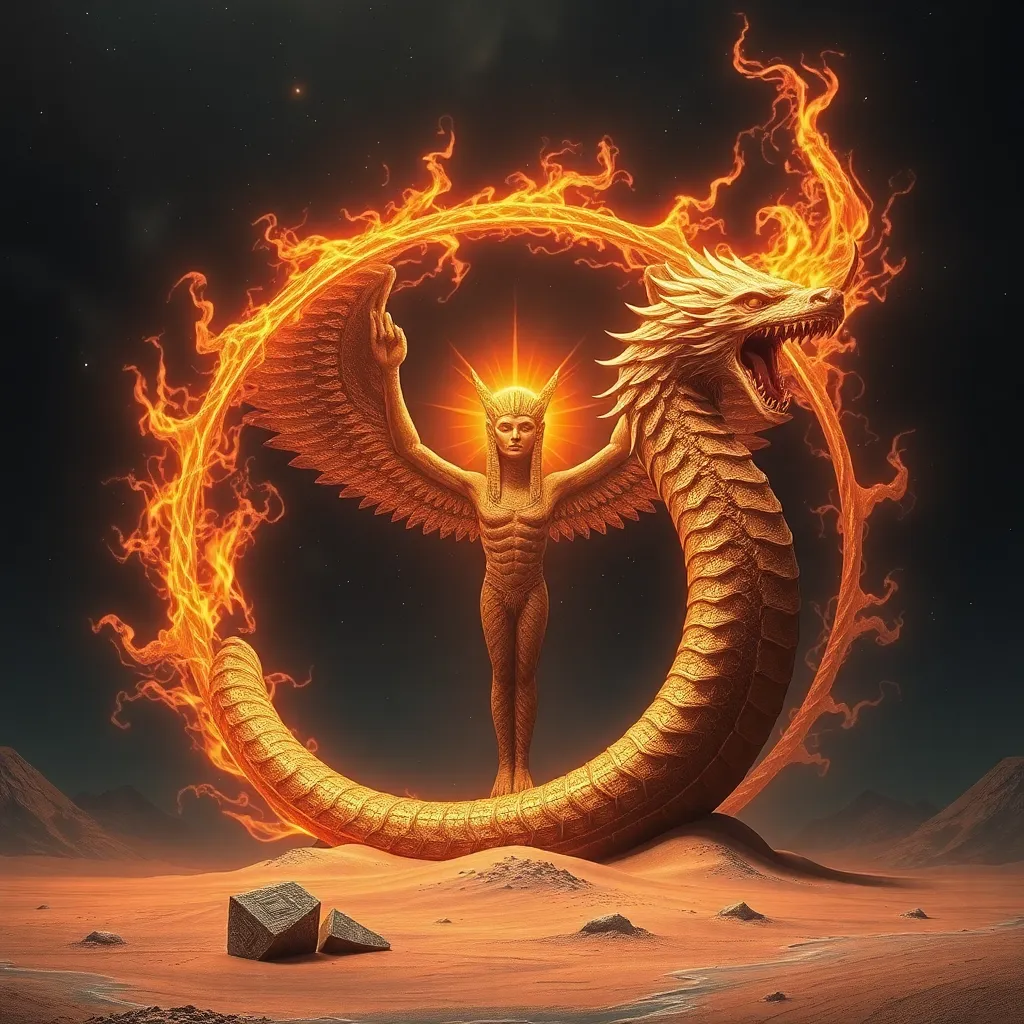
The Myth of the Cosmic Serpent: Creation and Destruction
I. Introduction
The Cosmic Serpent myth is a profound narrative that appears in various cultures around the world. From ancient times to modern interpretations, this myth encapsulates themes of creation and destruction, representing the cyclical nature of existence. The importance of these themes in mythology cannot be overstated, as they reflect humanity’s understanding of life, death, and rebirth.
This article will explore the origins of the Cosmic Serpent myth, its dual nature as a symbol of creation and destruction, its presence in modern culture, and its psychological interpretations. Through this exploration, we will uncover the significance of the Cosmic Serpent in shaping human thought and culture.
II. Origins of the Cosmic Serpent Myth
The origins of the Cosmic Serpent myth are deeply rooted in the historical context of ancient civilizations. Early references can be found in texts and artifacts from cultures such as Mesopotamia, Mesoamerica, and India, where serpents often held significant symbolic meaning.
Culturally, serpents were viewed with reverence and fear, embodying the duality of life. For example:
- In Mesopotamian mythology, Tiamat is depicted as a primordial serpent who embodies chaos and the ocean.
- In Mesoamerican mythology, the Feathered Serpent, known as Quetzalcoatl, represents both creation and destruction.
- In Indian mythology, the serpent Ananta serves as a cosmic symbol of eternity and time.
These variations in serpent symbolism highlight the complex role that the Cosmic Serpent plays across different cultures, often representing both the genesis of life and the forces of chaos.
III. The Serpent as a Symbol of Creation
The Cosmic Serpent is often portrayed as a vital force in creation myths. In many traditions, the serpent’s movements and actions initiate the formation of the world. For instance:
- In the Hindu creation myth, Vishnu is depicted reclining on the serpent Ananta, from whose navel sprouts the lotus that brings forth creation.
- In various Indigenous cultures, the serpent is seen as a giver of life, often associated with fertility and agriculture.
These examples illustrate that the serpent is not merely a creature of destruction but also a life-giving force, symbolizing the interconnectedness of all living things. The interpretation of the serpent as a creator emphasizes the idea that life emerges from the depths of chaos, a recurring theme in many creation stories.
IV. The Serpent as a Symbol of Destruction
While the Cosmic Serpent embodies creation, it also possesses destructive qualities. In several myths, the serpent is associated with chaos and upheaval. For example:
- In the biblical story of the serpent in the Garden of Eden, the serpent represents temptation and the fall of humanity.
- In Norse mythology, Jörmungandr, the Midgard Serpent, signifies the potential for destruction during Ragnarök, the end of the world.
This duality of the serpent’s nature is crucial in understanding its role in mythology. The Cosmic Serpent serves as a reminder that creation and destruction are intricately linked, and that out of destruction can come new beginnings. The myth illustrates the balance of forces in the universe, embodying the principle that life is a continuous cycle of birth, death, and rebirth.
V. The Cosmic Serpent in Modern Culture
The influence of the Cosmic Serpent myth continues to resonate in contemporary literature and media. Many authors and filmmakers draw inspiration from this ancient symbol to convey complex themes of existence and transformation. Examples include:
- Literary works that explore the journey of self-discovery often feature serpentine imagery as a metaphor for personal evolution.
- In films and television, serpents are frequently portrayed as guardians of ancient wisdom or harbingers of chaos.
Moreover, the relevance of the Cosmic Serpent in today’s society reflects humanity’s ongoing quest to understand the relationship between creation and destruction, urging individuals to confront their fears and embrace change.
VI. Comparative Analysis with Other Mythological Creatures
When examining the Cosmic Serpent, it is essential to compare it with other mythological creatures that embody similar themes, such as dragons and chaos monsters. While there are notable differences, there are also striking similarities:
- Both serpents and dragons often symbolize primal forces of nature, representing both creation and destruction.
- Chaos monsters, like the Leviathan, similarly embody the struggles between order and chaos, reflecting humanity’s fears of the unknown.
These universal themes of rebirth and renewal highlight a common thread in human mythology, revealing insights into our understanding of nature and existence. They remind us that the forces of creation and destruction are not opposites but rather two sides of the same coin.
VII. Psychological and Symbolic Interpretations
From a psychological perspective, the Cosmic Serpent can be interpreted through a Jungian lens as a symbol of the unconscious. Jung posited that myths serve as reflections of the collective unconscious, revealing deep-seated human fears and desires. The serpent, as a symbol, encompasses:
- The fear of the unknown, represented by its association with chaos and destruction.
- The desire for transformation and renewal, as seen in its role as a life-giver.
Understanding the Cosmic Serpent myth can aid individuals in navigating personal and collective transformation, encouraging them to confront their fears and embrace the cycles of life.
VIII. Conclusion
In conclusion, the Cosmic Serpent holds significant meaning in the realms of creation and destruction. Its enduring legacy in human culture reflects our attempts to make sense of the world around us and our place within it. Through the lens of mythology, we can appreciate the complexity of existence, acknowledging that creation and destruction are intertwined processes that shape our reality.
Ultimately, the myth of the Cosmic Serpent challenges us to explore the depths of our consciousness and the cycles of life, urging us to embrace both the beauty and chaos that existence entails.