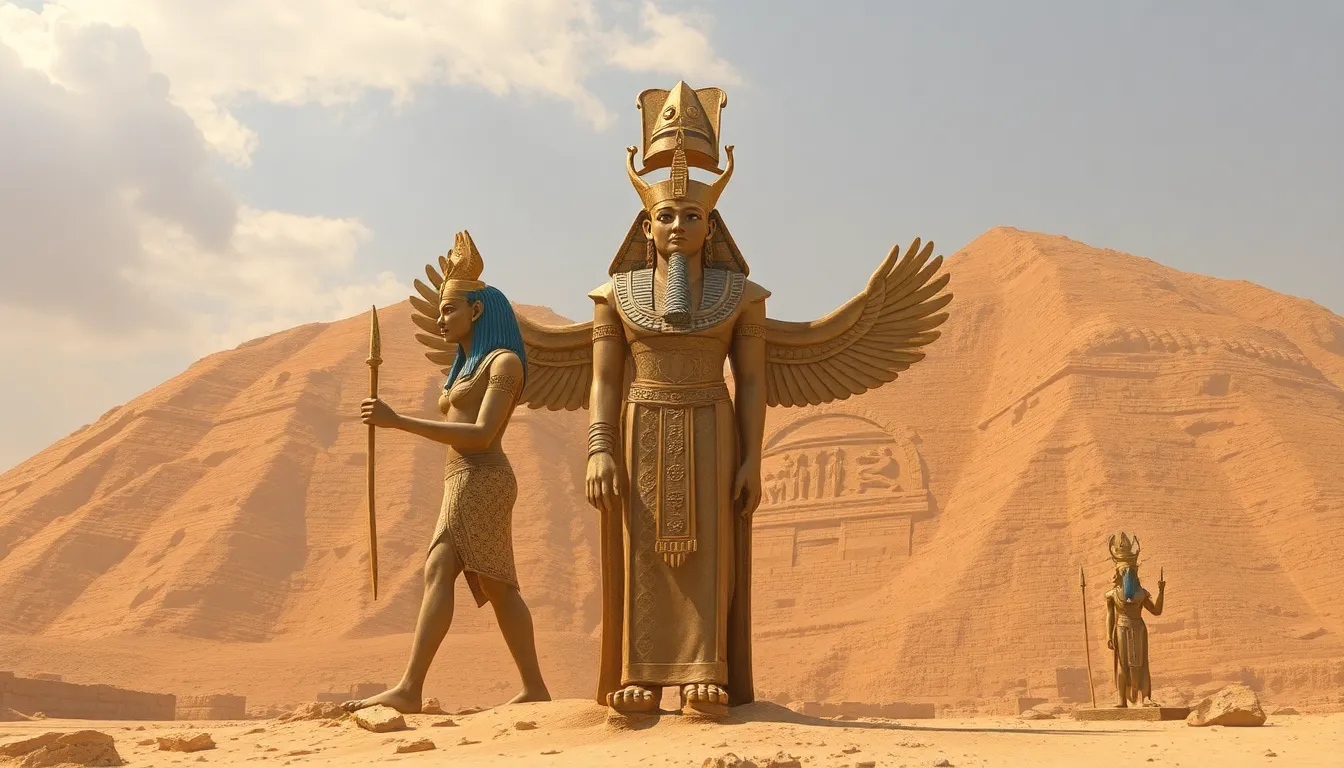
The Mysteries of Ma’at: Balance and Protection in Egyptian Beliefs
I. Introduction
In ancient Egyptian culture, Ma’at represents more than just a concept; it embodies the very essence of balance, truth, and order. This principle was pivotal to the Egyptian worldview, influencing various aspects of life, from governance to personal conduct. The importance of Ma’at in Egyptian beliefs cannot be overstated, as it was seen as essential not only for individual well-being but also for the stability of the cosmos.
II. The Concept of Ma’at
Ma’at is derived from the ancient Egyptian word that signifies truth, balance, order, and harmony. It is often personified as a goddess depicted with an ostrich feather on her head, symbolizing truth and justice. The etymology of Ma’at reflects a deep connection to the natural order and the ethical conduct expected of individuals.
In art and mythology, Ma’at is frequently illustrated as a figure embodying stability and equilibrium. Her feather is central to the weighing of the heart ceremony, a significant ritual in the afterlife journey of souls. She is not only a concept but a divine force that maintains the equilibrium of the universe.
III. The Role of Ma’at in Cosmic Order
Ma’at is the cornerstone of cosmic order in ancient Egyptian mythology. She represents the principle of harmony that governs the universe, ensuring that chaos does not prevail. Without Ma’at, the balance of nature and society would falter, leading to disorder and destruction.
The relationship between Ma’at and the gods is crucial, particularly with deities like Ra, the sun god, and Osiris, the god of the afterlife. Ra embodies the light and life of the sun, while Osiris represents resurrection and regeneration. Together, they operate under the auspices of Ma’at, ensuring that the cycles of life, death, and rebirth proceed in harmony.

IV. Ma’at and the Afterlife
One of the most profound aspects of Ma’at is its influence on the afterlife beliefs of the ancient Egyptians. The weighing of the heart ceremony, a pivotal event for the deceased, is a direct reflection of Ma’at’s principles. During this ceremony, the heart of the deceased is weighed against Ma’at’s feather, symbolizing truth and justice.
If the heart was found to be lighter than the feather, the individual was deemed worthy and granted passage to the afterlife. However, if the heart was heavier, laden with sins and misdeeds, it was devoured by Ammit, the devourer of souls. This stark judgment underscores the significance of living in accordance with Ma’at throughout one’s life.
V. Ma’at in Daily Life
The principles of Ma’at were not confined to the afterlife; they permeated daily life in ancient Egypt. To embody Ma’at, individuals engaged in various practices and rituals designed to promote balance and harmony. These included:
- Ritual offerings to the gods to ensure divine favor.
- Acts of charity and justice towards others to foster community harmony.
- Daily affirmations of truth and integrity in personal conduct.
Ma’at also shaped the societal structure of ancient Egypt, influencing the legal system and governance. The pharaohs, viewed as gods on earth, were expected to uphold Ma’at, ensuring justice and order within their realms. The concept was fundamental in the administration of laws and the maintenance of social order.
VI. Ma’at’s Representation in Egyptian Art and Literature
Ma’at’s presence is vividly felt in Egyptian art and literature. Temples and tombs often feature her image, signaling her importance in both life and death. Many artworks depict Ma’at alongside pharaohs, emphasizing the divine justification of their rule and the harmony they were meant to maintain.
Literary references to Ma’at can be found in ancient texts, including the “Book of the Dead,” where her principles guide the deceased through the afterlife. These references highlight her role as a moral compass, illustrating how deeply embedded her influence was in the cultural fabric of ancient Egypt.
VII. The Legacy of Ma’at in Modern Contexts
The legacy of Ma’at extends beyond ancient Egypt, influencing contemporary philosophies and justice systems. The concepts of truth, justice, and balance resonate in modern legal frameworks and ethical discussions. Many of Ma’at’s principles can be seen in:
- Modern human rights movements advocating for justice and equality.
- Environmental movements that seek to restore balance to the natural world.
- Philosophical discussions on the nature of truth and morality.
In today’s world, the relevance of Ma’at’s principles is evident as societies strive for balance and justice amidst chaos and discord. The enduring mysteries of Ma’at serve as a reminder of the importance of harmony in personal and collective existence.
VIII. Conclusion
In conclusion, Ma’at holds a place of immense significance within ancient Egyptian beliefs, symbolizing balance, truth, and cosmic order. From the afterlife to daily life, her influence was pervasive and profound. The mysteries of Ma’at continue to inspire and challenge us today, urging reflection on the fundamental principles of balance and protection in our lives and societies.