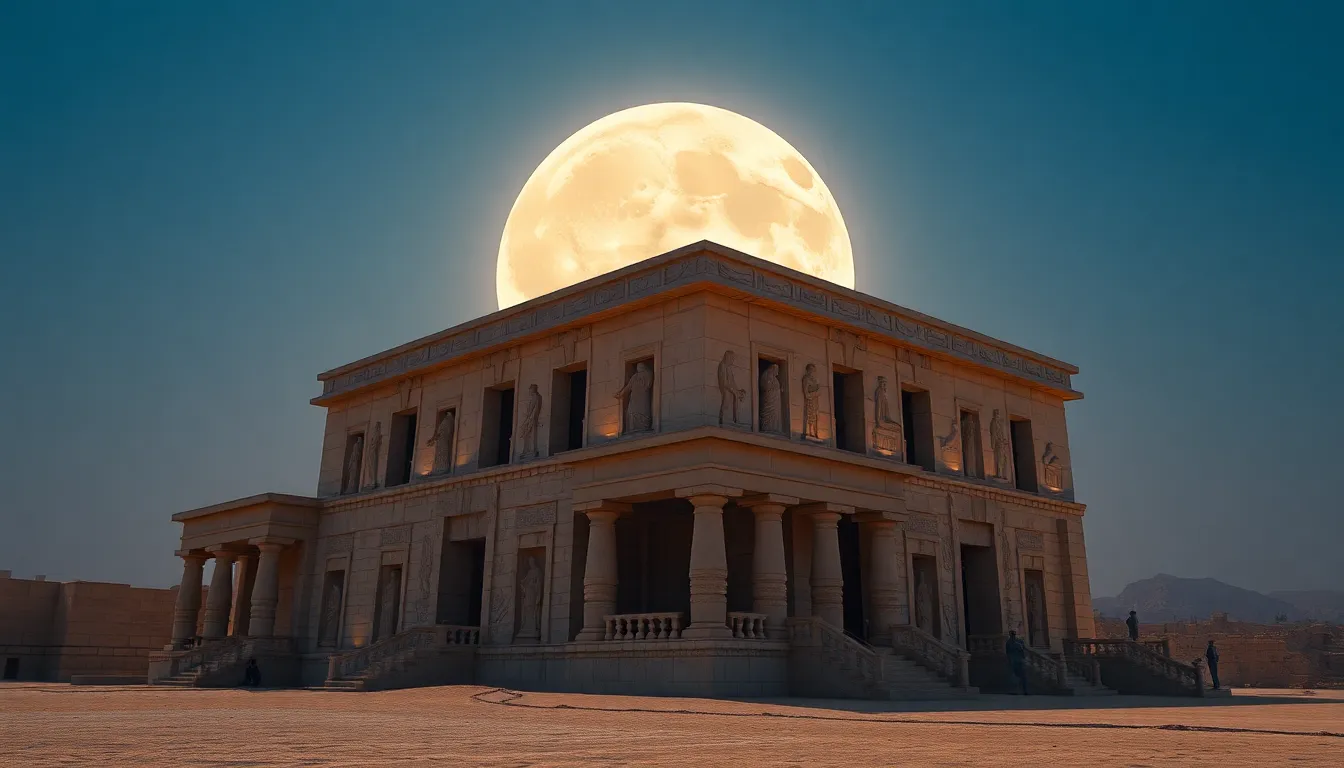
The Moon’s Influence on Egyptian Art and Architecture
I. Introduction
The moon has held a significant place in ancient Egyptian culture, representing not only a celestial body but also a powerful symbol woven into the fabric of their mythology and daily life. In a civilization that revered the rhythm of nature, the moon’s cycles were seen as a vital influence on agriculture, fertility, and timekeeping. This article aims to explore the profound connection between lunar symbolism and Egyptian artistic expression, revealing how the moon’s phases and mythology shaped the art and architecture of ancient Egypt.
II. Historical Context of Lunar Worship in Ancient Egypt
In ancient Egypt, the moon was more than a nighttime luminary; it was deeply integrated into their religious beliefs and practices. The moon was associated with various deities, most notably Khonsu, the god of the moon, and Thoth, the god of wisdom, writing, and the lunar calendar.
A. The role of the moon in Egyptian mythology and religion
The ancient Egyptians viewed the moon as a crucial component of the cosmos, representing the cyclical nature of life and death. It was believed that the moon influenced the Nile’s flooding, which in turn dictated agricultural practices.
B. Key lunar deities: Khonsu and Thoth
– **Khonsu**: Often depicted as a young man with a sidelock of youth and a lunar disk atop his head, Khonsu embodied the moon’s phases and was revered for his role in healing and protection.
– **Thoth**: Represented as an ibis or a baboon, Thoth was associated with knowledge and the measurement of time, playing a pivotal role in the lunar calendar and rituals.
C. The lunar calendar and its importance in daily life and rituals
The Egyptians developed a lunar calendar that was essential for agricultural planning and religious festivals. The moon’s cycles dictated the timing of many rituals, including those associated with fertility and the afterlife.
III. Symbolism of the Moon in Egyptian Art
The influence of the moon extended into the realm of art, where its symbolism was manifested in various forms. Lunar motifs are prevalent in paintings, carvings, and other artistic expressions of ancient Egypt.
A. Representation of lunar motifs in paintings and carvings
Artists often depicted the moon alongside solar imagery, showcasing the duality of light and darkness. This representation was not just aesthetic; it held deeper meanings related to balance and harmony.
B. The moon’s duality: Light and darkness in artistic themes
The moon’s phases were symbolic of transformation and renewal, themes that were frequently explored in artistic narratives. The interplay of light and dark in artwork served as a metaphor for life’s challenges and triumphs.
C. Case studies of specific artworks featuring lunar symbolism
- The Tomb of Seti I: Features intricate depictions of the moon alongside sun deities, illustrating the harmony between day and night.
- The Book of the Dead: Contains numerous references to the moon, particularly in spells relating to the afterlife and the judgment of souls.
IV. Architectural Elements Influenced by Lunar Cycles
The architectural achievements of ancient Egypt were also influenced by lunar cycles, as seen in the alignment and design of various temples and structures.
A. Alignments of temples and structures with lunar phases
Many temples were oriented to align with specific lunar events, such as the full moon or the new moon, which played a significant role in religious ceremonies.
B. The use of light and shadow in architectural design
Egyptian architects skillfully utilized light and shadow to enhance the spiritual experience within sacred spaces, creating atmospheres that changed with the lunar phases.
C. Examples of notable structures influenced by lunar considerations
- The Temple of Karnak: Features alignments that reflect lunar cycles, particularly in its sacred precincts.
- The Great Pyramid of Giza: While primarily solar-oriented, certain alignments also reflect lunar significance during particular times of the year.
V. The Moon in Funerary Practices and Tomb Design
The afterlife held immense importance in ancient Egyptian belief, and the moon played a significant role in this realm, influencing funerary practices and tomb design.
A. The significance of the moon in the afterlife beliefs
The moon was associated with the journey of the soul and its eventual rebirth, symbolizing the cyclical nature of life and death.
B. Iconography related to the moon in tomb paintings and artifacts
Tombs often featured lunar imagery, including depictions of Khonsu and other lunar symbols, reinforcing the connection between the deceased and the cosmos.
C. Analysis of specific tombs that reflect lunar influence
- The Tomb of Ramses VI: Contains elaborate murals that illustrate the moon’s role in guiding the soul in the afterlife.
- The Tomb of Tutankhamun: Features artifacts with lunar motifs, emphasizing the importance of the moon in the young pharaoh’s journey after death.
VI. The Intersection of Astronomy and Art in Ancient Egypt
Astronomy played a crucial role in shaping the artistic and architectural practices of ancient Egypt. The observation of celestial bodies, particularly the moon, influenced various aspects of their culture.
A. The role of astronomy in shaping artistic and architectural practices
Astronomical knowledge was essential for determining the timing of religious festivals and agricultural cycles, which in turn influenced artistic themes and architectural designs.
B. Lunar observations and their integration into artistic motifs
Artists often incorporated celestial observations into their work, using the moon’s phases as inspiration for motifs that conveyed themes of change and continuity.
C. The importance of celestial cycles in planning and construction
The alignment of structures with celestial events, including lunar phases, was vital in ensuring that buildings served both practical and spiritual purposes.
VII. Modern Interpretations and Legacy
The influence of lunar themes continues in contemporary Egyptian art, as modern artists draw inspiration from the rich symbolism of the moon found in ancient practices.
A. The enduring influence of lunar themes in contemporary Egyptian art
Many contemporary artists explore lunar motifs, reflecting on the past while infusing their work with modern interpretations of ancient symbols.
B. How modern artists draw inspiration from ancient lunar symbolism
Artists today often revisit themes of duality, transformation, and the cosmos, echoing the ancient Egyptians’ reverence for the moon.
C. The significance of preserving this aspect of cultural heritage
Understanding and preserving the lunar symbolism in Egyptian culture is crucial for appreciating the depth of their history and its ongoing influence on contemporary art.
VIII. Conclusion
The moon’s profound impact on Egyptian art and architecture is a testament to the civilization’s intricate relationship with the cosmos. By exploring the connections between lunar symbolism and artistic expression, we gain valuable insights into the beliefs, values, and practices of ancient Egypt. Understanding these cultural symbols not only enriches our appreciation of their art and architecture but also invites us to reflect on the enduring legacy of these celestial influences in our modern world.