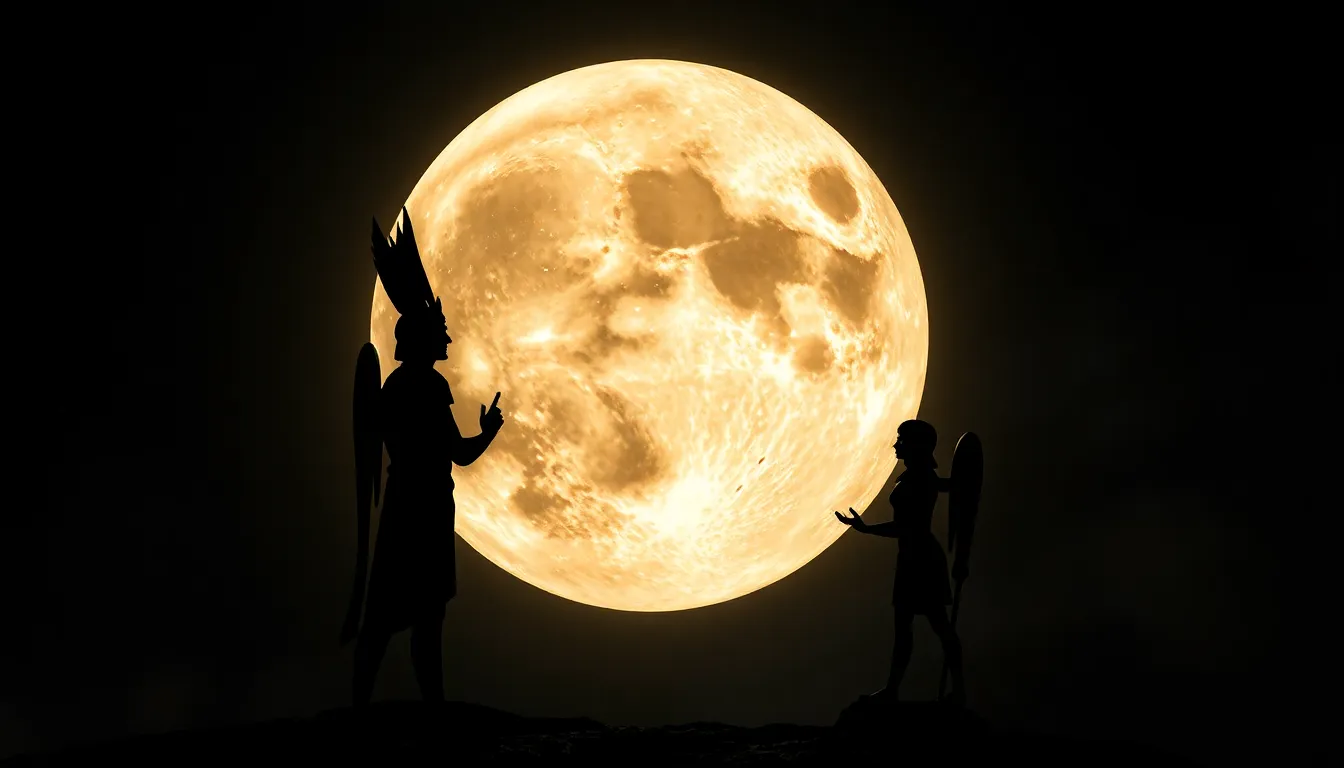
The Moon as a Guide for the Dead: Egyptian Beliefs Explored
I. Introduction
Ancient Egyptian beliefs about the afterlife are rich and complex, showcasing a deep spirituality intertwined with their understanding of the universe. The Egyptians viewed life as a continuous journey, where death was merely a transition to another realm. Celestial bodies, particularly the Moon, played a significant role in their spiritual practices and beliefs.
This article aims to explore the Moon’s role as a guide for the deceased in ancient Egyptian mythology, examining its symbolism, connection to the afterlife, and its influence on funerary practices.
II. The Egyptian Cosmology
To understand the Moon’s significance in guiding the dead, one must first grasp the concept of Ma’at, which represents truth, balance, and cosmic order. In Egyptian cosmology, the universe was seen as a delicate balance between chaos and order, with the gods and goddesses playing critical roles in maintaining this equilibrium.
The gods, such as Anubis and Osiris, were responsible for guiding souls through the afterlife. They ensured that the deceased followed the proper path, helping them navigate the challenges they encountered. Within this pantheon, the Moon held a unique place, symbolizing the cyclical nature of life and death.
III. The Symbolism of the Moon in Egyptian Culture
The Moon was rich in symbolism, particularly concerning its phases. Each phase represented different aspects of life and the afterlife:
- New Moon: A symbol of rebirth and new beginnings.
- Waxing Moon: Growth and development, reflecting the soul’s journey.
- Full Moon: Completion and fulfillment, representing the ultimate reunion with the divine.
- Waning Moon: Decline and reflection, a reminder of the impermanence of life.
Additionally, the Moon was seen as a symbol of regeneration and rebirth, mirroring the cycles of nature. Myths and stories involving the Moon often highlighted its connection to the afterlife, where it served as a guiding light for souls traversing the Duat, the Egyptian underworld.
IV. The Journey of the Soul
The journey of the soul in ancient Egyptian belief was a profound experience filled with trials and tribulations. Upon death, the deceased would embark on a journey through the Duat, where they faced various challenges that tested their worthiness. Central to this journey was the Weighing of the Heart ceremony, where the heart of the deceased was weighed against the feather of Ma’at.
The connection between the Weighing of the Heart and the Moon is significant. The Moon, often associated with the night and the underworld, was believed to illuminate the path for the souls navigating through darkness. This celestial body guided the deceased, ensuring they reached Osiris, the god of the afterlife, for judgment.
V. The Moon in Funerary Practices
The influence of the Moon extended to funerary practices, where lunar imagery was prevalent in tomb paintings and inscriptions. These depictions often included the Moon in various phases, symbolizing the deceased’s journey and transformation in the afterlife.
Rituals and practices were often aligned with lunar cycles, with specific ceremonies conducted during particular phases of the Moon to enhance the spiritual significance of the rites. The Moon’s presence in burial sites and offerings further emphasized its importance as a guiding force for the deceased, helping them navigate the afterlife.
VI. The Connection Between the Moon and Osiris
Osiris, the god of the afterlife, had strong associations with the Moon. He was often depicted with lunar attributes, symbolizing his role in the regeneration of life and the cyclical nature of death. The myth of Osiris, involving his death and resurrection, contains several lunar elements, reinforcing the Moon’s significance in the context of the afterlife.
Osiris’s death and rebirth mirrored the phases of the Moon, influencing lunar worship and rituals. The connection between Osiris and the Moon highlighted the idea that death was not an end but a transition, much like the lunar cycle.
VII. Comparative Analysis: The Moon in Other Cultures’ Afterlife Beliefs
Examining lunar symbolism in other ancient civilizations reveals intriguing similarities and differences in beliefs about the Moon as a guide for the dead:
- Mesopotamia: The Moon was often associated with the goddess Sin, who guided souls in the afterlife.
- Greco-Roman Traditions: The Moon, personified as Selene or Luna, was connected to the night and the mysteries of death.
- Chinese Mythology: The Moon was linked to immortality and the afterlife, with legends surrounding the Moon goddess, Chang’e.
These comparisons enhance our understanding of Egyptian beliefs, illustrating how the Moon served as a universal symbol of guidance, regeneration, and the cyclical nature of life and death across cultures.
VIII. Conclusion
The Moon’s significance in guiding the dead in Egyptian beliefs is profound and multifaceted. From its association with rebirth and regeneration to its role in the journey of the soul through the afterlife, the Moon was a celestial presence that provided illumination and guidance.
These ancient beliefs continue to resonate in modern spirituality, reflecting humanity’s enduring fascination with the cosmos and its influence on our understanding of life and death. The intersection of astronomy and ancient mythology serves as a reminder of how celestial bodies have shaped human beliefs and practices throughout history.