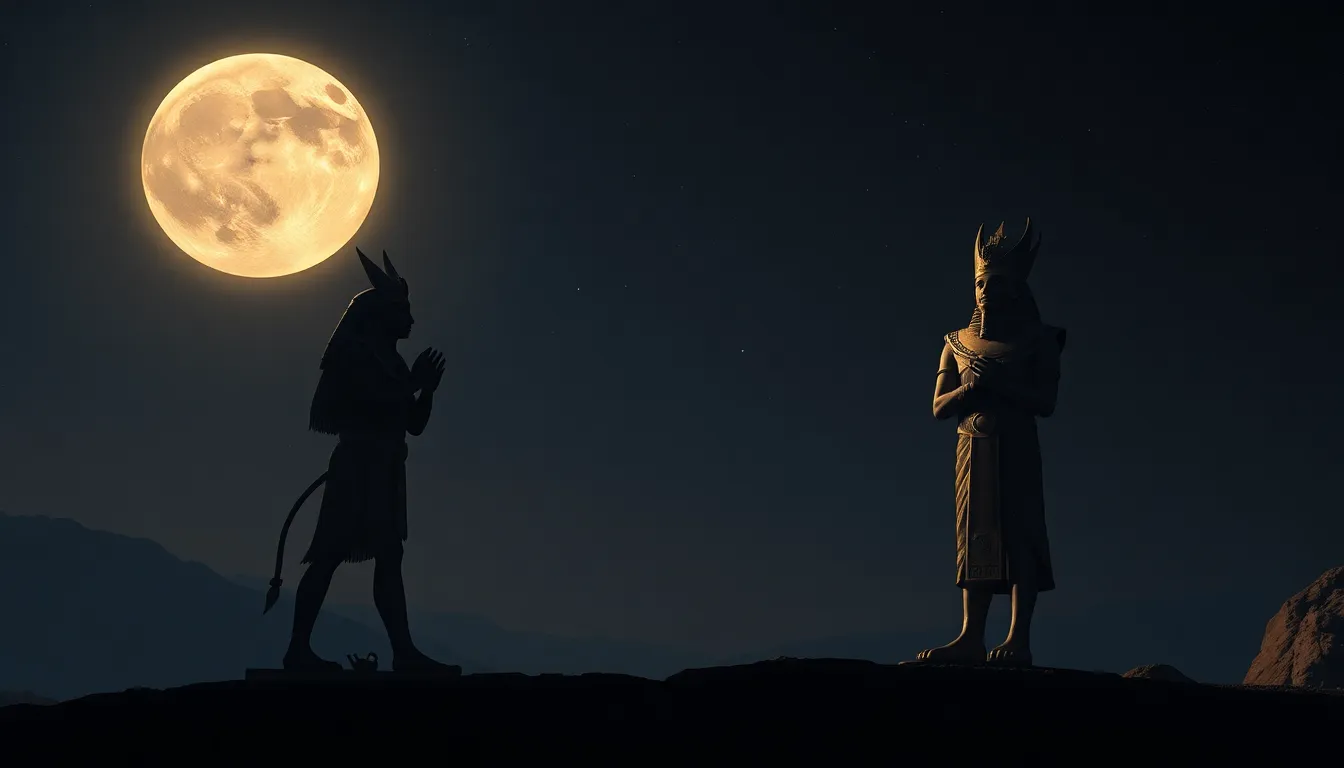
The Moon and the Pharaohs: Rulership and Celestial Signs
I. Introduction
The significance of the moon in ancient Egyptian culture is a fascinating subject that intertwines astronomy, mythology, and governance. The moon was not merely a celestial body; it was an essential element that influenced the rhythm of life in ancient Egypt. From agriculture to religious practices, the lunar cycles were deeply embedded in the daily lives of the Egyptians.
The relationship between celestial bodies, particularly the moon, and rulership in Egyptian civilization was profound. Pharaohs often claimed divine right and authority, which was frequently linked to their understanding of celestial phenomena. This article aims to explore how lunar symbolism and pharaonic authority were interwoven, reflecting the Egyptians’ reverence for the cosmos.
II. Historical Context of Pharaohs and Celestial Beliefs
In ancient Egypt, the role of gods and celestial signs was paramount in governance. The Pharaoh was not just a political leader; he was considered a divine figure, often associated with various deities, including those of the moon. The dynastic periods of Egypt, spanning thousands of years, reveal varying associations with lunar cycles.
Throughout different dynasties, the moon was seen as a symbol of power and stability. The influence of astronomy on Egyptian political structures was significant, as rulers often sought to align their reigns with favorable celestial events, reinforcing their legitimacy.
A. The Role of Gods and Celestial Signs in Ancient Egyptian Governance
- The Pharaoh as a divine intermediary between gods and people.
- Celestial signs interpreted as omens or messages from the gods.
- Linking rulership to the movement of celestial bodies.
B. Overview of the Dynastic Periods and Their Lunar Associations
Egyptian dynasties, including the Old, Middle, and New Kingdoms, had distinct associations with lunar deities and events. For instance:
- The Old Kingdom saw the moon associated with the god Khonsu, representing time and protection.
- The Middle Kingdom emphasized the moon’s role in agriculture and fertility.
- The New Kingdom marked a peak in astronomical observation and lunar worship.
III. The Moon as a Symbol of Power and Authority
The moon represented various concepts, including fertility, renewal, and immortality. These attributes were essential to the Pharaohs, who viewed themselves as the embodiment of these qualities. The lunar phases were believed to influence the Pharaoh’s divine right to rule, where each phase symbolized different aspects of governance.
Iconography of the moon is prevalent in royal regalia and architecture, showcasing its importance in the visual representation of power. For example, the crescent moon was often depicted on the crowns of Pharaohs, symbolizing their connection to the divine.
A. The Moon’s Representation of Fertility, Renewal, and Immortality
- The moon’s cycles reflecting the agricultural calendar.
- Symbolism of rebirth linked to the lunar phases.
- Immortal nature of the moon paralleling the Pharaoh’s eternal rule.
B. Associations between Lunar Phases and the Pharaoh’s Divine Right to Rule
The lunar phases were observed and interpreted as indicators of the Pharaoh’s strength and legitimacy. A full moon might symbolize a time of prosperity and stability, while a new moon could indicate a time of introspection and preparation for renewal.
C. Iconography of the Moon in Royal Regalia and Architecture
Royal tombs and temples often featured lunar motifs, emphasizing the connection between the Pharaoh and the moon. The architecture of certain temples was aligned with lunar events, showcasing the importance of celestial bodies in Egyptian spirituality.
IV. Lunar Deities and Their Influence on Pharaohs
Key lunar deities such as Khonsu and Thoth played crucial roles in Egyptian mythology and were closely associated with the Pharaohs. Khonsu, the god of the moon, was often depicted as a young boy with a sidelock of youth, symbolizing the cyclical nature of time.
Thoth, the god of wisdom and writing, was also linked to the moon. His association with lunar cycles made him a patron of knowledge and governance, further reinforcing the connection between lunar worship and pharaonic legitimacy.
A. Key Lunar Deities: Khonsu, Thoth, and Their Roles in Mythology
- Khonsu: The protector of travelers and the embodiment of time.
- Thoth: The scribe of the gods and the god of knowledge.
B. The Impact of Lunar Worship on Pharaonic Legitimacy
Lunar worship legitimized the Pharaoh’s rule, as leaders sought divine favor through rituals dedicated to these deities. The Pharaoh’s ability to interpret celestial signs was viewed as a reflection of their divine connection.
C. Rituals and Ceremonies Dedicated to Lunar Gods
Various rituals were conducted to honor lunar deities, particularly during significant lunar events. These ceremonies often involved offerings, prayers, and festivals that reinforced the Pharaoh’s divine status and connection to the cosmos.
V. Celestial Events and Their Political Implications
Celestial events such as eclipses and significant lunar cycles were interpreted with great significance by the ancient Egyptians. These occurrences were seen as omens, influencing political decisions and the perception of rulers.
Case studies of significant lunar events, such as eclipses during the reign of certain Pharaohs, reveal their impact on governance and public perception. The prophetic nature of celestial signs played a crucial role in the political landscape of ancient Egypt.
A. Eclipses, Lunar Cycles, and Their Interpretations by Ancient Egyptians
- Interpreting solar and lunar eclipses as signs of divine displeasure.
- The belief that lunar cycles could herald changes in leadership.
B. Case Studies of Significant Lunar Events and Their Effects on Rulership
Throughout history, specific lunar events were linked to the rise and fall of Pharaohs. For instance, a notable eclipse might have been interpreted as a sign that a ruler’s time was coming to an end.
C. The Prophetic Nature of Celestial Signs in Governance
The ancient Egyptians believed that celestial signs held prophetic meanings, guiding rulers in their decisions. The interpretation of these signs could lead to significant shifts in political strategy and leadership.
VI. The Moon in Egyptian Art and Architecture
The moon’s influence extended into Egyptian art and architecture, where it was depicted in various forms. Temple reliefs and tomb paintings often showcased lunar motifs, celebrating the relationship between the Pharaoh and the cosmos.
Architectural alignments with lunar phases demonstrate the ancient Egyptians’ advanced understanding of astronomy. Many temples were constructed to align with specific lunar events, reinforcing the connection between the divine and earthly power.
A. Depictions of the Moon in Temple Reliefs and Tomb Paintings
- Artistic representations of lunar deities and phases.
- Symbolic use of the moon in funerary art.
B. Architectural Alignments with Lunar Phases and Celestial Events
Many temples, such as the Temple of Karnak, were designed with alignments to lunar cycles, showcasing the Egyptians’ reverence for celestial bodies and their influence on time and governance.
C. The Significance of Lunar Motifs in Funerary Practices
Lunar motifs were prevalent in funerary practices, symbolizing the journey of the soul and the promise of rebirth, much like the cyclical nature of the moon itself.
VII. Comparative Analysis: The Moon in Other Ancient Civilizations
The moon held significance in various ancient cultures, with similarities and differences in lunar symbolism. In Mesopotamia, the moon was associated with gods like Sin, while in Mesoamerican societies, lunar deities played crucial roles in agricultural cycles.
The influence of Egyptian lunar beliefs extended to neighboring civilizations, showcasing the interconnectedness of ancient cultures and their celestial interpretations.
A. Similarities and Differences in Lunar Symbolism Across Cultures
- Similar associations with fertility and agriculture.
- Divergent interpretations of lunar eclipses and celestial events.
B. The Role of the Moon in Mesopotamian and Mesoamerican Societies
In Mesopotamia, the moon was central to the calendar