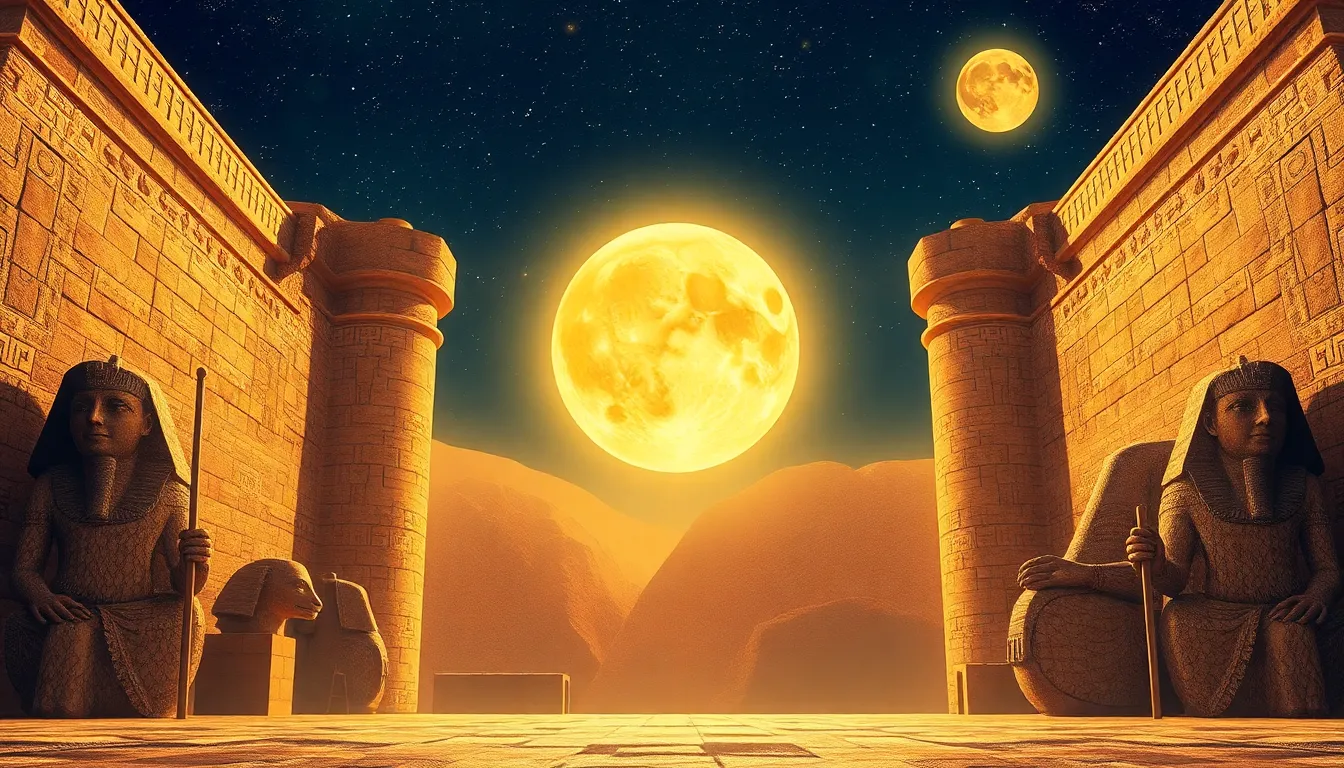
The Lunar Myths of Ancient Egypt: A Comprehensive Overview
I. Introduction
Lunar myths are stories and beliefs surrounding the moon that have been present in various cultures throughout history. These myths often reflect the significance of the moon in shaping societal values, agricultural practices, and religious beliefs. In ancient cultures, including that of Egypt, the moon was not merely a celestial body but a powerful symbol intertwined with daily life and the cosmos.
In Ancient Egyptian society, the moon played a crucial role, influencing everything from agriculture to religious practices. Its phases were closely observed and linked to the rhythms of life in the Nile Valley, making lunar myths a vital part of Egyptian cosmology. This article aims to provide a comprehensive overview of the lunar myths of ancient Egypt, exploring their significance, key deities, creation stories, rituals, and their legacy in modern times.
II. The Role of the Moon in Ancient Egyptian Cosmology
The moon was integral to Ancient Egyptian cosmology, serving as a guide for timekeeping and agriculture. The lunar cycle, with its distinct phases, influenced various aspects of life, including:
- Agriculture: The Egyptians relied on the lunar calendar to determine the best times for planting and harvesting crops.
- Religion: The phases of the moon were linked to various religious observances and rituals, marking important times for worship and offerings.
Moreover, the moon served as a symbol of timekeeping and navigation. It was seen as a celestial marker that helped the Egyptians track the passing of time and seasonal changes. Additionally, the moon was associated with the afterlife, symbolizing rebirth and regeneration. This connection reinforced the belief in the cyclical nature of life and death.
III. Key Lunar Deities in Ancient Egyptian Mythology
Several deities in Ancient Egyptian mythology were associated with the moon, each embodying different aspects of its significance:
- Thoth: Often depicted as an ibis or a baboon, Thoth was the god of wisdom, writing, and the moon. He was believed to govern the lunar calendar and was also associated with the measurement of time.
- Khonsu: Known as the youthful moon god, Khonsu was depicted as a young man with a sidelock of youth and a lunar disk on his head. He was considered a protector of travelers and was invoked for safe journeys during the night.
- Isis: While primarily known as the goddess of motherhood and fertility, Isis also had lunar associations. She was linked to the moon’s nurturing qualities and its role in the cycles of life.
IV. Lunar Myths and Creation Stories
The moon’s role in creation stories is prominent in Egyptian mythology. The lunar deity Thoth, for example, was believed to have played a part in the creation of the world. His wisdom was crucial in establishing order from chaos.
Myths surrounding the birth of lunar deities often highlight their importance in the cosmic order. In some narratives, Thoth is said to have been born from the eye of Ra, the sun god, symbolizing the balance between light and darkness.
When comparing Egyptian lunar myths to those of other ancient cultures, such as the Greeks and Mesopotamians, one can see similarities in the themes of duality and the cyclical nature of existence. The moon often represents change, fertility, and the passage of time across various mythologies.
V. Lunar Festivals and Rituals
Ancient Egyptians celebrated several key lunar festivals that were vital to their religious and agricultural calendars. These festivals marked significant lunar phases, including:
- Wepet-Renenutet: A festival marking the new moon, associated with renewal and new beginnings.
- Full Moon Celebrations: Rituals during the full moon were dedicated to various deities, particularly Thoth and Khonsu, involving offerings and prayers for prosperity.
Rituals associated with lunar phases not only held spiritual significance but also impacted societal practices. The alignment of agricultural activities with lunar cycles ensured that the community thrived. Temples often held special ceremonies during these phases, reinforcing the connection between the divine and the everyday lives of the Egyptians.
VI. Astronomy and the Lunar Calendar
The Ancient Egyptians had a sophisticated understanding of lunar cycles, which they meticulously observed. The lunar calendar was developed based on the moon’s phases, consisting of twelve months of thirty days, with an additional five days added to complete the year.
This calendar served various purposes, including:
- Agricultural Planning: Farmers used lunar phases to determine the best times for planting and harvesting.
- Religious Festivals: Many religious observances were scheduled according to the lunar calendar, ensuring alignment with celestial events.
Overall, lunar observations influenced daily life significantly, shaping social structures, agricultural practices, and religious observances in Ancient Egypt.
VII. The Legacy of Lunar Myths in Modern Egyptology
Research into lunar myths continues to evolve, with ongoing discoveries shedding light on their significance in Ancient Egyptian culture. Archaeological findings often reveal new insights into how lunar beliefs influenced various aspects of life.
Contemporary culture and spirituality still draw from these ancient beliefs. Lunar symbolism is evident in modern practices, rituals, and even art, showcasing the enduring legacy of these myths. The study of lunar myths remains crucial in understanding the complexities of Ancient Egyptian civilization and its worldview.
VIII. Conclusion
The lunar myths of Ancient Egypt offer a fascinating glimpse into how the moon shaped the lives and beliefs of its people. From agricultural practices to religious rituals, the moon was an essential aspect of their cosmology.
Reflecting on these myths reveals their enduring legacy, influencing both ancient practices and modern interpretations of spirituality. For those interested in exploring the depths of ancient cultures, the study of lunar mythology presents a rich field of research and discovery.