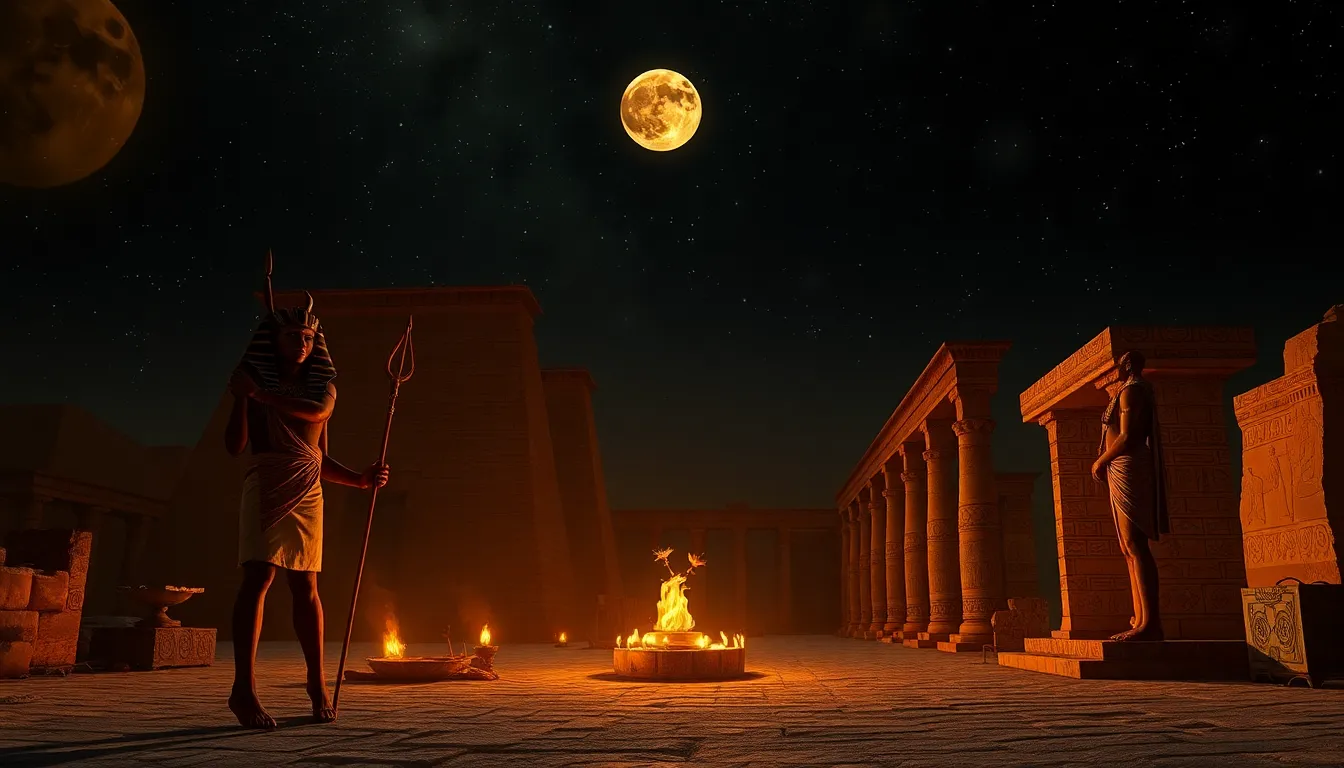
The Lunar Festivals of Ancient Egypt: Celebrations and Rituals
I. Introduction
Ancient Egyptian culture was deeply intertwined with celestial events, particularly the lunar cycles. The lunar calendar played a significant role in the daily lives of the Egyptians, influencing agricultural practices, religious observances, and social activities. Lunar festivals were not merely celebrations; they were essential to the rhythm of life, marking significant periods in the agricultural cycle and religious calendar.
This article aims to explore the importance of lunar festivals in Ancient Egypt, examining their structure, major celebrations, rituals, and the social and cultural significance they held for the Egyptian people.
II. The Lunar Calendar in Ancient Egypt
The lunar calendar in Ancient Egypt was based on the phases of the moon, with each month beginning with the sighting of the new moon. This calendar was essential for scheduling festivals, agricultural activities, and religious observances.
- Structure and significance: The lunar year comprised 12 months of 29 or 30 days, totaling approximately 354 days. This calendar was crucial for determining the timing of festivals and agricultural cycles.
- Differences between lunar and solar calendars: The solar calendar, which was also used in Ancient Egypt, consisted of 365 days and was primarily used for civil purposes. The lunar calendar, in contrast, was more closely associated with religious and agricultural events.
- Role in scheduling: The lunar calendar’s fluctuations meant that festivals would shift in relation to the solar calendar, creating a dynamic interplay between agricultural cycles and religious observances.
III. Major Lunar Festivals
Several key lunar festivals were celebrated in Ancient Egypt, each with its unique significance and rituals. Two of the most important festivals were the Festival of Opet and the Wepet-Renpet (New Year) celebrations.
A. Overview of key lunar festivals
- Festival of Opet
- Wepet-Renpet (New Year)
- Festival of the Inundation
- Feast of the Valley
B. Detailed exploration of the Festival of Opet
The Festival of Opet was celebrated annually in Thebes, marking the rejuvenation of the Pharaoh and the connection between the king and the divine. This festival lasted for several days and included a grand procession from Karnak Temple to Luxor Temple. Highlights of the festival included:
- Processions of sacred boats carrying the statues of the gods Amun, Mut, and Khonsu.
- Rituals performed by priests to ensure the fertility of the land and the prosperity of the kingdom.
- Communal feasting and celebrations that involved the entire populace.
C. Examination of the Wepet-Renpet (New Year) celebrations
The Wepet-Renpet, or the New Year festival, marked the beginning of the lunar year and was a time of renewal and hope. It was celebrated with various rituals that included:
- Offerings to the gods to ensure their favor in the coming year.
- Rituals to invoke fertility and prosperity, crucial for the agricultural calendar.
- Community gatherings to celebrate the new year with music, dance, and feasting.
IV. Rituals and Ceremonies
The rituals associated with lunar festivals were complex and varied, often involving elaborate ceremonies. Common elements of these rituals included:
- Role of priests and priestesses: Priests and priestesses played a central role in conducting the rituals, ensuring that the proper offerings were made and the correct prayers were recited.
- Music and dance: Festivals were often accompanied by music and dance, which were believed to please the gods and invite their blessings.
- Offerings: Various offerings, including food, incense, and symbolic items, were presented to the deities during the festivities.
V. Symbolism and Mythology
The lunar phases were closely connected to Egyptian mythology, influencing the way festivals were celebrated. Several deities were associated with the moon, including:
- Thoth: The god of wisdom and writing, often depicted with a lunar motif.
- Khonsu: The moon god, who represented time and was believed to influence the cycles of life.
The symbolism of lunar festivals extended beyond mere observance; they represented the cyclical nature of life, death, and rebirth, central themes in Egyptian mythology.
VI. Community Involvement and Social Aspects
Lunar festivals were communal events that brought together people from various social strata. The participation of the community was vital for the success of these celebrations.
- Role of the community: Local communities actively participated in preparations and celebrations, reinforcing social bonds.
- Importance for social cohesion: Festivals fostered a sense of belonging and cultural identity among the Egyptians.
- Participation of various social classes: Festivals were attended by all classes, from the Pharaoh to the common people, highlighting the unity of society in religious and agricultural life.
VII. Influence on Later Cultures
The impact of Ancient Egyptian lunar festivals extended beyond their time, influencing neighboring civilizations and continuing to resonate in modern practices.
- Impact on neighboring civilizations: The lunar calendar and its associated festivals influenced the religious practices of various cultures in the region.
- Continuation in modern Egypt: Some lunar celebrations have persisted in contemporary Egyptian culture, reflecting the enduring legacy of these ancient practices.
- Legacy in contemporary practices: The themes of renewal and celebration associated with lunar festivals continue to be significant in various cultural and religious observances today.
VIII. Conclusion
Lunar festivals were a cornerstone of Ancient Egyptian society, intertwining agricultural, religious, and social life in profound ways. They served not only as a means of marking time but also as crucial expressions of cultural identity and community cohesion.
As we reflect on the significance of these celebrations, it becomes clear that the traditions and beliefs surrounding lunar festivals have left an indelible mark on cultural heritage. Preserving the historical knowledge of these rituals is essential for understanding the complexities of Ancient Egyptian life and its lasting influence on contemporary practices.