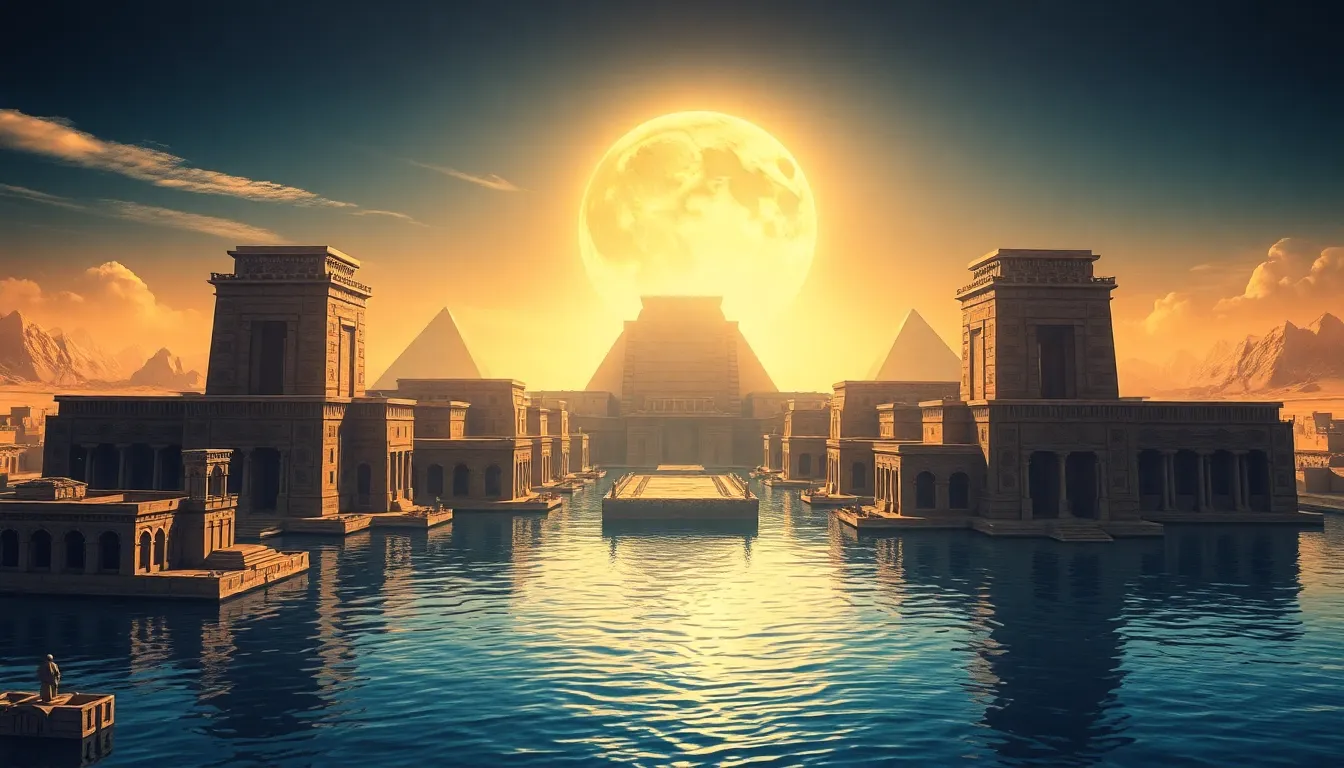
The Lost City of Atlantis: Egyptian Myths and Geography
I. Introduction
The myth of Atlantis has captivated the imagination of countless individuals throughout history, becoming a prominent feature of popular culture. From literature to film, Atlantis is often depicted as a highly advanced civilization that mysteriously vanished beneath the waves. This narrative, while fascinating, is steeped in complexity and intertwined with various cultural myths, particularly those of ancient Egypt.
Egyptian mythology provides significant insights that could shed light on the legendary Atlantis. The rich tapestry of Egyptian beliefs, gods, and stories offers a unique lens through which we can examine the potential connections to this enigmatic lost city.
The purpose of this article is to explore the historical context of Atlantis, its connections to Egyptian mythology, and the geographical theories surrounding its potential location.
II. Historical Context of Atlantis
A. Origin of the Atlantis Myth in Plato’s Writings
The tale of Atlantis was first introduced by the ancient Greek philosopher Plato in his dialogues “Timaeus” and “Critias.” Plato describes Atlantis as a powerful and advanced civilization that existed approximately 9,000 years before his time, located beyond the “Pillars of Hercules” (modern-day Strait of Gibraltar).
B. The Timeline of Atlantis in Ancient History
According to Plato, Atlantis was a large island that eventually fell out of favor with the gods due to its inhabitants’ hubris and moral decline. As a result, the island was said to have sunk into the ocean in a single day and night of misfortune. This timeline has led to extensive speculation regarding its historical basis and location.
C. Connections to Egyptian Civilization
Plato claimed that the story of Atlantis was derived from Egyptian sources, specifically referencing a priest from the ancient city of Sais. This connection suggests that the Egyptians held knowledge of a great civilization that parallels the story of Atlantis, leading to further exploration of Egyptian myths and their significance.
III. Egyptian Myths and Their Significance
A. Overview of Key Egyptian Myths Related to Lost Civilizations
Egyptian mythology is rich with tales of lost cities and civilizations, often serving as moral lessons or cautionary tales. Myths about the sun god Ra, the underworld, and the cyclical nature of life and death can be seen as reflections of the themes present in the Atlantis narrative.
B. The Role of the Nile River in Egyptian Mythology and its Parallels to Atlantis
The Nile River is central to Egyptian mythology, symbolizing life, fertility, and sustenance. Its predictable flooding cycle was seen as a gift from the gods, contrasting the unpredictable nature of water in the Atlantis myth. The Nile’s significance could parallel the idea of a lost civilization thriving near a life-giving water source before its downfall.
C. Symbolism of Water and Land in Ancient Egyptian Beliefs
In ancient Egyptian beliefs, water represented chaos and creation, while land symbolized stability and order. The duality of these elements is mirrored in the Atlantis myth, where a once-thriving civilization is swallowed by the chaotic sea. This interplay of water and land highlights the fragility of civilization in the face of nature’s power.
IV. Geographical Theories Surrounding Atlantis
A. Various Theories About the Location of Atlantis
Over the centuries, numerous theories have emerged regarding the location of Atlantis, including:
- The Mediterranean Sea
- The Caribbean Islands
- The Antarctic region
- The Sahara Desert
B. Examination of Potential Links to Egyptian Geography
Some scholars propose that Atlantis may have connections to the geography of ancient Egypt. The Nile Delta, with its fertile lands and complex waterways, could serve as a parallel to Plato’s descriptions of the island’s layout.
C. The Significance of the Mediterranean and the Sahara Desert
The Mediterranean Sea has long been a melting pot of cultures and civilizations, making it a plausible location for Atlantis. Additionally, the Sahara Desert’s vastness and ancient human habitation suggest that lost civilizations may have once thrived in this region before succumbing to environmental changes.
V. Archaeological Evidence and Discoveries
A. Key Archaeological Sites in Egypt Potentially Linked to Atlantis
Several archaeological sites in Egypt have drawn attention from researchers looking for clues linking to Atlantis. Notable sites include:
- Heliopolis – An ancient center of sun worship.
- Alexandria – A city with rich Greek and Egyptian histories.
- Canopus – A city believed to have been a major center for trade and culture.
B. Overview of Recent Discoveries and Their Implications
Recent underwater excavations near Alexandria have uncovered remnants of structures that suggest advanced engineering and urban planning, raising intriguing possibilities about connections to the Atlantis myth.
C. The Role of Underwater Archaeology in the Search for Atlantis
Underwater archaeology has become increasingly important in the quest to find Atlantis. Techniques such as sonar mapping and remote sensing are uncovering submerged ancient sites that may hold the key to understanding lost civilizations.
VI. Cultural Impact of the Atlantis Myth in Egypt
A. How the Atlantis Myth Influenced Egyptian Art and Literature
The myth of Atlantis has left a lasting mark on Egyptian art and literature, inspiring depictions of lost cities, gods, and epic tales of civilization’s rise and fall. Artists have often drawn parallels between their own history and the story of Atlantis.
B. The Legacy of Atlantis in Egyptian Folklore
Folklore in Egypt has absorbed elements of the Atlantis myth, with tales of lost cities beneath the sands and water. These stories serve as reminders of the impermanence of human achievement and the vastness of the natural world.
C. Comparisons with Other Ancient Cultures’ Interpretations of Atlantis
Other ancient cultures, such as the Mesopotamians and Greeks, have their interpretations of lost civilizations, often sharing themes with the Atlantis story. The blending of these narratives highlights a common human fascination with the rise and fall of great societies.
VII. Modern Interpretations and Theories
A. Contemporary Scholars’ Views on the Atlantis Myth and Egyptian Connections
Modern scholars continue to debate the origins and meaning of the Atlantis myth. Some argue for a purely allegorical interpretation, while others seek concrete historical connections to Egypt and other civilizations.
B. Popular Media Representations of Atlantis and Egypt
Films, books, and documentaries often conflate Egyptian mythology with the Atlantis narrative, creating a captivating but sometimes inaccurate portrayal of both. These representations influence public perception and understanding of these ancient cultures.
C. The Impact of Pseudoscience on the Perception of Atlantis
Pseudoscientific theories surrounding Atlantis often overshadow legitimate scholarly research, leading to a proliferation of myths and misunderstandings. Critical thinking and evidence-based approaches are essential in the ongoing exploration of Atlantis and its connections to Egyptian mythology.
VIII. Conclusion
In summary, the myth of Atlantis is deeply intertwined with Egyptian mythology, offering tantalizing clues about lost civilizations and the cyclical nature of history. The connections between the two reveal a rich tapestry of cultural narratives that continue to inspire exploration and inquiry.
The enduring mystery of Atlantis and its ties to Egypt invites further research and exploration of ancient myths. As we delve into these stories, we may uncover truths about our past and the civilizations that shaped our world.