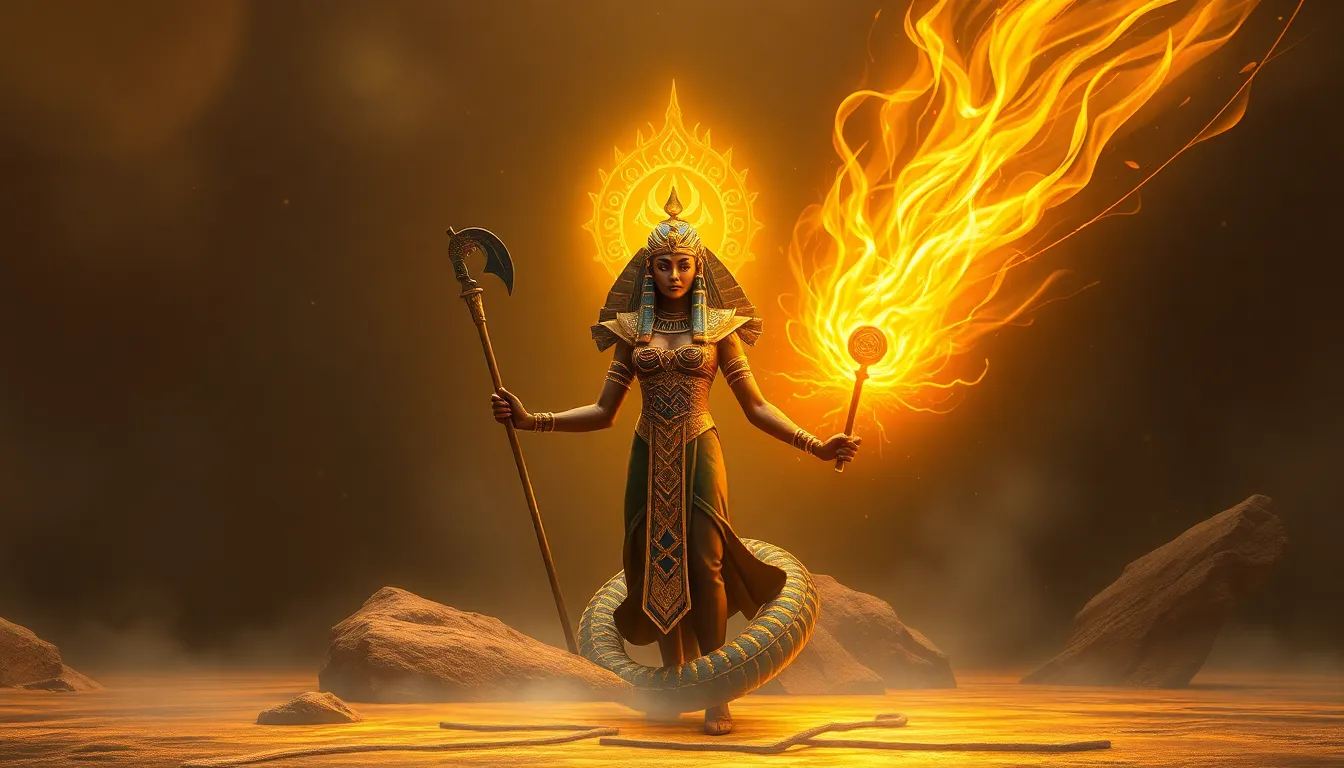
The Legend of the Serpent Goddess: Wadjet and Her Protective Powers
I. Introduction
Wadjet, the Serpent Goddess of ancient Egypt, stands as a prominent figure in the rich tapestry of Egyptian mythology. Often depicted as a cobra or a woman with a cobra on her head, she embodies protection, royalty, and the duality of life and death. Her importance in ancient Egyptian culture cannot be overstated, as she was revered as a guardian of the pharaoh and the nation itself.
This article aims to delve into the multifaceted nature of Wadjet, exploring her protective powers and the influence she wielded over ancient Egyptian society, rituals, and beliefs.
II. Historical Background of Wadjet
The origins of Wadjet can be traced back to the early dynastic period of Egypt, where she was worshipped primarily in the Nile Delta region, particularly in the city of Buto. Initially, she was considered a local deity, but over time, her reputation grew, and she became a national symbol of protection.
Wadjet’s worship evolved significantly throughout ancient Egypt. With the unification of Upper and Lower Egypt, she was incorporated into the broader pantheon of Egyptian gods. Her association with the pharaohs solidified her status as a guardian deity.
Important archaeological findings, such as inscriptions and temple reliefs, have illuminated Wadjet’s role in ancient Egyptian society. For instance, the discovery of the temple at Buto revealed extensive worship practices dedicated to her, including offerings and rituals aimed at invoking her protective powers.
III. Iconography and Symbols Associated with Wadjet
Wadjet’s iconography is rich and varied. She is commonly depicted as a cobra, reflecting her identity as a serpent goddess. Artists portrayed her in a variety of forms, including:
- A woman with a cobra on her head, symbolizing her protective nature.
- A full serpent, representing her primal power and connection to the earth.
The cobra, or Uraeus, is a significant symbol associated with Wadjet. It represents sovereignty and divine authority, often seen adorning the crowns of pharaohs as a protective emblem. The Uraeus was believed to spit fire at enemies, signifying Wadjet’s ferocity in defense of her followers.
Other symbols linked to Wadjet’s protective nature include:
- The ankh, symbolizing life and immortality.
- The sistrum, a musical instrument associated with fertility and protection.
IV. Wadjet’s Role as a Protector
Wadjet’s protective powers are a central theme in her mythology. She was seen as a guardian of the pharaoh, embodying the strength and ferocity needed to defend the kingdom. As the protector of Lower Egypt, she was often invoked during battles and significant state events.
Her association with the pharaoh extended to the idea of divine kingship. Pharaohs often sought her blessing to ensure their reign was fortified against chaos and enemies. Rituals dedicated to Wadjet included:
- Offerings of food and incense at her temples.
- Rituals performed before military campaigns, calling upon her to protect the nation.
V. Wadjet in the Context of Ancient Egyptian Religion
Wadjet’s relationship with other deities was complex. She was often linked with Nekhbet, the vulture goddess of Upper Egypt, together symbolizing the unification of the two lands. This duo represented the balance of power and protection for the pharaoh.
Within the pantheon, Wadjet held a significant position, not only as a protector but also as a symbol of fertility and rebirth. Her presence was felt in various aspects of ancient Egyptian religion, including:
- Funerary practices, where she was invoked to protect the deceased on their journey to the afterlife.
- Festivals celebrating the Nile’s flooding, which Wadjet was believed to oversee, assuring the fertility of the land.
VI. Cultural Impact and Legacy of Wadjet
Wadjet’s influence on ancient Egyptian society was profound. As a symbol of protection and royalty, she shaped the cultural identity of the nation. The imagery of Wadjet continued to inspire art, jewelry, and architecture throughout ancient Egypt.
In later cultures, elements of Wadjet’s mythology seeped into other religious practices. The symbolism of the cobra as a protective figure can be seen in various cultures influenced by Egyptian mythology.
Modern interpretations of Wadjet’s mythology have emerged, with neopagan practices recognizing her protective attributes and celebrating her as a symbol of empowerment and strength.
VII. Contemporary Perspectives on Wadjet
In contemporary spirituality, Wadjet is often invoked in rituals aimed at protection and empowerment. Neopagan communities appreciate her as a goddess of the earth, fertility, and sovereignty. Her mythology serves as a source of inspiration for those seeking to connect with ancient wisdom and protective energies.
Academic interest in Wadjet has also grown, with scholars exploring her significance in both historical and modern contexts. Research continues to uncover new insights into her worship and representation, highlighting her enduring relevance.
The protective powers of Wadjet resonate today, as individuals seek guidance and strength in a world often fraught with challenges. Her legacy as a guardian figure continues to inspire both personal and communal practices of protection.
VIII. Conclusion
Wadjet, the Serpent Goddess, embodies the essence of protection, sovereignty, and divine power in ancient Egyptian mythology. Her significance as a guardian of the pharaoh and the nation reflects the deep cultural values of ancient Egypt.
As we reflect on Wadjet’s enduring legacy, it becomes clear that mythological figures like her play a crucial role in shaping cultural identities and beliefs. The protective nature of Wadjet continues to inspire and empower individuals in contemporary society, underscoring the timeless relevance of mythological narratives.