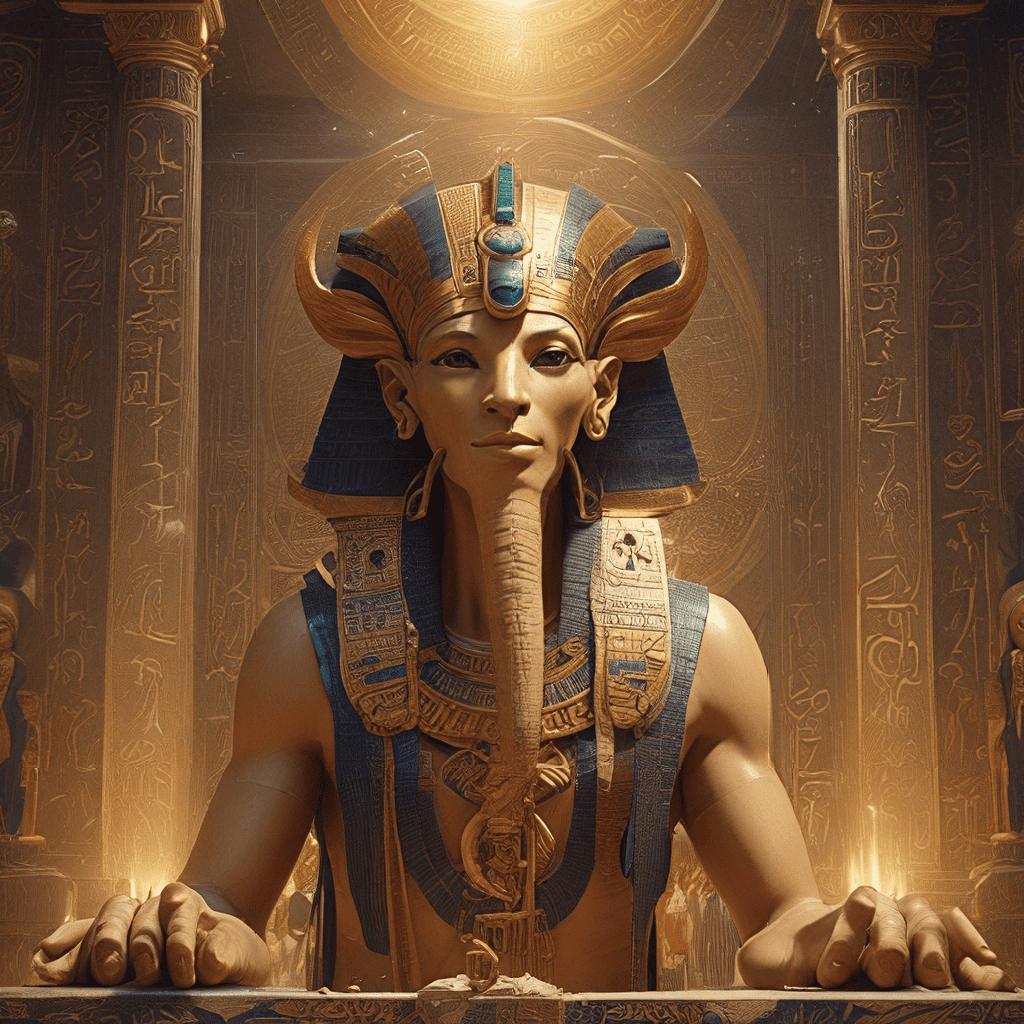
The Legacy of the Scribe: Unveiling the History of the Festival of Thoth
1. Thoth: The Divine Scribe and Patron of Knowledge
In the ancient Egyptian pantheon, Thoth held a position of immense importance. He was revered as the divine scribe, the inventor of writing, and the keeper of all knowledge. His association with wisdom, magic, and the moon made him a fascinating and complex deity. Thoth was often depicted as a man with the head of an ibis, a bird known for its intelligence and ability to navigate by the stars. This connection to the moon further cemented his association with time, the celestial cycles, and the cosmic order.
Thoth was not just a god of writing; he was the embodiment of knowledge itself. He was credited with creating the calendar, inventing astronomy, and establishing the principles of mathematics and geometry. The ancient Egyptians believed that Thoth’s wisdom extended beyond the earthly realm, influencing the very fabric of the universe. He was seen as the architect of the cosmos, responsible for maintaining harmony and balance within the divine order.
2. The Festival of Thoth: A Celebration of Knowledge and Renewal
The Festival of Thoth, also known as the “Feast of Thoth,” was a significant celebration in ancient Egypt. It was held annually during the month of Thoth (the first month of the Egyptian calendar), which corresponds roughly to September/October in our Gregorian calendar. This festival was dedicated to honoring the god Thoth and celebrating the power of knowledge and the pursuit of wisdom.
The festival’s duration was typically five days, during which time the ancient Egyptians engaged in various rituals and ceremonies. The festivities were filled with vibrant colors, music, and offerings. The exact dates of the festival could vary slightly depending on the lunar calendar. However, the key aspect was that it marked the beginning of the new year and a time for renewal and rebirth.
3. The Role of Scribes in the Festival
In ancient Egypt, scribes held a position of great respect and authority. They were responsible for recording history, keeping track of finances, and preserving sacred texts. As keepers of knowledge and tradition, scribes played a crucial role in the Festival of Thoth.
During the festival, scribes would participate in various rituals and ceremonies, often leading the processions and reciting hymns in honor of Thoth. They also played a vital role in recording the events of the festival, ensuring its continuity and preserving its legacy for future generations. Their presence served as a tangible reminder of the importance of writing, knowledge, and the divine guidance of Thoth.
4. The Festival’s Symbolism and Themes:
The Festival of Thoth embodied a deep-seated belief in the transformative power of knowledge. It was a time to celebrate the pursuit of wisdom, the renewal of the mind, and the connection between the earthly realm and the divine.
The festival’s key themes were rooted in the very essence of Thoth’s role as the god of knowledge:
* **The Pursuit of Wisdom:** The festival encouraged individuals to seek knowledge and strive for intellectual growth.
* **Renewal of the Mind and Spirit:** The festival marked a time for spiritual reflection and the shedding of old habits and ideas to embrace new beginnings.
* **Connection to the Divine:** The festival served as a bridge between humanity and the divine, highlighting the importance of seeking guidance and wisdom from the gods.
5. The Festival’s Rituals and Offerings:
The rituals and offerings during the Festival of Thoth reflected the god’s association with writing, knowledge, and the moon.
Here are some of the key rituals and offerings:
* **Offering of Papyrus and Ink:** Scribes and devotees would offer papyrus and ink to Thoth as symbols of writing and knowledge. This offering symbolized their dedication to preserving and expanding knowledge.
* **Performance of Sacred Hymns and Prayers:** Chants, hymns, and prayers were performed in honor of Thoth, praising his wisdom and seeking his guidance.
* **Creation of Magical Amulets and Talismans:** Amulets and talismans associated with Thoth were created and worn for protection and to enhance wisdom and understanding.
6. The Festival’s Impact on Society:
The Festival of Thoth had a profound impact on ancient Egyptian society. It played a vital role in promoting literacy and education, fostering intellectual curiosity, and cementing the importance of knowledge within the cultural fabric of Egypt.
Here are some of the key impacts:
* **Promotion of Literacy and Education:** The festival’s emphasis on knowledge and learning encouraged the spread of literacy and the advancement of education.
* **Influence on Egyptian Culture:** The festival’s themes and rituals influenced the development of Egyptian culture, literature, and art.
* **Veneration of Thoth:** The festival strengthened the veneration of Thoth and further solidified his position as a key deity in the Egyptian pantheon.
7. The Festival’s Decline and Legacy:
The decline of ancient Egypt led to the gradual fading of the Festival of Thoth. As the empire weakened and its influence waned, the celebration lost its cultural significance. However, the festival’s legacy lived on, its themes of knowledge, wisdom, and renewal continuing to resonate throughout history.
The festival’s influence can be seen in the enduring importance of education, the pursuit of knowledge, and the quest for understanding in modern society. The legacy of Thoth and his festival serves as a reminder of the human fascination with knowledge and the timeless desire to uncover the mysteries of the world.