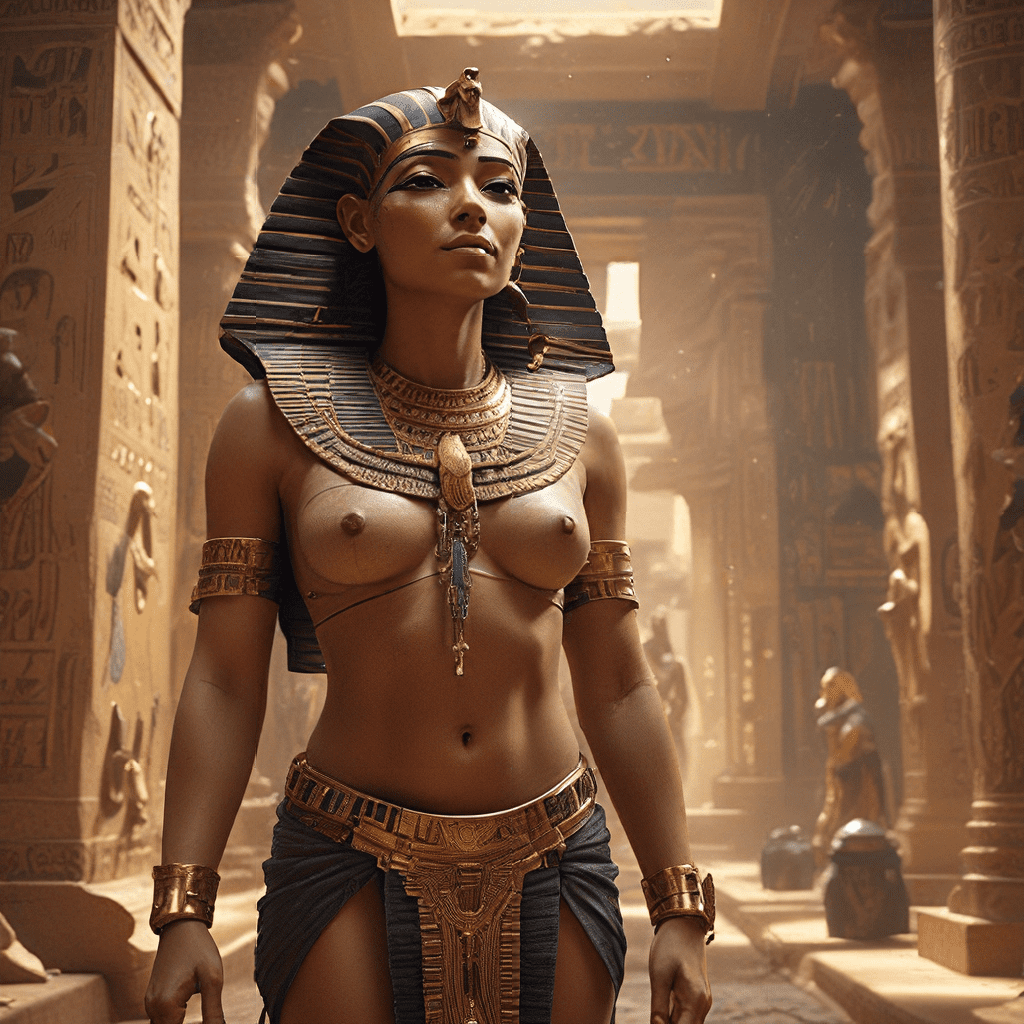
The Legacy of the Pharaohs: Ancient Egyptian Magic and Rituals
The Pharaohs of Ancient Egypt were more than just rulers; they were revered as divine beings, bridging the gap between the human and spiritual realms. Their lives were interwoven with complex rituals, ceremonies, and potent magic, all designed to maintain their power, ensure their prosperity, and guarantee their eternal journey into the afterlife.
1. The Divine Pharaoh: A Bridge Between Worlds
The Pharaoh was seen as the living embodiment of Horus, the powerful god of kingship, sky, and protection. This divine connection granted the Pharaoh the right to rule, bestowed upon him by the gods themselves. The Pharaoh was also deeply intertwined with the concept of Ma’at, the principle of cosmic order and justice. Maintaining Ma’at was crucial for the Pharaoh, as it ensured harmony in both the physical and spiritual realms. This role placed the Pharaoh as a mediator between the human world and the divine, responsible for ensuring the well-being of Egypt and its people.
2. Royal Rituals and Ceremonies: A Tapestry of Power and Protection
The Pharaoh’s life was a tapestry of intricate rituals and ceremonies, each with specific purposes. The Sed Festival, celebrated every 30 years of the Pharaoh’s reign, served as a symbolic renewal of his power and legitimacy. This festival was a grand spectacle, featuring processions, offerings, and elaborate performances designed to demonstrate the Pharaoh’s strength and divine favor. The Heb Sed Festival, celebrated in the Pharaoh’s later years, was a testament to his longevity and the gods’ continued favor. This festival involved a complex series of rituals designed to ensure the Pharaoh’s continued well-being and smooth transition to the afterlife.
The Pharaoh’s death was met with elaborate funerary rituals, designed to ensure his safe passage to the afterlife. These rituals involved mummification, the creation of elaborate tombs, and offerings intended to sustain the Pharaoh in the next life. The Pharaoh’s journey to the underworld was closely intertwined with the Osiris myth, and the rituals were designed to prepare him for judgment by Osiris and his eventual rebirth as a divine being.
3. The Power of the Pyramid: A Monument to Eternity
The Pyramids of Ancient Egypt are not just impressive feats of architecture but powerful symbols of the Pharaoh’s immortality. Constructed with staggering precision and grandeur, these towering structures were designed to house the Pharaoh’s eternal resting place. The interior of the pyramid was a complex maze of chambers and passages, each with symbolic significance, echoing the Pharaoh’s journey through the underworld. These passageways and chambers were carefully aligned with celestial bodies, further strengthening the connection between the Pharaoh and the divine.
4. The Role of Magic in the Pharaoh’s Life
Magic played a crucial role in the Pharaoh’s life, serving as a tool for protection, healing, and power. Ancient Egyptians believed that the universe was imbued with potent magical forces that could be harnessed for specific purposes. The Pharaoh, with his divine connection, was believed to possess unique access to these forces. He used spells, amulets, and incantations to safeguard himself, his people, and the kingdom. The Pharaoh’s magical abilities were seen as a vital component of his leadership, allowing him to influence events, protect against enemies, and ensure the prosperity of Egypt.
5. Ancient Egyptian Gods and Goddesses: Guardians of the Pharaoh
The Pharaoh’s life was deeply intertwined with the Egyptian pantheon. The Ennead, the primary gods of the Egyptian pantheon, played a crucial role in protecting the Pharaoh and ensuring his prosperity. The Pharaoh’s relationship with specific deities, such as Ra, the sun god, Osiris, the god of the underworld, and Isis, the goddess of magic and motherhood, was particularly important. These deities provided the Pharaoh with divine guidance, protection, and ensured his eternal life beyond the earthly realm.
6. Sacred Animals and their Connection to the Pharaoh
Animals played a significant role in Ancient Egyptian religion, often associated with specific deities and their attributes. The Pharaoh was often associated with specific animals, like the falcon (Horus), the bull (Apis), and the serpent (Wadjet). These associations reflected the Pharaoh’s divine connections, his strength, wisdom, and the power he wielded. The Pharaoh also used the imagery of these animals in his royal iconography, further solidifying his connection to the divine and his role as a divine ruler.