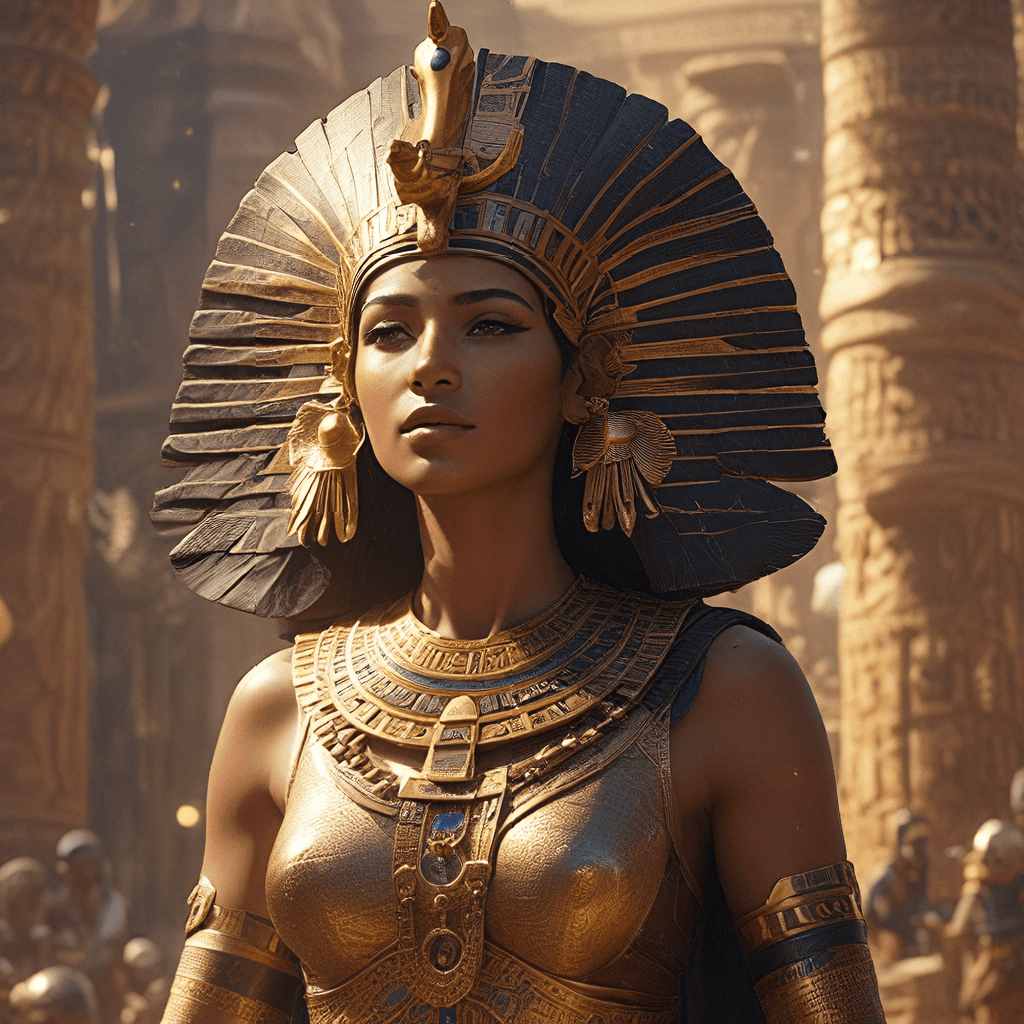
The Legacy of the Nile: Exploring the History of the Ra Festival
1. The Nile’s Lifeblood: Understanding the River’s Importance in Ancient Egypt
The Nile River, a majestic ribbon winding through the heart of Egypt, was far more than just a waterway for ancient Egyptians. It was the very lifeblood of their civilization. The annual flooding of the Nile brought fertile silt to the land, allowing for bountiful harvests and the rise of a thriving agrarian society. The river was a vital source of water for drinking, irrigation, and transportation, connecting communities and facilitating trade across the land. It was deeply woven into the fabric of Egyptian life, influencing their art, literature, and most importantly, their religion.
The importance of the Nile is reflected in ancient Egyptian mythology. The river was often personified as a deity, symbolizing the cycle of life, death, and rebirth. The Nile God, Hapy, was depicted as a man with a flowing beard, symbolizing the fertile waters of the river. He was often shown alongside other gods, highlighting the essential role the Nile played in Egyptian life.
2. Ra: The Sun God and His Role in Creation and the Cosmos
At the heart of ancient Egyptian religion stood Ra, the mighty sun god. Ra was believed to have created the world and all its inhabitants, a powerful deity who traversed the sky in his solar barque, bringing light and life to the land. His daily journey across the heavens was a vital part of the cosmic order, influencing the natural cycles of the day, the seasons, and the Nile’s flooding.
Ra’s association with the sun made him one of the most important deities in ancient Egypt. He was often depicted as a falcon-headed god, symbolizing his power and authority. He was also known as “The Great One,” “The King of Gods,” and “The Creator.” Temples were built to honor him, and festivals were held to celebrate his power and the life-giving energy of the sun.
3. The Ra Festival: A Celebration of Life, Renewal, and the Sun God’s Power
The Ra Festival, also known as the “Festival of the Setting Sun,” was a grand celebration held annually in ancient Egypt. This elaborate festival was a time for rejoicing, renewal, and honoring the sun god Ra. The festival’s purpose was to celebrate the sun god’s power, his life-giving energy, and his role in the cosmic order. It was a time for the community to come together, pray for a bountiful harvest, and reaffirm their faith in Ra’s benevolent reign.
The Ra Festival was a vibrant event, filled with elaborate rituals, processions, and offerings. The festivities focused on the sun god’s daily journey across the heavens, symbolizing the cyclical nature of life and the promise of rebirth. The festival was a reminder that even as the sun sets, it will rise again, bringing with it a new day and a renewed sense of hope.
4. The Festival’s Origins: From Ancient Rituals to Elaborate Celebrations
The Ra Festival has deep roots in ancient Egyptian history, tracing back to the early dynasties. It is believed to have evolved from simple agricultural rituals honoring the sun god and celebrating the Nile’s annual inundation. These rituals slowly transformed into grander celebrations, incorporating more elaborate ceremonies, processions, and offerings. As the Egyptian civilization grew and its religious beliefs became more complex, the Ra Festival became a key event in the religious calendar, a testament to the sun god’s enduring importance.
The festival’s early origins are shrouded in mystery, but historical records and archaeological evidence provide insights into its gradual development. The festival’s growth likely reflects the increasing complexity of Egyptian society and its religious practices. As the ancient Egyptians developed a more sophisticated understanding of the cosmos and their place within it, their celebrations of the sun god became more elaborate, reflecting their reverence for Ra’s power and the life-giving energy of the sun.
5. The Rituals and Ceremonies: A Detailed Look at the Practices and Symbols
The Ra Festival was a spectacle of elaborate rituals and ceremonies. The festival’s rituals were carefully planned, designed to honor Ra and invoke his blessing. The most important ceremony was the “Opet Festival,” which involved a procession carrying the sacred barque of Amun-Ra, a combined form of the sun god and the creator god Amun, from the temple of Karnak to the temple of Luxor.
The procession was a grand spectacle, filled with priests, musicians, dancers, and offerings. The sacred barque was adorned with intricate decorations and carried by priests who chanted hymns and offered prayers to Ra. The procession symbolized the sun god’s journey across the sky and his role in bringing life and renewal to the land. The procession was a powerful reminder of Ra’s power and his connection to all things.
6. The Royal Role: Pharaohs as Embodiments of Ra and Festival Participants
Pharaohs, the rulers of ancient Egypt, played a pivotal role in the Ra Festival. They were considered divine kings, chosen by the gods to rule on Earth. The Pharaoh was seen as the embodiment of Ra, the sun god who brought order and prosperity to the land. He was believed to be the son of Ra, and his legitimacy rested on his connection to the sun god.
During the festival, the Pharaoh would participate in the rituals and ceremonies, offering prayers and sacrifices to Ra. He would often lead the procession carrying the sacred barque, highlighting his role as the divine king and the earthly representative of the sun god. The Pharaoh’s participation in the festival solidified his authority and reaffirmed his connection to the divine, ensuring the stability and prosperity of the kingdom.
7. The Festival’s Impact: Social, Religious, and Economic Significance
The Ra Festival was more than just a religious celebration. It had a profound impact on ancient Egyptian society, influencing its social, religious, and economic life. The festival was a time for community building, reinforcing social bonds and celebrating the shared beliefs of the people.
Economically, the festival stimulated trade and boosted the economy. The production of goods for the festival, including food, decorations, and offerings, provided employment and economic activity. The festival also brought people from different regions together, facilitating trade and cultural exchange.
8. The Evolution of the Ra Festival: Changes and Adaptations Over Time
Over time, the Ra Festival evolved and adapted to changing societal and religious beliefs. The festival’s rituals, ceremonies, and celebrations varied across different periods of Egyptian history. The festival was influenced by the rise of new deities, such as Amun, who eventually merged with Ra to become Amun-Ra, the dominant deity of the Egyptian pantheon.
As new deities emerged and religious beliefs shifted, the Ra Festival incorporated new elements, reflecting the evolving religious landscape of ancient Egypt. However, despite its evolution, the festival’s core purpose – to celebrate the sun god’s power and his role in creation and renewal – remained constant.
9. The Legacy of the Ra Festival: Influence on Egyptian Culture and Beliefs
The Ra Festival left a lasting legacy on ancient Egyptian culture and beliefs. The festival reinforced the belief in the sun god’s power and influence over all aspects of life, from the natural cycles of the seasons to the prosperity of the kingdom. The festival also inspired countless works of art, literature, and architecture, reflecting the importance of the sun god in the hearts and minds of the ancient Egyptians.
The legacy of the Ra Festival can be seen in the magnificent temples dedicated to Ra, such as the temple of Heliopolis and the temple of Karnak. The festival’s influence also extends to Egyptian mythology, where the sun god’s story is interwoven with narratives about creation, renewal, and the cosmic order. The festival’s legacy is a testament to the enduring power of the sun god in Egyptian culture and the profound impact it had on the lives of the ancient Egyptians.
10. Modern Reinterpretations: The Ra Festival’s Presence in Contemporary Egyptian Society
The Ra Festival, although not celebrated in its ancient form today, continues to resonate with contemporary Egyptian society. The festival’s legacy is reflected in Egyptian art, literature, and popular culture. The sun god Ra remains a powerful symbol of life, energy, and creation, inspiring modern artists, writers, and musicians.
The Ra Festival’s influence is also seen in contemporary Egyptian celebrations, where the sun god is still invoked in prayers and rituals. The festival’s legacy serves as a reminder of the rich cultural heritage of Egypt and the enduring power of its ancient beliefs.