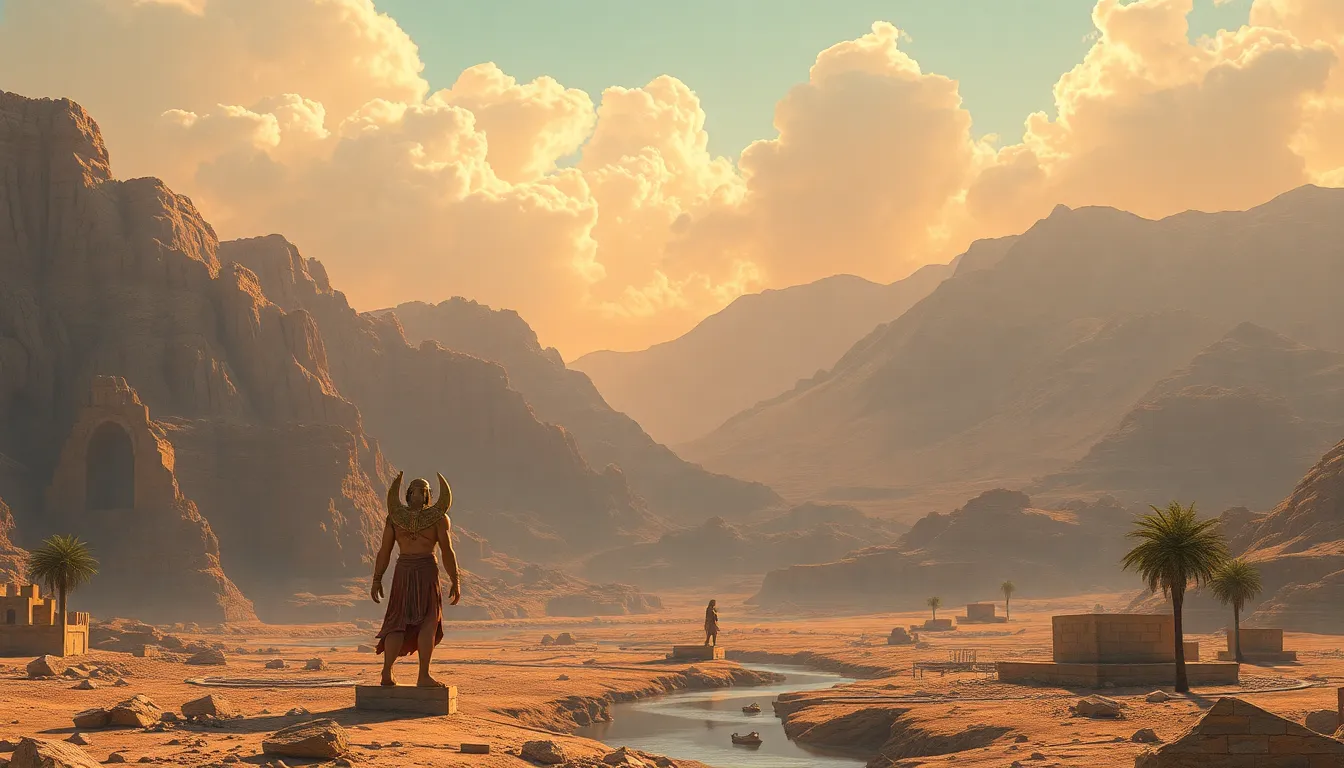
The Legacy of Nomes: How Geography Influenced Egyptian Myth
I. Introduction
The concept of Nomes in ancient Egypt refers to the administrative regions that structured the landscape and society of this remarkable civilization. These regions were not only vital for governance but also played a crucial role in shaping the mythology that permeated Egyptian culture. The interplay between geography and mythology is profound, as the physical landscape of Egypt influenced its gods, creation stories, and rituals. This article aims to explore how the geographical features of ancient Egypt and the structure of Nomes contributed to the richness of Egyptian mythology.
II. Understanding Nomes: Structure and Significance
A. Definition and administrative role of Nomes
Nomes were administrative divisions in ancient Egypt, each governed by a nomarch. These regions facilitated local governance and resource management, enhancing the management of agricultural and economic activities.
B. Number and classification of Nomes in ancient Egypt
Ancient Egypt was divided into 42 Nomes, with 22 located in Upper Egypt and 20 in Lower Egypt. Each Nome had its unique characteristics, governing bodies, and local deities.
C. Cultural and religious importance of Nomes in daily life
Nomes were not only administrative units but also held significant cultural and religious importance. Each Nome had its patron deity and unique traditions, which influenced local practices and beliefs.
III. Geographical Features of Egypt
A. The role of the Nile River in shaping Nomes and mythology
The Nile River is the lifeblood of Egypt, flowing through the desert and providing fertile land for agriculture. It shaped the Nomes, with settlements often clustered along its banks. The river’s annual flooding was seen as a divine blessing, linked to deities such as Hapi, the god of the Nile.
B. The impact of deserts, mountains, and oases on settlement and belief systems
The surrounding deserts and mountains created natural barriers that influenced trade routes and cultural exchanges. Oases served as vital points of settlement and worship, often linked to specific deities and myths.
C. Regional variations in geography and their mythological implications
Different regions of Egypt had distinct geographical features that influenced their local myths. For example, the fertile lands of the Nile delta contrasted sharply with the arid deserts, resulting in varied agricultural practices and associated deities.
IV. Mythological Narratives Linked to Geography
A. Creation myths and their geographical context
Creation myths in ancient Egypt often reflected the geographical landscape. For instance, the story of the god Atum creating the world from the chaotic waters of Nun can be seen as an allegorical representation of the Nile’s life-giving properties.
B. Deities associated with specific Nomes and their attributes
- Ptah – Patron of craftsmen and architects, associated with the Nome of Memphis.
- Amun – King of the gods, worshipped in Thebes.
- Ra – Sun god, closely linked to Heliopolis and the creation of life.
C. Regional myths that reflect local geography and resources
Many myths were crafted around local resources and geographical features. For example, the rich copper mines in the Sinai influenced the worship of deities associated with mining and metallurgy.
V. Case Studies: Notable Nomes and Their Myths
A. The Nome of Memphis and the myth of Ptah
Memphis, the capital of ancient Egypt, was home to Ptah, the creator god and patron of artisans. The city’s significance as a cultural hub is reflected in its mythology, which emphasizes creation and craftsmanship.
B. The Nome of Thebes and the worship of Amun
Thebes, another major city, was dedicated to Amun, whose worship grew with the city’s power. The geographical prominence of Thebes made it a center for worship and mythology, particularly through the grand temples and festivals honoring Amun.
C. The Nome of Heliopolis and the sun god Ra
Heliopolis was the center of sun worship, dedicated to Ra. The myths surrounding Ra’s daily journey across the sky reflect the physical and spiritual significance of the sun in Egyptian life and agriculture.
VI. Cultural Exchange and Geographic Influence
A. How trade routes and interactions with neighboring cultures influenced mythology
Trade routes connecting Egypt with neighboring cultures facilitated the exchange of ideas and myths. This interaction enriched Egyptian mythology, incorporating elements from other civilizations.
B. The role of geography in the diffusion of mythological themes across regions
The geographic layout of Egypt allowed for the migration of peoples and ideas, leading to the blending and adaptation of myths. As societies interacted, similar themes emerged, reflecting shared experiences.
C. Adaptations of myths in response to geographical changes over time
As landscapes shifted due to natural events or human activity, myths adapted to reflect these changes. This adaptability showcases the dynamic nature of Egyptian mythology in response to its geographical context.
VII. The Enduring Legacy of Nomes in Modern Culture
A. How ancient Egyptian mythology continues to influence contemporary art and literature
The myths and legends of ancient Egypt continue to inspire modern art, literature, and popular culture, highlighting the enduring fascination with its complex cosmology and geography.
B. The impact of archaeological discoveries on our understanding of Nomes and their myths
Recent archaeological findings have shed light on the significance of Nomes, revealing how geography shaped both daily life and religious practices in ancient Egypt.
C. Modern interpretations of Nomes in the context of geography and identity
Today, the study of Nomes provides insights into the geographical and cultural identity of ancient Egypt, emphasizing how place shaped belief systems and social structures.
VIII. Conclusion
The connection between geography and Egyptian mythology is a profound aspect of ancient culture. The structure of Nomes and their geographical features significantly influenced the development of myths, rituals, and religious practices. Understanding the legacy of Nomes enriches our comprehension of ancient Egyptian civilization and its lasting impact on modern society. The interplay between geography and mythology in Egypt remains a relevant and fascinating topic, inviting further exploration and appreciation.