The Hidden Meanings Behind Deity Relationships in Egyptian Texts
I. Introduction
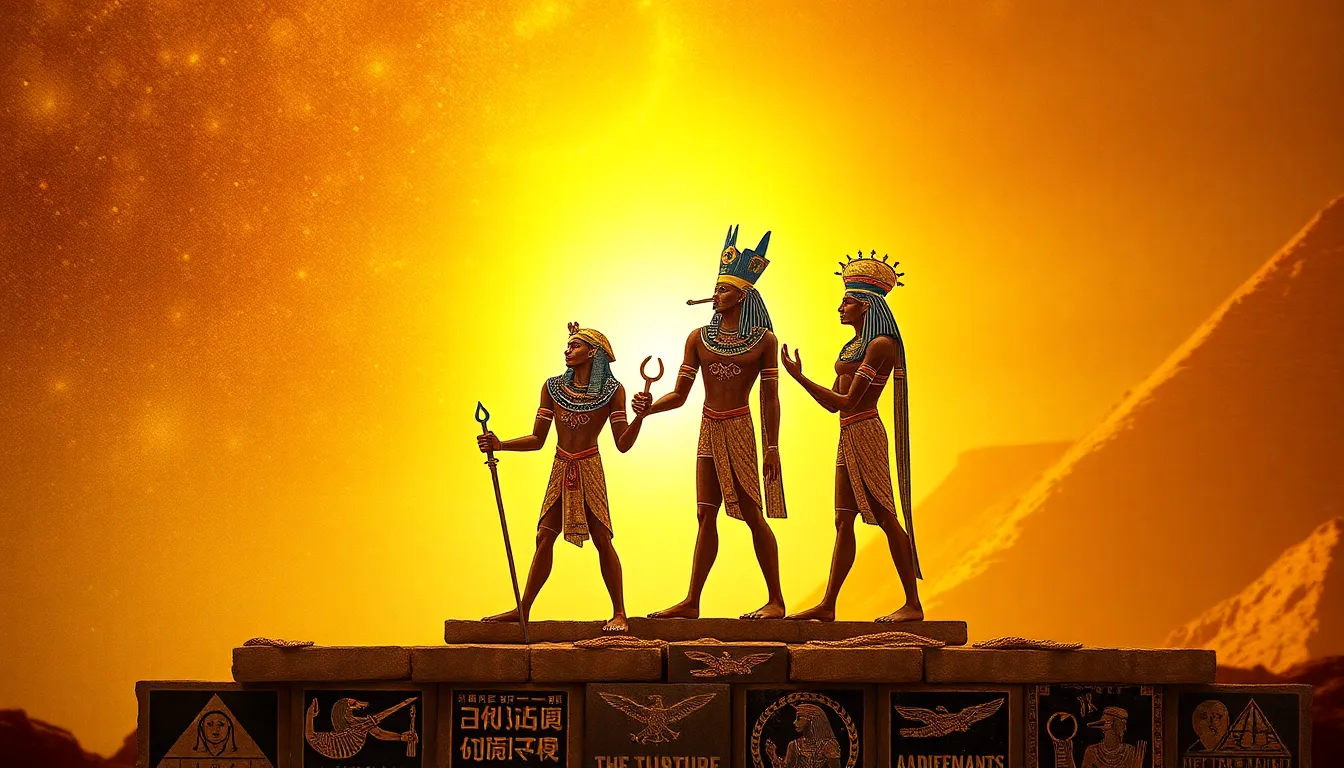
Ancient Egyptian religion is a fascinating tapestry woven from the beliefs, rituals, and narratives that revolved around a vast pantheon of deities. This pantheon was not just an assortment of gods and goddesses but a complex system of relationships that reflected the values and societal structures of ancient Egypt. Understanding these deity relationships is crucial for interpreting the texts and artifacts that have survived from this civilization.
The importance of deity relationships in Egyptian texts lies in their ability to convey deeper meanings about life, death, morality, and the cosmos. This article aims to explore the hidden meanings and interpretations of these relationships, shedding light on the intricate dynamics that shaped ancient Egyptian thought.
II. The Structure of the Egyptian Pantheon
The Egyptian pantheon is characterized by a multitude of gods and goddesses, each with unique roles and attributes. Some of the major deities include:
- Ra: The sun god, symbolizing creation and life.
- Osiris: The god of the afterlife, representing resurrection and fertility.
- Isis: The goddess of motherhood and magic, known for her protective nature.
- Horus: The sky god and protector of the pharaoh, embodying kingship.
- Set: The god of chaos and disorder, often in opposition to Osiris.
These deities exist within a hierarchical structure, where some gods are seen as supreme while others serve specific functions. The relationships among these gods often illustrate the dualities and oppositions that were central to Egyptian cosmology. For example, the conflict between Osiris and Set symbolizes the eternal struggle between order and chaos.
III. Symbolism in Deity Relationships
Mythological narratives in Egyptian texts are rich with symbolic meanings. The stories of the gods often serve as allegories that convey moral and social values. For instance, the myth of Isis and Osiris illustrates themes of love, loyalty, and resurrection, emphasizing the importance of familial bonds and the cycle of life and death.
Some examples of symbolic interactions include:
- Isis and Osiris: Represents the transformative power of love and the resilience of life.
- Horus and Set: Embodies the struggle between order (Horus) and chaos (Set), highlighting the importance of balance.
- Hathor and Ra: Reflects the nurturing aspect of the sun, where Hathor, as the mother, provides sustenance.
These symbols are not merely decorative; they convey deep truths about human experience and the natural world, serving as a guide for moral and ethical behavior.
IV. Gender Dynamics in Deity Relationships
The roles of male and female deities in the Egyptian pantheon reveal much about gender dynamics in ancient Egyptian society. While many gods were male, several powerful female deities played crucial roles in both mythology and worship. Noteworthy examples include:
- Hathor: Goddess of love, beauty, and motherhood, symbolizing the nurturing aspect of femininity.
- Sekhmet: A warrior goddess representing power and protection, often associated with healing.
- Isis: A central figure in motherhood and magic, embodying both strength and compassion.
The significance of divine feminine power is profound, as it challenges the often male-dominated narratives of other ancient cultures. In understanding these dynamics, we can gain insights into the social structures and gender roles of ancient Egyptian civilization.
V. Deity Relationships and Cosmic Order
In ancient Egyptian belief, the concept of Ma’at was central to understanding the universe’s order and balance. Ma’at represented truth, justice, and cosmic harmony, and the relationships among deities were seen as reflections of this order. The gods worked in concert to maintain Ma’at, ensuring that chaos did not prevail.
Deity relationships illustrate how the Egyptians understood the balance of the universe. For example:
- The conflict between Osiris and Set is a metaphor for the struggle to maintain cosmic order.
- The daily journey of Ra across the sky symbolizes the cyclical nature of time and the renewal of life.
- The harmony between Isis and Osiris exemplifies the balance of companionship and duty.
These interactions were not only mythological but were believed to have real implications for maintaining social and cosmic order.
VI. Textual Evidence: Key Sources and Interpretations
The study of ancient Egyptian deity relationships is supported by a variety of primary texts, including the Pyramid Texts, Coffin Texts, and various temple inscriptions. These texts provide rich narratives that illustrate the complexities of divine interactions.
Some key passages that illustrate these relationships include:
- Pyramid Texts detailing the resurrection of Osiris and the mourning of Isis.
- Coffin Texts that emphasize the protective roles of deities in the afterlife journey.
- Temple inscriptions celebrating the triumphs of gods over chaos.
However, interpreting these texts poses challenges, as they are often symbolic and require a nuanced understanding of ancient Egyptian culture and language. Scholarly debates continue around the meanings of specific passages and the implications of divine interactions.
VII. Modern Interpretations and Relevance
Contemporary scholars approach ancient deity relationships with fresh perspectives, often utilizing interdisciplinary methods that combine archaeology, anthropology, and literary analysis. These interpretations have expanded our understanding of ancient Egyptian culture, revealing a society deeply engaged with concepts of morality, gender, and cosmic balance.
The relevance of these themes extends beyond academic circles; they resonate with modern spirituality and mythology, as contemporary seekers often find inspiration in the lessons of ancient deities. The dynamics of love, power, and balance depicted in these relationships continue to inform our understanding of human experience.
VIII. Conclusion
In summary, the exploration of deity relationships in Egyptian texts reveals a rich tapestry of meanings that reflect the cosmology and values of ancient Egyptian society. From the hierarchical structure of the pantheon to the symbolism embedded in mythological narratives, these relationships offer profound insights into the human condition.
The study of these interactions remains vital for future research in Egyptology and religious studies, as it not only enriches our understanding of the past but also connects us to timeless themes that continue to resonate in the present.