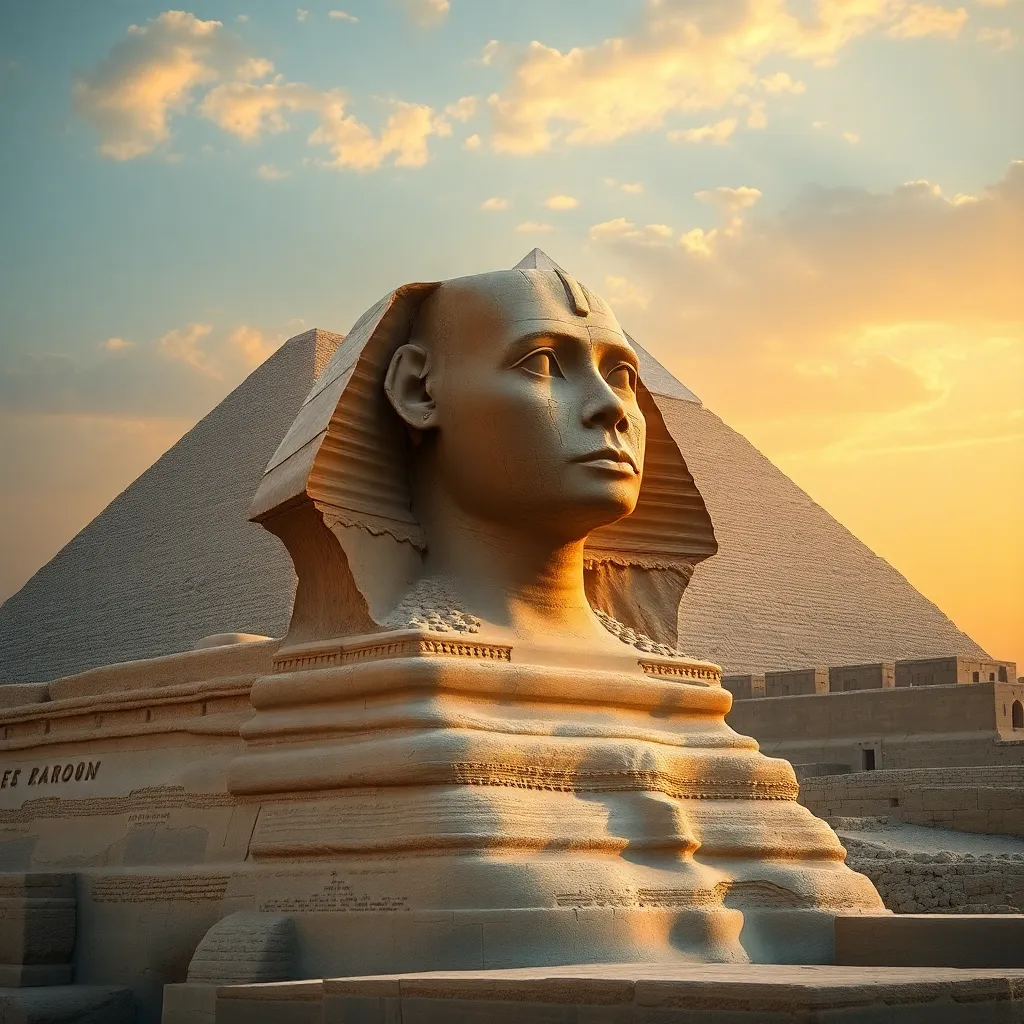
The Great Sphinx: Myths of Its Lost Nose
I. Introduction
The Great Sphinx of Giza, with its enigmatic presence and majestic form, stands as one of the most iconic symbols of ancient Egypt. Carved from limestone, this colossal statue features the body of a lion and the head of a pharaoh, believed to represent Pharaoh Khafre. It measures approximately 73 meters long and 20 meters high, making it one of the largest monolithic statues in the world.
In ancient Egyptian culture, the Sphinx held significant importance as a guardian figure, often associated with the sun god Ra and the afterlife. Its gaze towards the east signified the rising sun, symbolizing rebirth and regeneration. However, one of the most intriguing aspects of the Sphinx is the myth surrounding its lost nose—a feature that has fueled speculation and curiosity for centuries.
II. Historical Context of the Great Sphinx
The construction of the Great Sphinx is estimated to have occurred around 2500 BCE during the reign of Pharaoh Khafre, coinciding with the era of the Pyramids. The Sphinx was built as part of a larger complex that included temples and other structures, intended to honor the pharaoh and serve as a monumental testament to his power.
In Egyptian mythology, the Sphinx was believed to embody strength and wisdom. It was often depicted in conjunction with other deities, serving as a protector of sacred spaces. Its artistic and architectural significance cannot be overstated, as it represents the pinnacle of ancient Egyptian craftsmanship and the integration of art with spiritual purpose.
III. The Legend of the Lost Nose
The Great Sphinx’s nose has been missing for centuries, leading to various theories regarding its loss. The legend of the lost nose is steeped in mystery and speculation, with two primary theories emerging:
- Natrual erosion: Some historians believe that the nose may have eroded over time due to natural weathering processes. The Sphinx is exposed to harsh environmental conditions, including wind and sand erosion, which could have contributed to the degradation of its features.
- Human vandalism: Another prevalent theory suggests that the nose was deliberately destroyed by human hands. Historical accounts indicate that during the Middle Ages, the Sphinx was vandalized by iconoclasts who viewed it as a pagan idol. This theory is supported by records from travelers who noted the Sphinx’s damaged state.
Notable accounts from travelers and historians, such as the Arab historian al-Maqdisi in the 10th century, mention the Sphinx’s lack of a nose, further solidifying the myth surrounding its absence.
IV. Archaeological Evidence and Discoveries
Archaeological excavations and studies of the Great Sphinx have provided valuable insights into its history and condition. In the 19th and 20th centuries, various expeditions sought to uncover the mysteries of the Sphinx, focusing on its construction techniques and the surrounding complex.
Findings related to the facial features of the Sphinx reveal that its nose was originally a prominent part of its design, suggesting that it may have been intentionally sculpted with great detail. Experts have examined the stone surrounding the area where the nose once stood, with some proposing that tool marks indicate the possibility of deliberate removal.
Moreover, expert opinions on the condition of the Sphinx over time highlight the challenges it has faced from both natural and human influences. The ongoing study of the monument continues to shed light on its historical significance.
V. Cultural Interpretations of the Nose’s Absence
The absence of the Sphinx’s nose has given rise to various cultural interpretations and symbolic meanings. In ancient Egyptian art and culture, the nose often represented the breath of life, and its loss could symbolize a disconnect from the divine.
Theories on the implications of the missing nose include:
- A loss of identity for the Sphinx, suggesting a diminished status among the pantheon of Egyptian deities.
- The nose’s absence serving as a metaphor for the impermanence of human accomplishments in the face of time.
Legends and folklore surrounding the Sphinx have also emerged, with tales of curses or divine retribution for those who sought to deface the monument. Such stories serve to enhance the mystique of the Sphinx and its historical narrative.
VI. The Sphinx in Popular Culture
The Great Sphinx has been a source of inspiration across various forms of popular culture, appearing in movies, literature, and art. It often symbolizes mystery and the allure of ancient civilizations.
Adaptations of the myth of the lost nose have appeared in numerous contexts, from comedic portrayals in animated films to serious explorations of its historical significance in documentaries. The Sphinx’s enigmatic presence continues to captivate audiences worldwide, influencing public perception and interest in ancient Egypt.
VII. Modern-Day Efforts for Preservation
Modern conservation efforts for the Great Sphinx are crucial in ensuring its survival for future generations. Various organizations and governments are involved in restoration projects aimed at preserving the integrity of this ancient monument.
Challenges faced in preserving the Sphinx include:
- Environmental factors such as pollution and erosion.
- Tourism-related wear and tear from visitors.
- Funding and resource allocation for extensive restoration projects.
The importance of protecting historical artifacts like the Sphinx cannot be overstated, as they serve as vital links to our past and provide insight into the cultures that shaped human history.
VIII. Conclusion
The Great Sphinx of Giza, with its fascinating history and the enduring myth of its lost nose, remains a symbol of ancient Egypt’s grandeur and mystery. The Sphinx’s significance extends beyond its physical form, representing the complexities of human civilization and the stories that shape our understanding of the past.
Reflecting on the enduring nature of myths in history, it is evident that the tales surrounding the Sphinx and its lost nose continue to inspire curiosity and exploration. Understanding and preserving our cultural heritage is essential, as it allows us to connect with the legacies of those who came before us and appreciate the rich tapestry of human history.