The Golden Age of Pharaohs: Myth, History, and Legacy
I. Introduction
The Golden Age of Pharaohs refers to a significant period in ancient Egyptian history marked by remarkable achievements in governance, culture, and architecture. This age is often associated with prosperity, stability, and artistic flourishing.
Exploring the myths, historical facts, and legacy of this era is crucial for understanding not only ancient Egypt but also its lasting impact on civilization as a whole. Through this article, we will delve into the historical context, the mythical narratives, notable Pharaohs, art and architecture, the economy, the decline of this golden age, and its enduring legacy.
This article is structured to provide a comprehensive overview of the Golden Age of Pharaohs, highlighting key aspects that shaped this extraordinary period.
II. Historical Context of the Golden Age
The timeline of the Pharaohs’ reign in ancient Egypt spans thousands of years, but the Golden Age is primarily associated with the New Kingdom, which lasted from approximately 1550 to 1070 BCE. This period is characterized by the expansion of Egypt’s territory, wealth, and influence.
Key dynasties during this period include:
- The 18th Dynasty: Known for powerful Pharaohs like Hatshepsut and Thutmose III.
- The 19th Dynasty: Famous for Ramses II, often regarded as one of Egypt’s greatest rulers.
- The 20th Dynasty: Marked by the reign of Ramses III, who defended Egypt against invaders.
Major achievements during the Golden Age include advancements in governance, such as the establishment of a more centralized administration, the expansion of trade networks, and improvements in law and order. This era saw significant developments in various aspects of society, including art, literature, and science.
III. The Mythical Narrative of Pharaohs
Mythology played a vital role in Egyptian culture, serving as a means to explain natural phenomena, human experiences, and the divine order. The Pharaohs were often seen as intermediaries between the gods and the people, which reinforced their authority.
Prominent myths associated with the Pharaohs include:
- The Myth of Osiris: Illustrating themes of death and resurrection, this myth emphasized the Pharaoh’s role in ensuring the continuity of life.
- The Book of the Dead: A collection of spells and prayers to aid the deceased in the afterlife, reflecting the Pharaohs’ belief in immortality.
The intertwining of religion and royal authority was key to the stability and legitimacy of the Pharaohs’ rule. Their divine right to govern was often reinforced through elaborate rituals and monumental temple constructions dedicated to the gods.
IV. Notable Pharaohs of the Golden Age
Several Pharaohs stand out during the Golden Age for their monumental contributions to Egyptian civilization:
- Ramses II (Ramses the Great): Reigned from 1279 to 1213 BCE, he is known for his military campaigns, extensive building projects, and treaties, including one of the first known peace treaties with the Hittites.
- Hatshepsut: One of the few female Pharaohs, she ruled from 1479 to 1458 BCE and is celebrated for her prosperous reign and monumental building projects, notably her mortuary temple at Deir el-Bahari.
Their contributions to architecture, art, and culture during their reigns had lasting impacts on Egyptian civilization, influencing subsequent generations and leaving a rich legacy that continues to be admired today.
V. The Art and Architecture of the Era
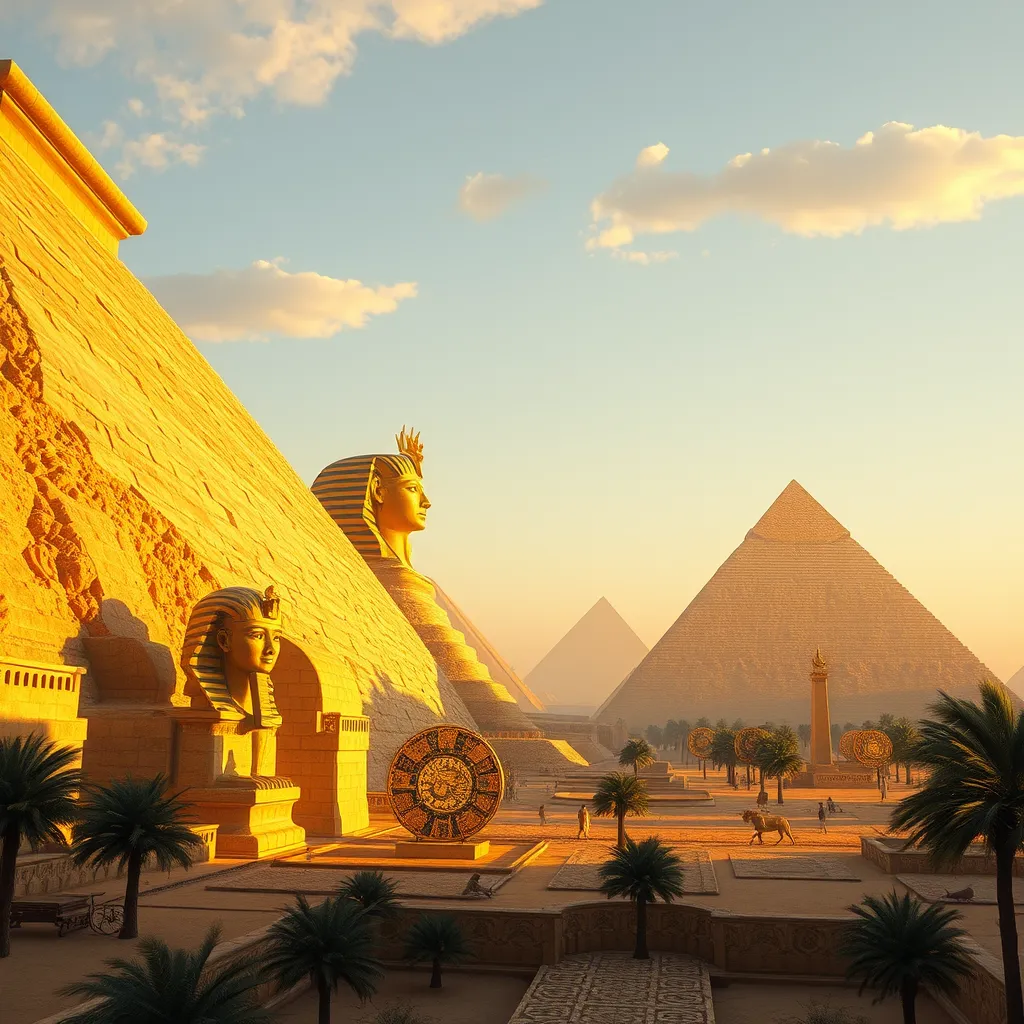
The Golden Age of Pharaohs witnessed significant innovations in building techniques and materials, which led to the creation of some of the most iconic structures in history. The art and architecture of this period were not merely functional but served as expressions of power and spirituality.
Iconic structures from this era include:
- The Pyramids: Although built earlier, their influence continued as models for later structures, symbolizing the Pharaoh’s divine connection.
- Temples: Grand temples such as Karnak and Luxor were constructed to honor the gods and reflect the Pharaohs’ divine rule.
- Monuments: Statues and obelisks, such as those erected by Ramses II, were designed to convey the greatness of the Pharaohs.
Art during this period flourished, with advancements in sculpture, painting, and decorative arts that depicted both the divine and the earthly realms. These artistic expressions served to reinforce the Pharaoh’s status as a god-king.
VI. The Economy and Trade During the Golden Age
The economy of ancient Egypt during the Golden Age was predominantly agrarian, with fertile lands along the Nile contributing to agricultural abundance. This economic stability was crucial for maintaining the power of the Pharaohs.
Key aspects of the economy included:
- Agricultural Practices: Advanced irrigation techniques and crop rotation led to surplus production, which supported large populations.
- Trade Routes: Egypt established vital trade networks with neighboring regions, exchanging goods such as gold, papyrus, and linen for luxury items like incense and exotic materials.
- Wealth Accumulation: The economic prosperity of the era allowed for significant investments in monumental constructions and cultural endeavors.
This economic strength contributed to the overall stability of the society and the enduring legacy of the Pharaohs.
VII. The Decline of the Golden Age
Despite its remarkable achievements, the Golden Age eventually faced decline due to various factors:
- Foreign Invasions: The incursions of the Sea Peoples and other foreign entities weakened Egypt’s military and territorial integrity.
- Internal Strife: Political instability and power struggles within the royal court contributed to the weakening of central authority.
- Economic Challenges: Resource depletion and declining trade routes also played a role in the eventual decline.
The transition to subsequent periods in Egyptian history marked a significant shift from the glory of the Golden Age to times of fragmentation and foreign rule.
VIII. Legacy of the Golden Age of Pharaohs
The legacy of the Golden Age of Pharaohs continues to influence modern culture and perceptions of ancient Egypt. Its impacts can be seen in various aspects:
- Influence on Modern Culture: The fascination with Pharaohs, pyramids, and ancient Egyptian mythology persists in literature, film, and art.
- Archaeological Discoveries: Ongoing excavations have unearthed treasures and insights into the lives of the Pharaohs, enriching our understanding of this era.
- Enduring Fascination: The allure of ancient Egypt, characterized by its mysteries and grandeur, continues to captivate scholars and enthusiasts alike.
The fascination with the Pharaohs serves as a testament to the rich history and cultural contributions of ancient Egypt.
IX. Conclusion
In summary, the Golden Age of Pharaohs represents a pinnacle of human achievement in ancient Egypt, characterized by advancements in governance, culture, and artistry. The exploration of myths and historical facts reveals a complex society deeply intertwined with its religious beliefs and the divine right of the Pharaohs.
Reflecting on the importance of preserving history and myths, we recognize the invaluable lessons and insights they offer. As we continue to explore and understand ancient Egypt, we are reminded of the enduring legacy of the Pharaohs and their contributions to our shared human heritage.
Let us continue to delve into the mysteries of this extraordinary civilization, ensuring that the stories of the Pharaohs and the lessons of the Golden Age endure for future generations.