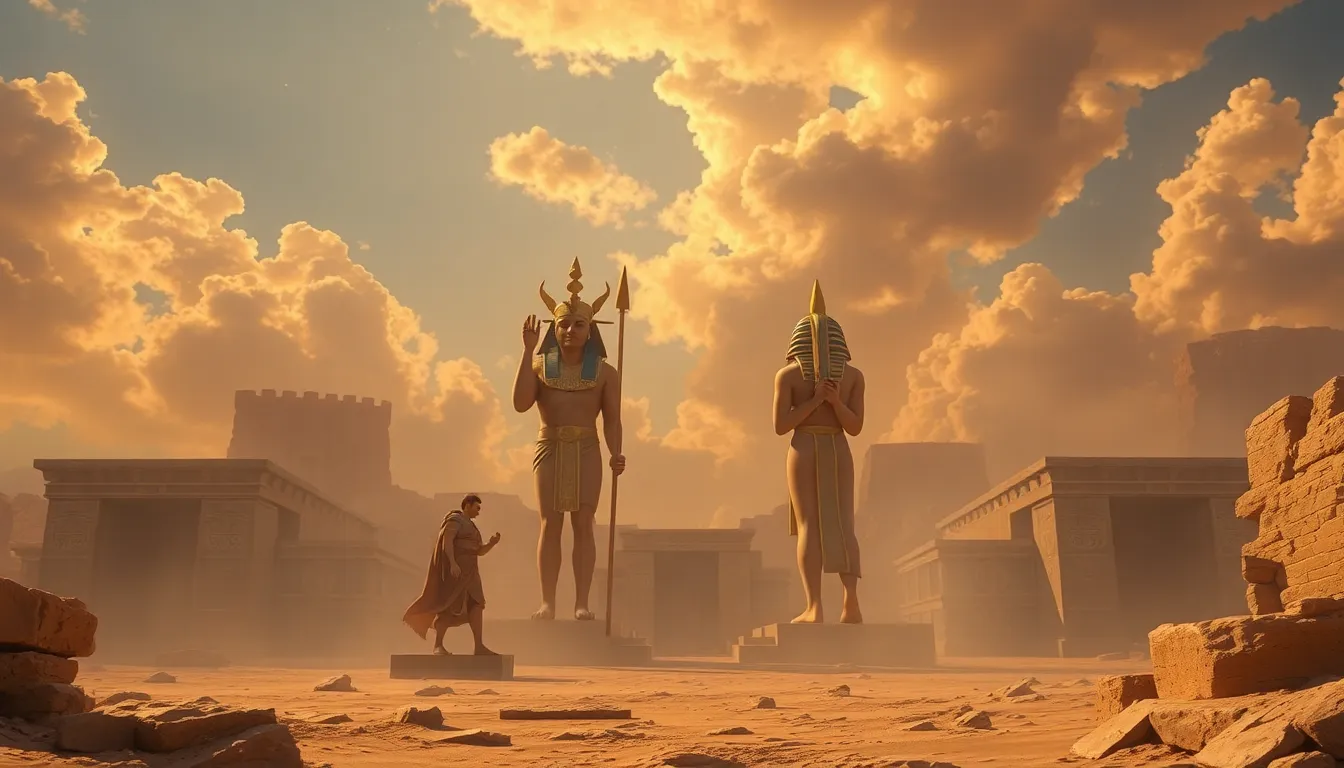
The Gods’ Judgment: Retribution Tales from the Egyptian Pantheon
I. Introduction
The ancient Egyptian pantheon is filled with a plethora of deities, each embodying different aspects of life, nature, and the afterlife. This rich mythology is not only a reflection of the Egyptians’ spiritual beliefs but also their understanding of morality, justice, and retribution.
In Egyptian belief systems, the concept of retribution is paramount. It underscores the moral order of the universe and the consequences of one’s actions. This article aims to explore various tales of judgment and retribution among the gods, showcasing how these narratives shaped the ancient Egyptians’ understanding of justice.
II. The Concept of Ma’at: Order and Justice
At the heart of Egyptian mythology lies the concept of Ma’at, which represents truth, balance, and cosmic order. Ma’at is often depicted as a goddess with an ostrich feather, symbolizing truth and justice.
The significance of Ma’at in maintaining both cosmic and social order cannot be overstated. It is a guiding principle that governs the actions of the gods and humanity alike. In ancient Egypt, living in accordance with Ma’at meant living a life of righteousness, integrity, and harmony.
Ma’at influences the actions of the gods, compelling them to act justly in their dealings with humanity. The stories of judgment among the deities often revolve around maintaining this cosmic order, ensuring that those who commit wrongdoings face appropriate consequences.
III. Osiris: The God of the Afterlife and Retribution
Osiris is one of the most significant deities in Egyptian mythology, known as the god of the afterlife, resurrection, and retribution. His story is a powerful tale of murder, betrayal, and eventual redemption.
According to myth, Osiris was murdered by his envious brother Set, who dismembered him and scattered his body across Egypt. However, Osiris’ loving wife, Isis, painstakingly collected the pieces and resurrected him, allowing him to become the ruler of the underworld.
In his domain, Osiris serves as a judge for the souls of the deceased. He presides over the judgment of the heart ceremony, where the heart of the deceased is weighed against the feather of Ma’at. Those who lived justly are rewarded with eternal life, while those who have sinned face retribution.
- Osiris represents the cycle of death and rebirth, symbolizing hope and the moral consequences of one’s actions.
- His role as a judge emphasizes the importance of justice and retribution in the afterlife.
IV. The Wrath of Sekhmet: Divine Punishment for Humanity
Sekhmet, the fierce lioness goddess of war and vengeance, embodies the destructive force of divine retribution. Her origins are rooted in the sun god Ra, who created her to punish humanity for their sins.
The tale of Sekhmet’s rampage against humanity reveals the consequences of disrespecting the gods. Enraged by mankind’s rebellion, Sekhmet descended upon the earth, wreaking havoc and causing widespread destruction.
Realizing the devastation she was causing, Ra sought to quell her fury. To do so, he devised a plan involving the creation of a red beer that resembled blood. When Sekhmet drank it, she became intoxicated and fell into a deep slumber, ceasing her destruction.
- This story illustrates the balance between punishment and mercy in divine judgment.
- It also serves as a reminder of the potential consequences of human actions against the divine.
V. Thoth: The Arbiter of Truth and Justice
Thoth, the god of wisdom, writing, and knowledge, plays a crucial role in the judgment of souls. Often depicted as a man with the head of an ibis, Thoth is revered as the arbiter of truth and justice.
During the judgment of the deceased, Thoth records the outcomes of the weighing of the heart ceremony. His presence ensures that the process is conducted fairly and justly, upholding the principles of Ma’at.
The weighing of the heart ceremony is a pivotal moment for souls, where their hearts are placed on one side of a scale and the feather of Ma’at on the other. The outcome determines their fate in the afterlife.
- Thoth’s role emphasizes the importance of truth in the pursuit of justice.
- His influence in administering justice reinforces the moral framework of Egyptian mythology.
VI. The Tale of the Destruction of Mankind
In one of the most profound myths, the gods decide to punish humanity for their disobedience and lack of reverence. The sun god Ra, witnessing the decline of moral order, convenes the gods to discuss humanity’s fate.
Ra ultimately decides that humanity must be punished for their transgressions. However, his heart is filled with compassion, and he seeks a balance between justice and mercy. Instead of outright destruction, he sends a lioness, Sekhmet, to enact his judgment, leading to the aforementioned tale of her rampage.
This myth encapsulates the themes of mercy and justice, illustrating the complexities of divine judgment.
VII. The Balance of Justice: The Role of Anubis
Anubis, the jackal-headed god, serves as the guardian of the dead and the facilitator of judgment. His role is crucial in ensuring that souls are treated fairly in the afterlife.
As the one who oversees the weighing of the heart, Anubis guides souls through the process, ensuring their journey is just and balanced. His commitment to fairness is evident in various stories where he intervenes to protect the innocent.
- Anubis exemplifies the importance of balance in the realm of justice.
- His stories highlight the moral obligation of the gods to uphold righteousness.
VIII. Conclusion
The tales of retribution and judgment in Egyptian mythology reveal the profound significance of justice within their belief system. The gods, through their actions and decisions, provide moral lessons that resonate even today.
The enduring legacy of these stories continues to influence modern interpretations of justice, reminding us that actions have consequences and that balance must be maintained in all aspects of life.
Ultimately, the moral lessons derived from the gods’ judgment stories serve as a timeless reminder of the importance of living in accordance with truth, justice, and harmony.