The Gift of Writing: Understanding the Importance of Thoth in the Festival
1. Introduction: The Divine Scribe
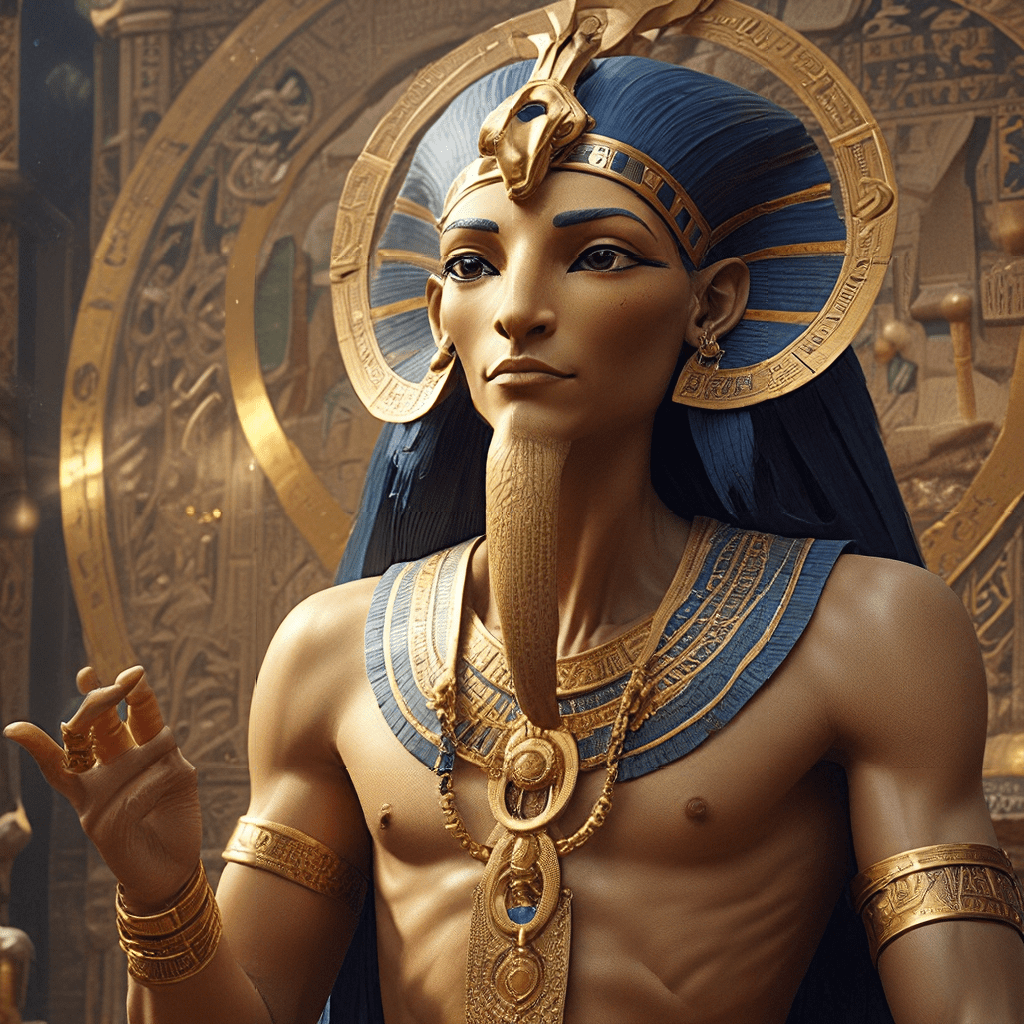
In the realm of ancient Egyptian mythology, Thoth stands as a revered deity, embodying wisdom, magic, and the power of language. He is often depicted as a wise and learned scribe, credited with inventing writing and bestowing this gift upon humanity. This remarkable invention transformed Egyptian civilization, shaping its culture, governance, and religious practices. The importance of Thoth’s gift is highlighted during various festivals dedicated to his divine presence, where writing takes center stage in rituals and ceremonies.
2. Thoth’s Role in Creation
According to Egyptian creation myths, Thoth played a pivotal role in bringing order to the chaotic beginnings of the world. He was instrumental in the creation of the written language, which allowed humans to record knowledge, communicate ideas, and preserve their history. Writing became an essential tool for the Egyptians, enabling them to document their beliefs, laws, and societal structures. It provided a means to connect the past with the present and future, ensuring the continuity of their cultural heritage.
The significance of writing in ancient Egypt cannot be overstated. It was a fundamental aspect of their daily life, used for everything from record-keeping and religious texts to contracts and personal letters. The invention of hieroglyphics, a complex system of symbols representing words and sounds, allowed for a sophisticated form of written communication. Thoth’s gift of writing empowered the Egyptians to express themselves, organize their society, and advance their civilization.
3. Thoth and Knowledge
Thoth’s association with writing extended beyond its practical applications. He was also seen as the god of knowledge, wisdom, magic, and the arts. His vast knowledge encompassed a wide range of subjects, including astronomy, mathematics, medicine, and music. The Egyptians believed that Thoth could access and impart divine wisdom, making him a source of guidance and inspiration.
In depictions, Thoth is often portrayed holding a papyrus scroll, symbolizing his mastery of writing and the vast knowledge he possessed. He is also associated with the ibis, a bird known for its intelligence and keen eyesight, which serves as his sacred animal. Thoth’s connection to knowledge and wisdom made him a highly respected figure in Egyptian society, celebrated for his role in enlightening humanity.
4. Festivals Honoring Thoth
Throughout the year, the Egyptians held various festivals dedicated to Thoth, honoring his contributions to their civilization. Among these, the “Festival of Thoth” held a significant place in their religious calendar. This festival, celebrated during the month of Thoth (corresponding to the months of September and October), was a time to pay homage to the god of writing and knowledge. The Egyptians believed that during this festival, Thoth’s divine presence was particularly strong, making it an auspicious time for seeking wisdom and enhancing knowledge.
Other festivals related to Thoth included the “Festival of the Opening of the Mouth” and the “Festival of the Great Flood.” These festivals highlighted the various aspects of Thoth’s power, including his role in the creation of the world and his association with the moon. These annual celebrations reinforced the importance of Thoth in Egyptian mythology and culture.
5. The Gift of Writing in the Festival
During the “Festival of Thoth,” the Egyptians celebrated the god’s gift of writing with special rituals and ceremonies. The festival was a time for scribes to showcase their skills, and for the public to express their gratitude for the transformative power of writing. The festival might have included processions, offerings, and recitations of sacred texts. These events emphasized the significance of writing in Egyptian society, connecting it to Thoth’s divine presence and highlighting its role in their cultural and spiritual life.
The festival might also have involved writing competitions, where scribes would demonstrate their knowledge and skill. This allowed them to compete for recognition and prestige, further reinforcing the importance of writing in Egyptian society.
6. The Importance of Writing in Egyptian Society
Writing was an integral part of ancient Egyptian society, impacting various aspects of daily life. Scribes, highly trained individuals proficient in hieroglyphics, played a crucial role in record-keeping, administration, and religious practices. They were responsible for documenting royal decrees, historical events, and religious texts, ensuring that knowledge was preserved and passed down through generations.
Writing was also used for communication, allowing individuals to exchange messages, negotiate contracts, and record personal accounts. The Egyptians used writing to create elaborate tomb inscriptions, preserving the memories and achievements of the deceased.
The “Festival of Thoth” provided a platform to celebrate the profound impact of writing on Egyptian society, reinforcing its importance in cultural, religious, and social realms.
7. The Myth of Thoth and the Moon
An interesting myth associated with Thoth tells the story of his creation of the moon. According to this myth, Thoth was challenged by the god of darkness, Set, to a game of dice. Thoth’s superior skill and cunning led him to win the game, allowing him to claim a portion of Set’s power – the light of the moon.
This myth reinforces Thoth’s link to wisdom, intelligence, and the ability to overcome challenges. It also highlights his connection to the celestial bodies, particularly the moon. The moon’s cycles are associated with knowledge and wisdom, further solidifying Thoth’s role as the god of these attributes.
The “Festival of Thoth” provided a platform to celebrate this myth, further emphasizing the god’s connection to knowledge and wisdom. It served as a reminder of Thoth’s power and influence over the cosmos and its connection to human life.