The Geography of the Sacred Lizard: Myths of the Nile
I. Introduction
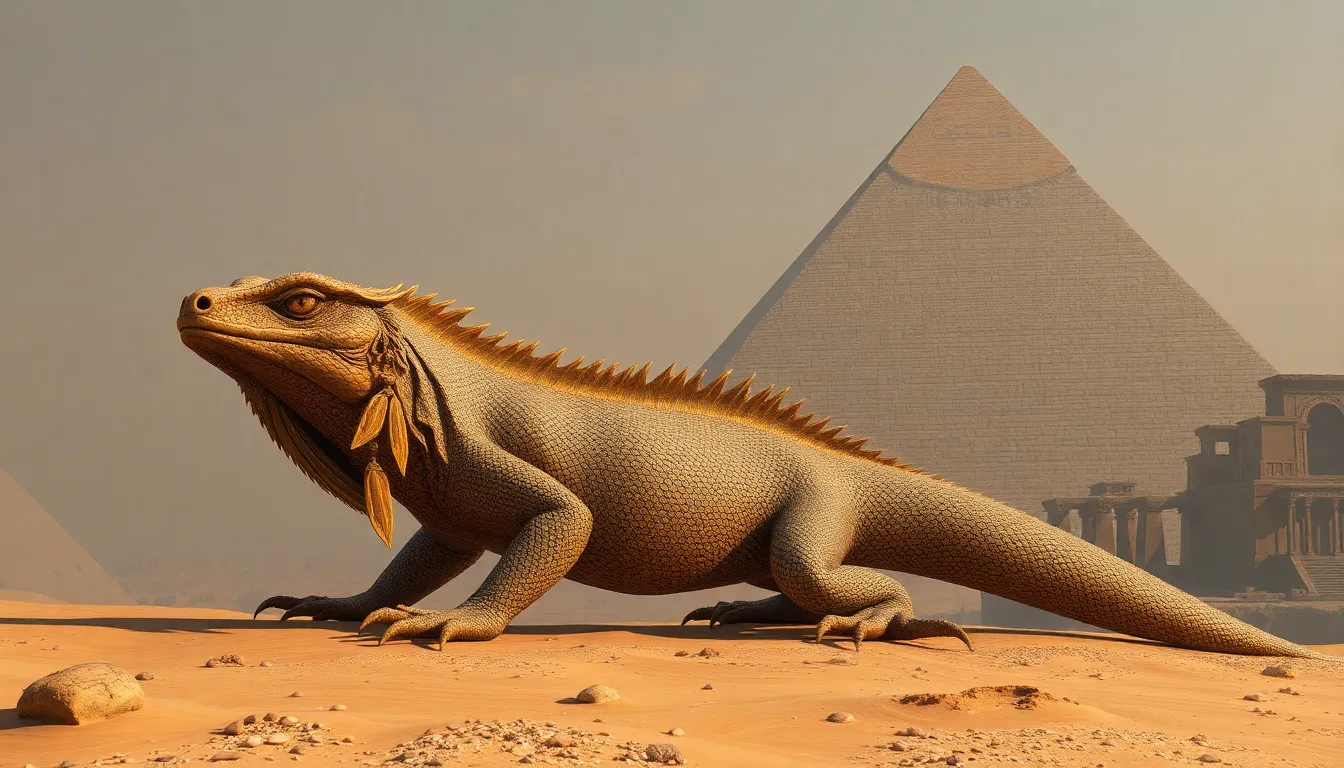
The Sacred Lizard, often identified with the species Agama agama, holds a special place in ancient Egyptian mythology and culture. Revered for its unique characteristics and vibrant appearance, this lizard symbolizes regeneration and the cyclical nature of life, much like the Nile River that nourishes the land of Egypt.
The Nile River, often referred to as the lifeblood of Egypt, serves as a cultural and geographical backdrop for many myths and legends involving the Sacred Lizard. This article aims to explore the intersection of geography and mythology, detailing how the Sacred Lizard and the Nile River intertwine within Egyptian lore.
II. The Sacred Lizard: An Overview
A. Description and characteristics of the Sacred Lizard
The Sacred Lizard is notable for its vibrant colors, particularly the males that exhibit striking blue and orange hues during mating season. These lizards typically inhabit rocky terrains and are known for their agility and adaptability.
B. Importance of the lizard in ancient Egyptian culture
In ancient Egypt, the Sacred Lizard was often associated with the sun god Ra, symbolizing rebirth and protection. It was believed that the lizard possessed healing powers and could ward off evil spirits, making it a significant figure in local folklore.
C. Role of the lizard in local ecosystems
Ecologically, the Sacred Lizard plays a vital role as both predator and prey within its habitat. It helps control insect populations and serves as food for larger predators, thus maintaining a balanced ecosystem.
III. The Nile River: Lifeblood of Ancient Egypt
A. Geographic features of the Nile River
The Nile is the longest river in the world, stretching over 6,650 kilometers. It flows through eleven countries, with its most significant impact felt in Egypt, where it creates a fertile valley in an otherwise arid landscape.
B. The Nile’s influence on ancient Egyptian civilization
The Nile River was essential for agriculture, transportation, and trade. Its annual floods deposited nutrient-rich silt, allowing for bountiful harvests. This abundance contributed to one of the most advanced civilizations of the ancient world.
C. Connection between the river and local fauna, including the Sacred Lizard
The biodiversity around the Nile includes various species of reptiles, including the Sacred Lizard. The river’s ecosystem supports a variety of habitats that are crucial for the survival of many species.
IV. Myths and Legends Surrounding the Sacred Lizard
A. Traditional myths involving the Sacred Lizard
Several myths feature the Sacred Lizard as a central character, often depicting it as a guardian of the sun and a symbol of resurrection. One popular myth tells of the lizard’s ability to regenerate lost body parts, echoing the themes of renewal found in Egyptian beliefs.
B. Symbolism of the lizard in Egyptian mythology
- Rebirth: The lizard represents the cyclical nature of life.
- Protection: It was believed to guard against malevolent forces.
- Transformation: The lizard symbolizes change and adaptability.
C. Narratives that highlight the lizard’s connection to the Nile
In various legends, the Sacred Lizard is depicted as emerging from the Nile, symbolizing the life-giving properties of the river and its association with fertility and growth.
V. The Sacred Lizard in Ancient Egyptian Art and Literature
A. Depictions of the lizard in ancient artifacts
Ancient Egyptian artifacts frequently feature the Sacred Lizard, often in amulets and pottery. These depictions served both decorative and protective purposes, believed to bring good fortune to their owners.
B. Literary references to the lizard and its mythological role
Literature from ancient Egypt also mentions the Sacred Lizard, often in poetic contexts that celebrate its beauty and significance. Scribes would include references to the lizard in religious texts and rituals.
C. Cultural impact of these representations on modern understanding
Today, these ancient representations continue to influence modern interpretations of Egyptian mythology, providing insights into the values and beliefs of ancient Egyptians.
VI. The Sacred Lizard’s Ecological Role
A. Habitat and behavior of the Sacred Lizard in the Nile region
The Sacred Lizard thrives in rocky hills and savannas near the Nile. Its behavior includes basking in the sun, foraging for insects, and displaying territorial aggression during mating season.
B. The lizard’s role in the local ecosystem and its interactions with other species
As both a predator and prey, the Sacred Lizard contributes to the ecological balance. It preys on insects, helping control their populations, while also serving as a food source for birds and larger reptiles.
C. Conservation status and current threats to the lizard’s habitat
Currently, the Sacred Lizard faces threats from habitat destruction due to urban expansion and agriculture. Conservation efforts are crucial to preserving its habitat and ensuring its survival.
VII. The Intersection of Geography and Mythology
A. How geography shapes cultural beliefs and myths
Geography plays a fundamental role in shaping cultural beliefs. The unique landscapes and ecosystems of Egypt fostered specific myths and legends that reflect the relationship between the people and their environment.
B. The influence of the Nile’s geography on the creation of lizard-related myths
The Nile’s predictable flooding patterns and its role as a source of life contributed to the myths surrounding the Sacred Lizard. The lizard’s regenerative abilities were seen as a reflection of the river’s life-giving properties.
C. Case studies of other geographic features influencing local mythology
Similar to the Sacred Lizard, other geographic features, such as mountains and deserts, have also inspired myths and legends in different cultures. These narratives often reflect the relationship between people and their natural surroundings.
VIII. Conclusion
In conclusion, the Sacred Lizard is a significant figure in ancient Egyptian mythology, symbolizing rebirth and protection. Its connection to the Nile River deepens our understanding of how geography influences cultural beliefs and myths. The enduring legacy of the Sacred Lizard continues to resonate in modern culture, emphasizing the importance of preserving both the geography and mythology of the Nile for future generations.