The Geography of the Sacred Dog: Myths of Anubis
I. Introduction
Anubis is one of the most significant deities in ancient Egyptian mythology, primarily recognized as the god of the afterlife. His role encompasses guiding souls to the underworld, overseeing the mummification process, and ensuring the proper conduct of funerary rites. Anubis’ significance extends beyond his mythological functions; he embodies the cultural and spiritual values of ancient Egyptian society.
The geography of ancient Egypt, characterized by the life-giving Nile River, arid deserts, and sacred burial grounds, played a crucial role in shaping the myths and worship of Anubis. This article explores Anubis’ historical context, the geographic significance of his worship, and his representation in art, while also examining his enduring legacy in modern culture.
II. Anubis: The God of the Afterlife
A. Historical context of Anubis in Ancient Egypt
Anubis, known as Inpu in ancient Egyptian, was revered as the protector of the dead and the god of funerary rites. His worship can be traced back to the earliest periods of Egyptian history, and he consistently held a prominent place in the pantheon throughout various dynasties. Anubis was often invoked during burial ceremonies, emphasizing his vital role in ensuring a safe passage to the afterlife.
B. Symbolism of Anubis as a jackal or dog deity
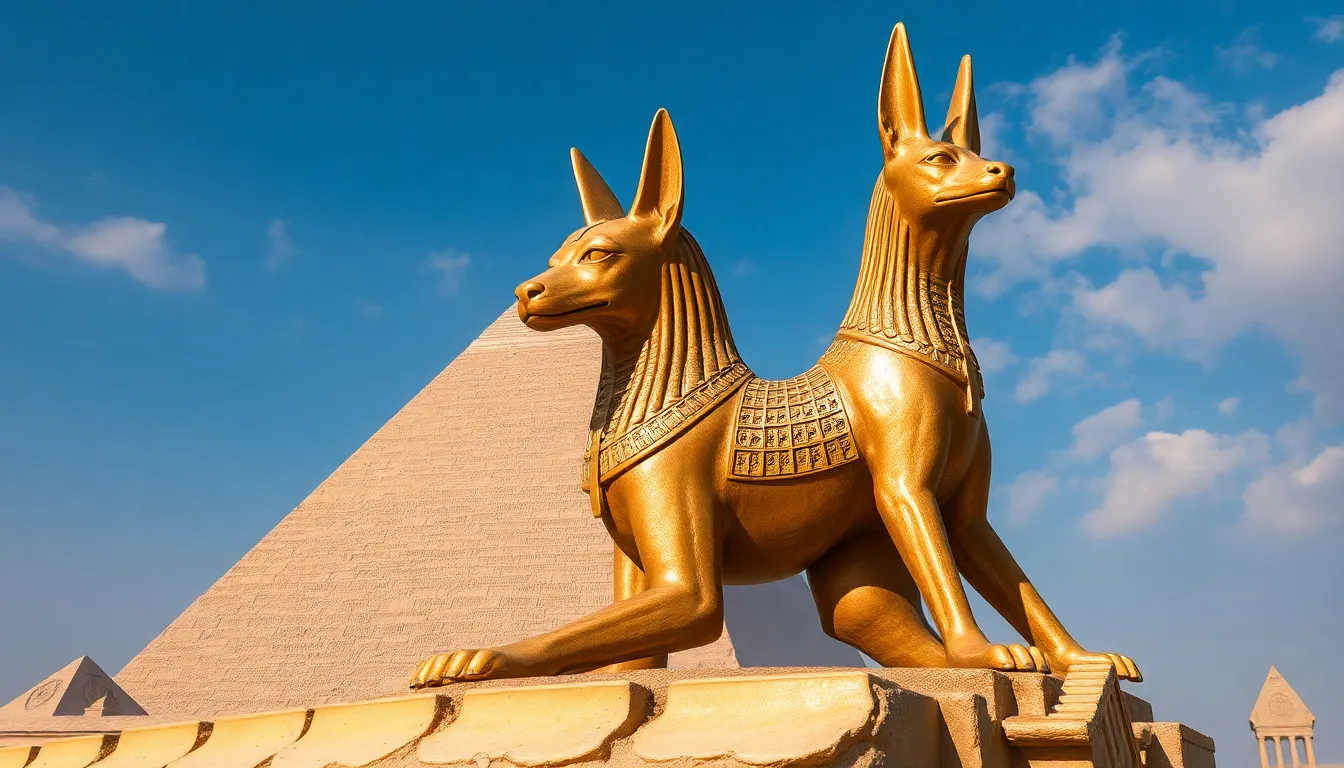
The most iconic representation of Anubis is that of a jackal or a man with the head of a jackal. This imagery is deeply symbolic, as jackals were commonly found in ancient Egypt, particularly in desert regions where they scavenged the remains of the dead. This association with death and the afterlife made the jackal a fitting symbol for Anubis.
C. Role of Anubis in funerary practices and beliefs about the afterlife
Anubis played a critical role in funerary practices, including:
- Overseeing the embalming process of the deceased.
- Guiding souls through the Duat (the Egyptian underworld).
- Weighing the hearts of the deceased against the feather of Ma’at to determine their fate.
These practices underscored Anubis’ importance in ensuring the deceased could successfully navigate the challenges of the afterlife.
III. Geographic Significance in Anubis’ Mythology
A. The role of the Nile River in shaping religious beliefs
The Nile River was the lifeblood of ancient Egypt, providing sustenance and fostering agricultural prosperity. Its annual flooding symbolized renewal and rebirth, themes that resonated with Anubis’ role in the afterlife. The river’s banks were often associated with sacred spaces, where rituals honoring Anubis were performed.
B. Sacred sites and temples dedicated to Anubis across Egypt
Several temples and sacred sites were dedicated to Anubis, illustrating the geographic spread of his worship:
- Saqqara: Home to the Step Pyramid of Djoser, where Anubis was prominently worshipped.
- Abu Simbel: A temple complex that featured depictions of Anubis alongside other deities.
- The Valley of the Kings: A significant burial site where Anubis was frequently invoked.
C. The significance of the desert and burial grounds in his mythology
The desert, often seen as a liminal space between life and death, played a vital role in Anubis’ mythology. Burial grounds were sacred spaces where the deceased were interred, and Anubis was believed to protect these sites. The geography of the desert also influenced the rituals performed to honor him, often emphasizing the connection between the living and the dead.
IV. Anubis in Ancient Egyptian Art and Iconography
A. Depictions of Anubis in tomb paintings and carvings
Anubis is frequently depicted in ancient Egyptian art, especially in tomb paintings and carvings. These representations often showcase him performing critical functions related to death and the afterlife. Common depictions include:
- Guiding the deceased to the afterlife.
- Performing the “Opening of the Mouth” ceremony.
- Standing protectively over tombs.
B. Geographic influences on artistic representations of Anubis
The geographic regions of Egypt influenced the style and form of the artistic portrayals of Anubis. For instance, the art from Upper Egypt often depicted him in a more stylized manner, while Lower Egyptian art reflected a more naturalistic approach.
C. The evolution of Anubis’ iconography throughout different dynasties
Throughout different dynasties, Anubis’ iconography evolved, reflecting changes in artistic styles and religious beliefs. From the early dynastic period to the Ptolemaic era, Anubis’ representations adapted to incorporate new elements while retaining his core characteristics as a guardian of the dead.
V. The Influence of Local Cultures and Geography on Anubis’ Worship
A. Regional variations in worship practices across Egypt
Worship practices dedicated to Anubis varied significantly across different regions of Egypt, influenced by local customs and geographic contexts. Some areas emphasized specific rituals unique to their communities, leading to a rich tapestry of beliefs surrounding Anubis.
B. Interaction between Anubis and other deities influenced by geography
Anubis often interacted with other deities in the Egyptian pantheon, such as Osiris, the god of the afterlife, and Ma’at, the goddess of truth and justice. Geographic proximity to temples dedicated to these deities often led to shared worship practices and overlapping mythologies.
C. The impact of trade routes and cultural exchanges on Anubis’ mythology
Trade routes played a significant role in the dissemination of Anubis’ mythology beyond Egypt. Cultural exchanges with neighboring civilizations introduced new ideas and practices, which were often assimilated into the existing worship of Anubis.
VI. Anubis in Modern Interpretations and Popular Culture
A. Revival of interest in Anubis in modern spirituality and neo-paganism
In recent years, there has been a revival of interest in ancient Egyptian spirituality, with Anubis emerging as a prominent figure in neo-pagan practices. Many modern spiritual seekers are drawn to Anubis for his associations with protection, guidance, and the mysteries of the afterlife.
B. Representation of Anubis in contemporary literature, film, and art
Anubis has found a place in contemporary literature and film, often portrayed as a powerful and enigmatic figure. Notable representations include:
- The “Percy Jackson” series, where he appears as a character.
- In the “Mummy” films, where Anubis is depicted as a fearsome protector of the tombs.
C. Geographic relevance in modern depictions of Anubis
Modern interpretations often retain Anubis’ geographic significance, portraying him in desert landscapes or alongside the Nile, reinforcing the connection between his mythology and the physical world of ancient Egypt.
VII. Comparative Mythology: Anubis and Other Canine Deities
A. Overview of other dog-like deities across different cultures
Anubis is not alone in his realm; several other cultures feature canine deities. For instance:
- Fenrir: A monstrous wolf in Norse mythology.
- Hecate: Often associated with dogs in Greek mythology.
B. Geographic motifs in the myths of similar deities
Similar to Anubis, these deities often embody themes of death, protection, and guidance, influenced by the geographic contexts of their respective cultures. The deserts of Egypt, the forests of Scandinavia, and the mystery-laden landscapes of Greece all contribute to the myths surrounding these canine figures.
C. Comparative analysis of themes and attributes
Despite cultural differences, these deities share common attributes, such as:
- Association with the afterlife.
- Roles as guardians or guides.
- Symbolism of loyalty and protection.
</ul