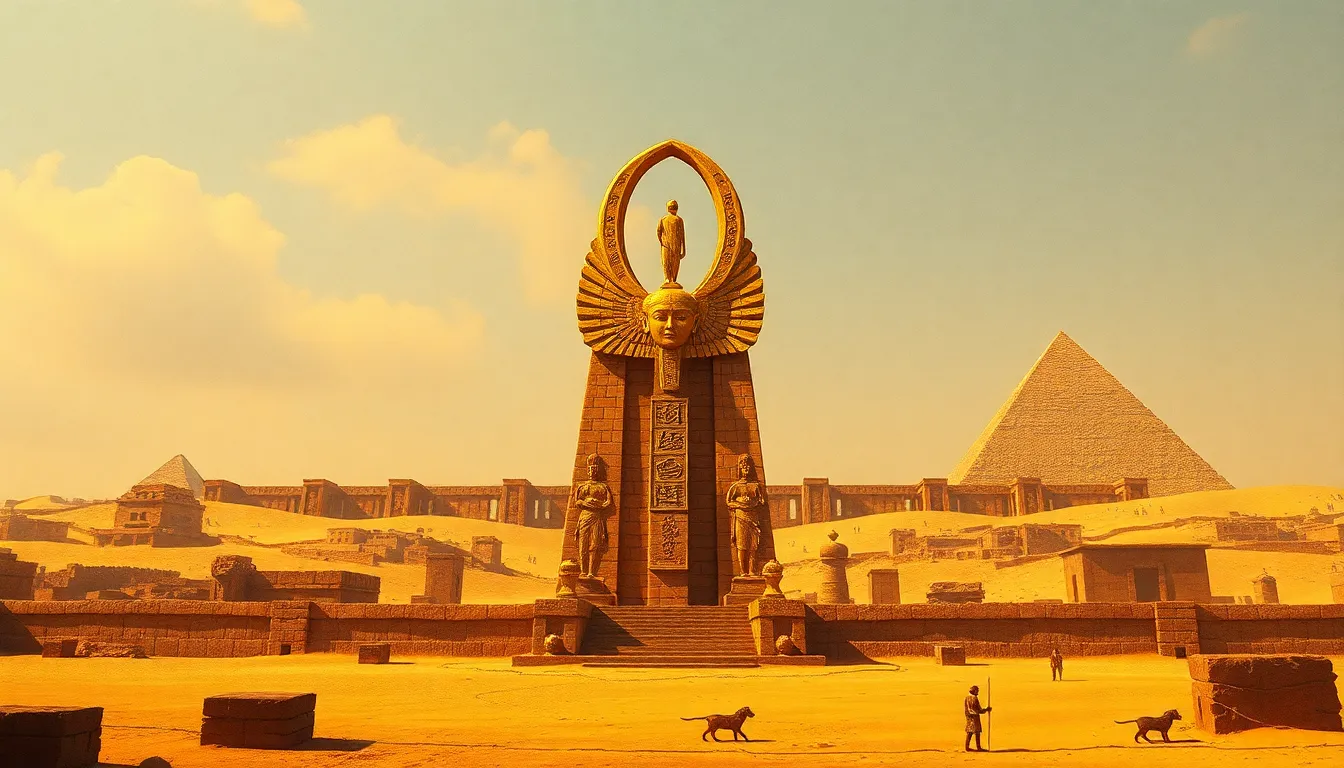
The Geography of the Sacred Ankh: Myths of Life
I. Introduction to the Ankh: Symbolism and Significance
The Ankh, an ancient Egyptian hieroglyph, is often recognized as the symbol of life. Its unique shape resembles a cross with a loop at the top, representing the union of opposites and the cycle of life and death. This powerful symbol has held immense significance throughout Egyptian history, embodying concepts of life, immortality, and divine protection.
Historically, the Ankh was not only a religious emblem but also a representation of the pharaoh’s right to rule and their connection to the divine. It is frequently found in tomb art, temple carvings, and amulets, emphasizing its cultural importance in both life and the afterlife.
Myths associated with the Ankh often revolve around the themes of creation, rebirth, and resurrection, illustrating its central role in ancient Egyptian spirituality.
II. The Origins of the Ankh in Ancient Egypt
A. Historical emergence of the Ankh symbol
The Ankh first appeared around 3000 BCE during the early dynastic period of Egypt. It quickly became a prominent symbol in Egyptian art and hieroglyphs, often depicted in the hands of deities and pharaohs, signifying their divine authority and connection to life.
B. The Ankh in Egyptian religion and mythology
In Egyptian mythology, the Ankh is closely linked to the concepts of life and death. It was believed to grant access to the afterlife and was often placed in the hands of gods and goddesses, serving as a key to eternal life.
C. Key deities associated with the Ankh (e.g., Isis, Osiris)
- Isis: The goddess of motherhood and magic, often depicted holding the Ankh, representing her role as a giver of life.
- Osiris: The god of the afterlife and resurrection, associated with the Ankh as a symbol of rebirth and immortality.
- Horus: The sky god, sometimes shown with the Ankh, illustrating the connection between the heavens and the earth.
III. Geographical Distribution of Ankh Symbolism
A. Regions where the Ankh was prevalent
The Ankh was predominantly found in ancient Egypt, but its influence spread to neighboring regions through trade and cultural exchange. It became a common symbol in Nubia, Libya, and even in parts of the Mediterranean.
B. The role of trade and cultural exchange in spreading the Ankh
As Egyptian culture interacted with other civilizations through trade routes, the Ankh symbol was adopted and adapted by different cultures. This exchange facilitated the spread of Egyptian religious beliefs and practices, allowing the Ankh to evolve in meaning and significance.
C. Variations of the Ankh in different cultures
While the Ankh remains primarily associated with ancient Egypt, variations of the symbol can be found in other cultures, often representing similar themes of life and immortality. For example, the Ankh’s likeness appears in some African tribal art and is echoed in other spiritual traditions.
IV. The Ankh as a Symbol of Life and Immortality
A. The concept of life force in ancient beliefs
The Ankh represents the vital life force, known as ‘Ka’ in ancient Egyptian belief. It symbolizes the divine energy that sustains life and connects the physical and spiritual worlds.
B. The Ankh in funerary practices and tomb art
In funerary practices, the Ankh was often placed in tombs to ensure the deceased’s passage to the afterlife. Tomb paintings frequently depicted the Ankh being offered to the deceased, signifying their eternal life and the promise of resurrection.
C. Myths surrounding resurrection and the afterlife
Many myths, such as the story of Osiris’s resurrection, center on the Ankh. Osiris, killed and dismembered by his brother Set, was revived by Isis, who used the Ankh to restore his life, symbolizing the cycle of death and rebirth.
V. The Ankh in Contemporary Culture
A. The Ankh’s revival in modern spirituality and fashion
In recent years, the Ankh has experienced a resurgence in modern spirituality, often embraced as a symbol of life and protection. It has become a popular motif in jewelry, tattoos, and fashion, appealing to those interested in ancient wisdom and spirituality.
B. Interpretations of the Ankh in popular media
The Ankh has made appearances in various forms of popular media, including literature, films, and video games. It is often depicted as a mystical object, representing power and life, further solidifying its cultural relevance.
C. The significance of the Ankh in contemporary movements
Contemporary movements focusing on spirituality, self-awareness, and cultural heritage often adopt the Ankh as a symbol of unity and connection to ancient wisdom, bridging the past with the present.
VI. Myths and Legends Associated with the Ankh
A. Stories of gods and goddesses connected to the Ankh
Many myths involve gods and goddesses who wield the Ankh as a symbol of their authority over life and death. Stories of Isis resurrecting Osiris and Horus avenging his father are central narratives that highlight the Ankh’s significance.
B. Folklore surrounding the Ankh in various cultures
Folklore from different cultures often ties back to the themes of life and immortality embodied by the Ankh. Tales of eternal youth, healing, and the cyclical nature of existence resonate with the symbol’s deeper meanings.
C. The Ankh in literature and art
The Ankh has inspired countless works of art and literature throughout history. From ancient artifacts to modern interpretations, its presence signifies the enduring fascination with life and what lies beyond.
VII. The Ankh’s Influence on Modern Symbolism
A. How the Ankh has inspired new symbols
The Ankh has influenced the creation of new symbols that encapsulate themes of life and unity, inspiring artists and spiritual leaders to reinterpret its meaning in contemporary contexts.
B. The Ankh in the context of peace, love, and unity
In modern spirituality, the Ankh is often associated with peace, love, and unity, symbolizing the interconnectedness of all beings and the shared journey of life.
C. The ongoing relevance of the Ankh in spiritual practices
The Ankh continues to hold relevance in spiritual practices today, serving as a reminder of life’s sacredness and the potential for renewal and growth, both physically and spiritually.
VIII. Conclusion: The Enduring Legacy of the Ankh
A. Summary of the Ankh’s geographical and cultural significance
The Ankh’s journey through history has been marked by its geographical spread and cultural significance. From its origins in ancient Egypt to its adaptations in various cultures, the Ankh remains a powerful symbol of life and immortality.
B. Reflections on the myths of life and their relevance today
The myths surrounding the Ankh reflect universal themes of life, death, and rebirth that resonate across time and cultures. These stories continue to inspire and provide insight into the human experience.
C. Final thoughts on the continued fascination with the Ankh symbol
The Ankh’s enduring legacy serves as a testament to humanity’s quest for understanding life and the mysteries of existence. As we navigate the complexities of modern life, the symbol of the Ankh remains a beacon of hope and a reminder of our shared journey toward enlightenment.