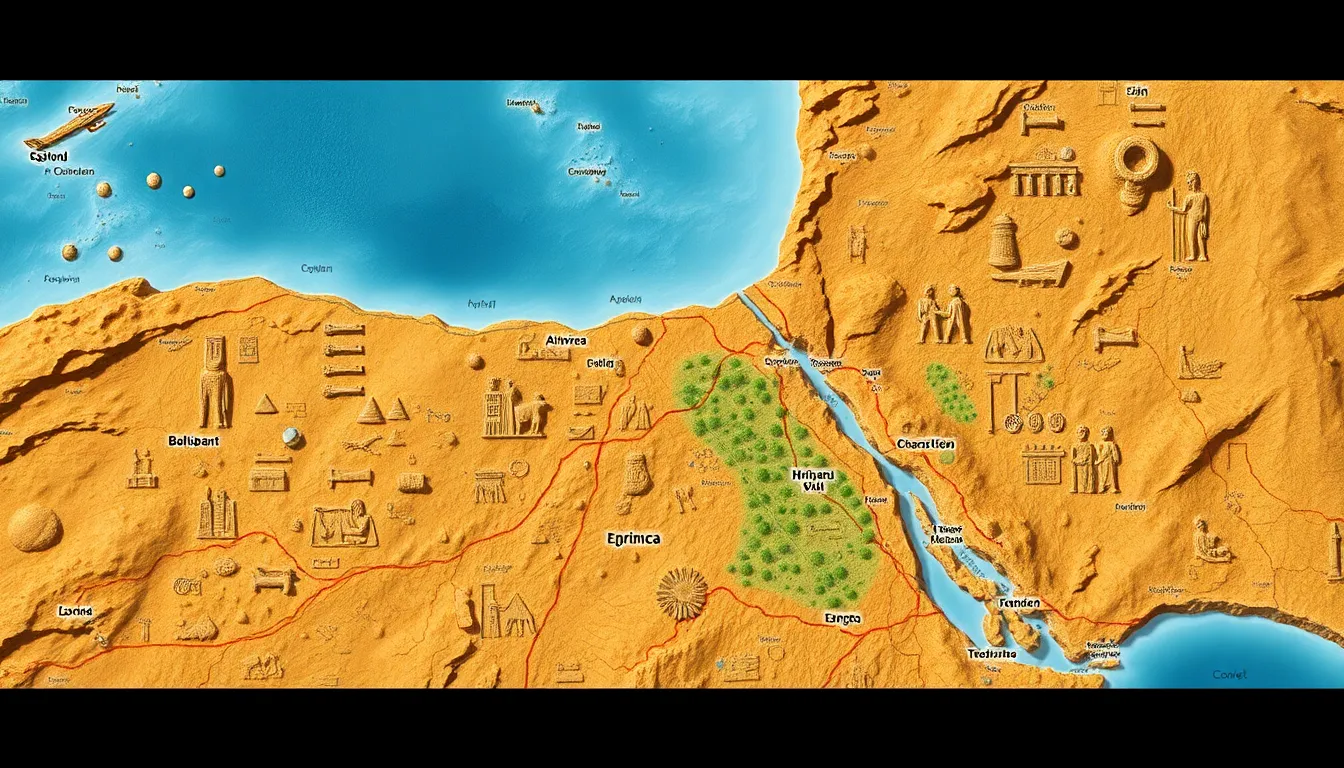
The Geography of the Gods: Sacred Places in Egyptian Lore
I. Introduction to Egyptian Sacred Geography
The geography of ancient Egypt was not merely a backdrop for the lives of its people; it was deeply intertwined with their beliefs, spirituality, and mythology. The landscape itself was imbued with divine presence, where natural features were often seen as manifestations of the gods. This article delves into the sacred sites of Egypt, exploring their significance and the rich tapestry of myths that surround them.
II. The Nile River: Lifeblood of Egypt and Divine Connection
The Nile River, often referred to as the lifeblood of Egypt, held a sacred status in Egyptian culture. To the ancient Egyptians, the river was not just a source of water; it was a divine entity that sustained life.
- The Nile as a Sacred Entity: The Egyptians personified the Nile as a god, Hapi, who was revered for the annual flooding that brought fertility to the land.
- Myths Surrounding the Nile: Various myths, such as the story of Hapi, emphasized the river’s role in creation and sustenance. Hapi was often depicted with a potbelly, symbolizing abundance.
- The River’s Role in Rituals and Agriculture: The flooding of the Nile was celebrated through festivals, and its waters were essential for irrigation, making agriculture possible in the arid desert.
III. The Pyramids of Giza: Tombs of the Divine
The Pyramids of Giza stand as monumental testaments to ancient Egyptian engineering and spirituality. Constructed during the Fourth Dynasty, these pyramids served more than just as royal tombs.
- Historical Context: The Great Pyramid of Giza, built for Pharaoh Khufu, is one of the Seven Wonders of the Ancient World and showcases the advanced architectural skills of the time.
- Gateways to the Afterlife: The pyramids were designed as gateways for the pharaohs to ascend to the heavens, ensuring their continued existence alongside the gods.
- The Significance of the Pyramid Shape: The pyramid’s shape is thought to represent the rays of the sun, symbolizing a connection between the earth and the divine.
IV. The Temples of Karnak and Luxor: Centers of Worship
The Temple complexes of Karnak and Luxor served as major religious centers in ancient Egypt, drawing worshippers from across the land.
- Karnak Temple Complex: This vast complex was dedicated primarily to the god Amun and includes numerous temples, chapels, and sanctuaries, reflecting the power and wealth of the pharaohs.
- Luxor Temple’s Role: Luxor Temple played a critical role in religious festivals, particularly the Opet Festival, which celebrated the connection between the pharaoh and the gods.
- Architectural Features: The grandeur of these temples, with their towering columns and intricate carvings, served to connect the divine with the earthly realm.
V. The Valley of the Kings: Necropolis of the Pharaohs
The Valley of the Kings, located on the west bank of the Nile, served as the burial site for many pharaohs and nobles during the New Kingdom.
- Importance in the Afterlife Journey: The valley was believed to be a crucial part of the journey to the afterlife, where the dead would navigate through trials to reach the realm of the gods.
- Notable Tombs: Tombs such as that of Tutankhamun and Ramses II are famous not only for their grandeur but also for the artifacts that illustrate the connection between the pharaohs and the divine.
- Symbolism of the Landscape: The valley’s rugged terrain and hidden tombs symbolized the protection of the deceased and the sacred nature of the burial practices.
VI. Heliopolis and the Cult of the Sun
Heliopolis, known as the “City of the Sun,” was a vital center for solar worship in ancient Egypt.
- Center for Solar Worship: The sun god Ra was the primary deity worshipped here, and the city played a crucial role in the development of solar theology.
- Significance of the Benben Stone: The Benben stone, a sacred relic of the sun god, was believed to be the first piece of land to emerge from the primordial waters and symbolized creation.
- Myths of Creation: Heliopolitan myths describe the creation of the world through the actions of Ra, emphasizing the sun’s journey across the sky as a vital aspect of Egyptian cosmology.
VII. The Sacred Mountains: Peaks of Divine Influence
Mountains in Egyptian mythology were often seen as sacred places, associated with various gods and divine events.
- Significant Mountains: Mountains such as Gebel Barkal and the Theban Hills were considered the dwelling places of gods.
- Association with Gods: For instance, the mountain was associated with Horus, the sky god, and Set, the god of chaos, reflecting the duality of nature.
- Influence on Local Myths: The natural landscape influenced numerous local myths and rituals, where mountains were often seen as points of connection between the earth and the heavens.
VIII. Conclusion: The Enduring Legacy of Sacred Geography
The sacred geography of ancient Egypt continues to impact modern understanding of its culture and beliefs. The remnants of temples, pyramids, and sacred sites offer insights into the spiritual landscape that shaped the lives of the Egyptians.
As we explore these sacred places today, efforts are being made to preserve them, ensuring that future generations can appreciate their historical and spiritual significance. The ongoing study of these sites reveals a profound relationship between geography and spirituality, reminding us of the enduring legacy of the ancient Egyptians in their quest for understanding the divine.