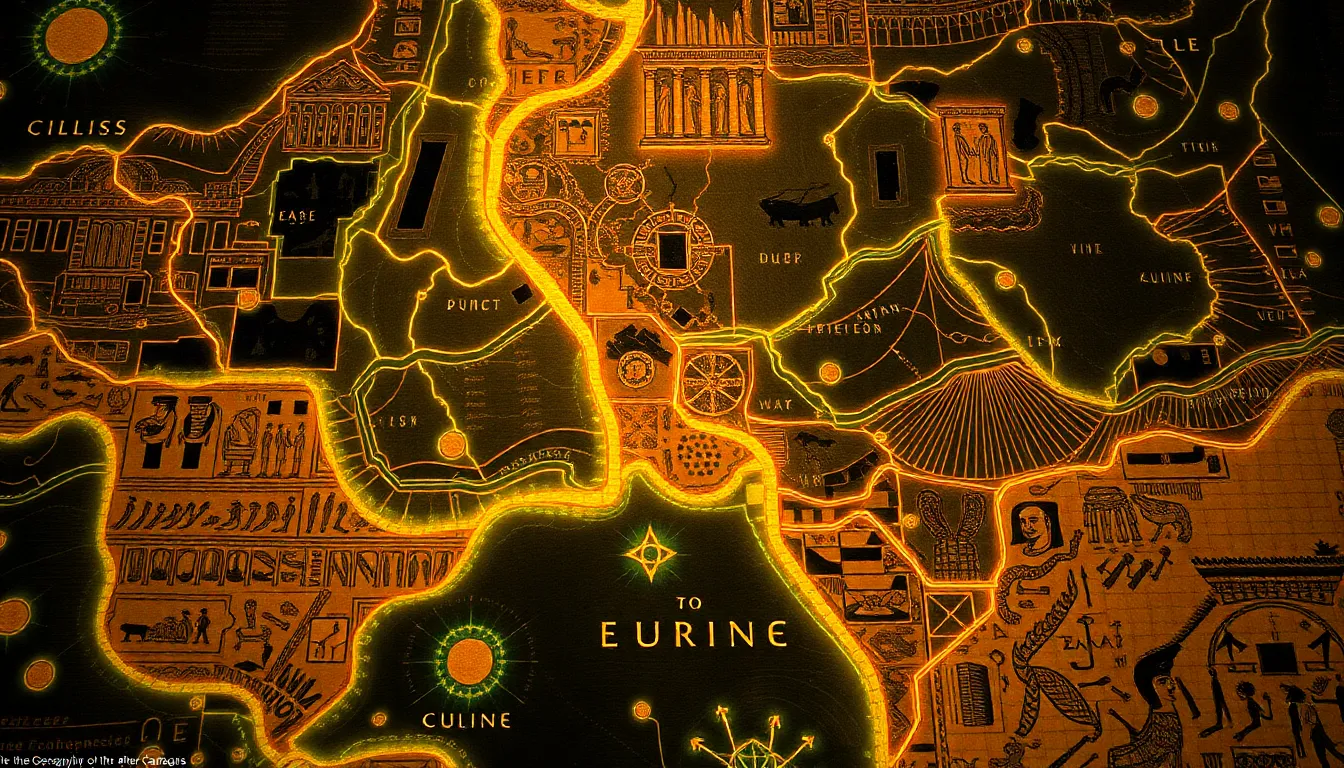
The Geography of the Afterlife: Mapping the Journey to Duat
I. Introduction
Duat, in ancient Egyptian mythology, represents the realm of the dead—a complex and multifaceted afterlife that is as rich in symbolism as it is in geography. Understanding Duat is crucial for appreciating the beliefs and practices surrounding death and the afterlife in ancient Egypt. This article aims to explore the geography of Duat, its historical context, and its significance within the broader framework of Egyptian mythology.
II. Historical Context of Duat
The concept of Duat has its origins in the earliest Egyptian religious beliefs, evolving significantly through different dynasties and periods. Initially, it was a shadowy underworld, but over time, it transformed into a more structured and detailed landscape, reflecting the changing beliefs about life after death.
- Origins: The earliest references to Duat can be traced back to the Pyramid Texts, which describe it as a dark and mysterious place where the dead dwell.
- Evolution: During the Middle Kingdom, the narrative around Duat became more elaborate, incorporating various realms and deities.
- Funerary Practices: The role of Duat in funerary practices was pivotal; elaborate tombs and burial rites were designed to ensure safe passage and a favorable existence in the afterlife.
III. The Structure of Duat
Duat is depicted as a vast and intricate landscape consisting of various realms and geographical features that symbolize different aspects of the afterlife experience.
- Reams and Landscapes: Duat is often described as a place with numerous regions, including:
- The Field of Reeds, a paradise for the righteous.
- The Hall of Judgment, where the heart is weighed.
- Fiery regions, representing punishment for the wicked.
- Key Geographical Features: Some significant features of Duat include:
- The Nile River, which symbolizes the journey of the soul.
- Mountains, representing obstacles and challenges.
- Fields of reeds, symbolizing abundance and peace.
- Symbolism: Each element of Duat’s geography carries profound meaning, reflecting the beliefs about morality, judgment, and the cycle of life and death.
IV. The Journey through Duat
The journey through Duat is a significant aspect of the afterlife narrative, representing the soul’s passage from death to eternity.
- Steps of the Soul’s Journey: Upon death, the soul embarks on a perilous journey through Duat, which includes:
- Navigating the waters of the Nile.
- Facing various guardians and deities.
- Undergoing trials that test the soul’s worthiness.
- Challenges and Obstacles: Souls encounter numerous challenges, including:
- Serpents and monsters that threaten the unworthy.
- Tests of knowledge and virtue.
- Weighing of the Heart: One of the most critical events in this journey is the Weighing of the Heart ceremony, where the deceased’s heart is weighed against the feather of Ma’at, the goddess of truth and justice. This ceremony determines the fate of the soul—whether it will enjoy eternal peace or face annihilation.
V. Mythological Figures and Deities of Duat
Duat is populated by numerous deities, each playing a crucial role in the afterlife journey.
- Key Deities: Important figures include:
- Osiris, the god of the afterlife and resurrection.
- Anubis, the god of embalming and the protector of graves.
- Thoth, the god of wisdom and writing, who records the results of the Weighing of the Heart.
- Roles in Guiding Souls: These deities assist and guide souls through the complexities of Duat, ensuring they navigate the challenges successfully.
- Mythology’s Influence: The narratives surrounding these deities helped shape the understanding of Duat’s geography and the nature of the afterlife.
VI. Artistic Representations of Duat
The artistic depictions of Duat in tomb paintings and inscriptions provide insight into ancient Egyptian beliefs about the afterlife.
- Tomb Paintings: Many tombs feature intricate paintings that illustrate the journey through Duat, showcasing both the perils and the rewards.
- Reflecting Understanding: Art served as a medium to communicate the complexities of the afterlife, emphasizing the importance of preparation for the journey.
- Preservation of Beliefs: These artistic representations played a vital role in preserving the cultural and religious beliefs surrounding Duat through the ages.
VII. Cultural Comparisons: Duat and Other Afterlife Concepts
When comparing Duat to other ancient civilizations’ concepts of the afterlife, intriguing similarities and differences emerge.
- Comparison with Other Civilizations: For instance:
- Greek Hades represents a realm of the dead but lacks the structured journey found in Duat.
- Norse Hel is also a place for the dead, but the criteria for entering differ significantly from the Egyptian perspective.
- Common Themes: Themes of judgment, a journey, and the duality of reward and punishment are prevalent across many cultures.
- Influence of Egyptian Beliefs: Egyptian beliefs about the afterlife have profoundly influenced later cultural and religious concepts, including the Christian heaven and hell.
VIII. Conclusion
In summary, the geography of Duat is a rich tapestry woven with mythology, historical context, and artistic expression. This exploration of Duat reveals not only the ancient Egyptians’ intricate beliefs about the afterlife but also their understanding of morality, justice, and the eternal journey of the soul.
The enduring legacy of Duat continues to resonate in modern interpretations of the afterlife, reminding us of the universal quest for understanding what lies beyond death. By studying Duat, we gain insights into the human condition—a reflection on life, death, and the hope for immortality.