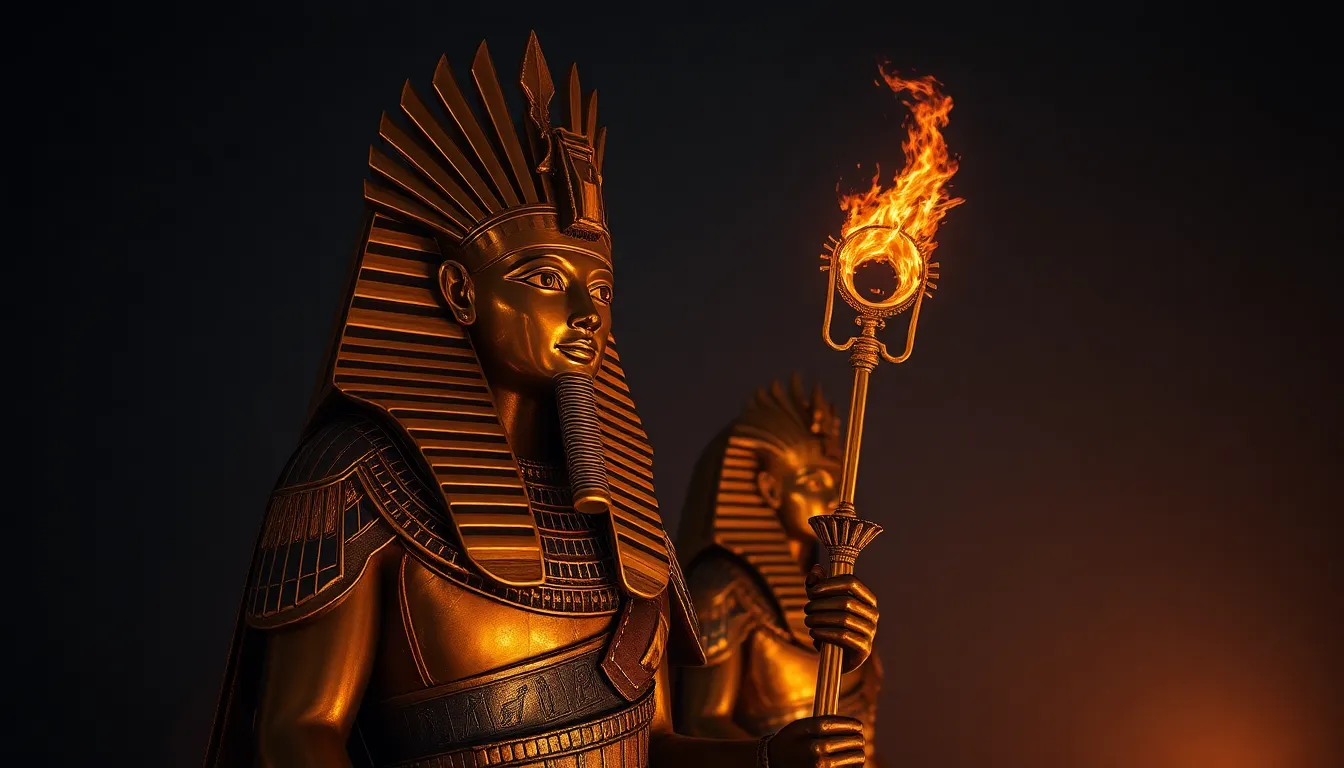
The Festival of the Golden Horus: Celebrating Kingship
I. Introduction
The Festival of the Golden Horus was a significant celebration in ancient Egypt that highlighted the divine right of kingship and the important role of the pharaoh in Egyptian society. This festival not only marked the new reign of a pharaoh but also served as a reminder of the enduring connection between the rulers of Egypt and the divine, particularly the god Horus.
In ancient Egyptian culture, kingship was of utmost importance, with the pharaoh seen as a living god on Earth, a mediator between the divine and the mortal realms. The Festival of the Golden Horus encapsulated this idea, celebrating both the power and the responsibilities of kingship.
This article aims to explore the historical context, symbolism, rituals, and cultural significance of the Festival of the Golden Horus, as well as its legacy in modern culture.
II. Historical Context
The origins of the Golden Horus Festival can be traced back to the early dynastic periods of ancient Egypt, where the integration of religious and political power was evident. The festival was closely tied to the mythology surrounding Horus, the falcon-headed god, who represented kingship, protection, and vengeance.
As the festival evolved through different dynasties, it incorporated various local customs and beliefs, reflecting the changes in Egyptian society and governance. Each pharaoh would adapt the festival to their reign, emphasizing personal achievements and divine favor.
III. The Symbolism of the Golden Horus
The Golden Horus symbol, often depicted as a falcon with a gold emblem, was significant in ancient Egyptian iconography. This symbol represented the power of the pharaoh and their divine protection from Horus. Gold, in ancient Egypt, was not only a precious metal but also a symbol of the divine. It was associated with the gods and the afterlife, representing eternity and immortality.
Horus played a crucial role in Egyptian mythology as the protector of the pharaoh, often depicted as battling the god Set to reclaim his rightful place on the throne of Egypt. This mythological narrative reinforced the pharaoh’s position as chosen by the gods, elevating the festival’s importance.
IV. Rituals and Ceremonies
The Festival of the Golden Horus included various key rituals that highlighted the relationship between the pharaoh and the divine. Some of these rituals included:
- Processions featuring the pharaoh in elaborate regalia, showcasing his power and divine right to rule.
- Offerings to the god Horus, including food, incense, and symbolic items, to ensure his favor and protection.
- Public celebrations, where the general populace participated in feasting and festivities, fostering a sense of unity and loyalty to the pharaoh.
The participation of priests was integral to the festival, as they performed sacred rites and chants to invoke the blessings of Horus. The pharaoh, as the central figure in these ceremonies, was seen as the embodiment of Horus, further solidifying his divine status.
V. Cultural Significance
The Festival of the Golden Horus had a profound impact on ancient Egyptian society and governance. It reinforced the social hierarchy, as the pharaoh was at the top of the structure, perceived as a divine ruler. This divine right of kings was essential for maintaining order and stability in a complex society.
Artistic expressions inspired by the festival manifested in various forms, including:
- Murals depicting the festival’s rituals in temples and tombs, serving both a decorative and educational purpose.
- Sculptures representing the pharaoh and Horus, highlighting their connection and the importance of the festival.
- Religious texts and hymns that celebrated the festival, contributing to the literary heritage of ancient Egypt.
VI. Modern Interpretations and Legacy
The influence of the Festival of the Golden Horus can still be seen in contemporary Egyptian culture. While the ancient practices may not be directly replicated, the themes of kingship and divine right continue to resonate in various cultural expressions.
In modern times, there have been revival efforts to celebrate ancient traditions, with festivals and events aimed at educating the public about Egypt’s rich history. These celebrations often incorporate elements of the Golden Horus Festival, fostering a connection to the past.
The festival also plays a significant role in understanding ancient Egyptian history, offering insights into their beliefs, values, and societal structures.
VII. Comparisons with Other Kingship Festivals
The Festival of the Golden Horus shares similarities with kingship festivals in other ancient cultures, such as those in Mesopotamia and Mesoamerica. Common themes include:
- Celebration of the ruler’s divine legitimacy.
- Public rituals that reinforce the connection between the gods and the ruler.
- Festivities that engage the populace, fostering a sense of community and loyalty.
However, there are notable differences in the specific rituals and cultural significance attributed to these festivals, shaped by the unique mythologies and societal structures of each civilization.
VIII. Conclusion
The Festival of the Golden Horus was a vital aspect of ancient Egyptian culture, symbolizing the divine nature of kingship and the pharaoh’s role as a mediator between the gods and the people. Its importance extends beyond ancient times, influencing modern interpretations and celebrations of Egyptian heritage.
The enduring legacy of the Festival of the Golden Horus invites further exploration and appreciation of ancient Egyptian traditions and their profound impact on the understanding of kingship and divinity in human societies.