body {
font-family: Arial, sans-serif;
line-height: 1.6;
margin: 20px;
padding: 20px;
background-color: #f9f9f9;
}
h1, h2, h3 {
color: #2c3e50;
}
ul {
margin: 10px 0;
padding-left: 20px;
}
The Duality of Life and Death: Ammit’s Role
I. Introduction
Throughout various cultures, the concepts of life and death are intertwined, often reflecting humanity’s deepest fears and aspirations. In ancient Egypt, these ideas were personified through a rich tapestry of deities and mythological figures. Among them, Ammit stands out as a significant entity, embodying the duality of existence.
This article aims to explore Ammit’s role in Egyptian mythology, shedding light on her significance in the realms of life, death, and the moral judgments that accompany them.
II. Understanding Ammit: The Devourer of Souls
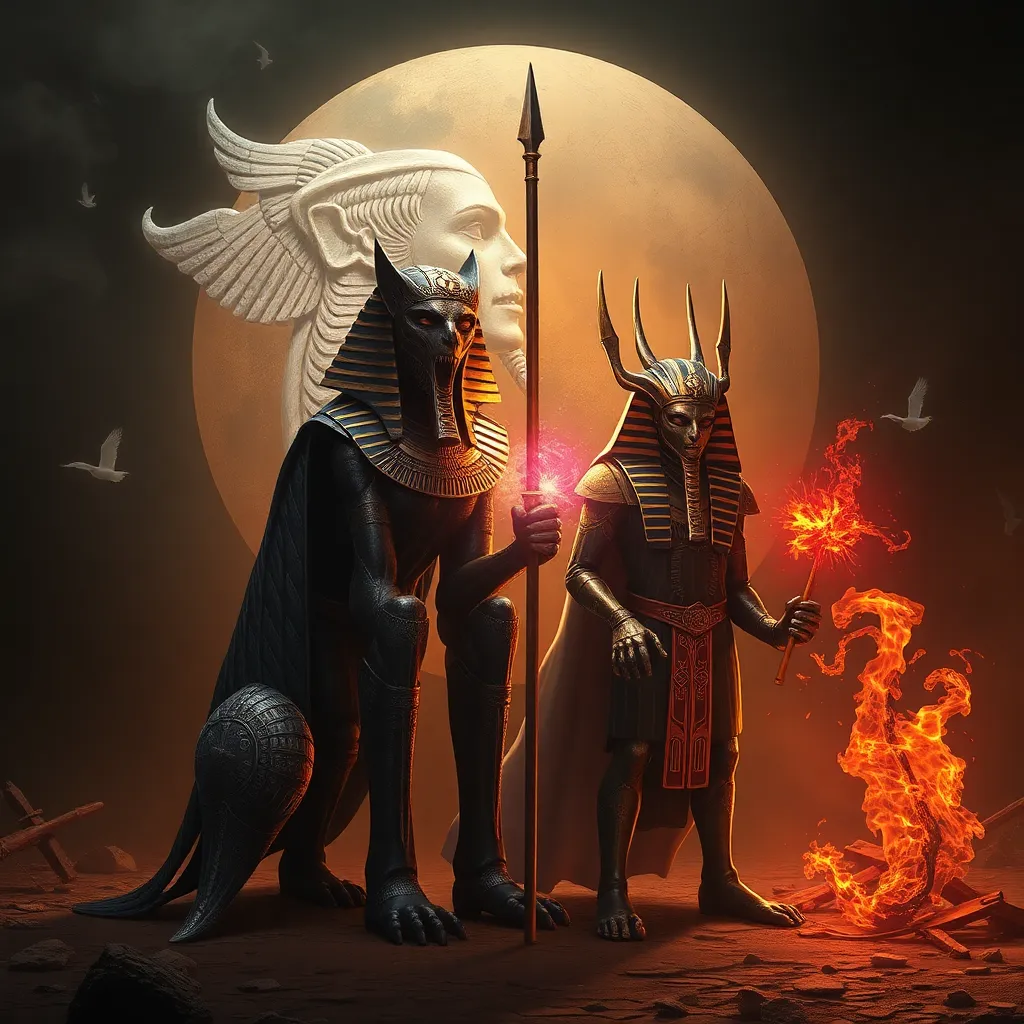
Ammit, often depicted as a fearsome creature with the head of a crocodile, the body of a lion, and the hindquarters of a hippopotamus, symbolizes the ultimate consequence of a life lived without virtue. Her appearance is as terrifying as her function: she is known as the Devourer of Souls.
In the Egyptian pantheon, Ammit holds a unique position. She is not a goddess to be worshipped but rather a creature that enforces the moral order. Her existence serves as a reminder of the consequences of one’s actions in life, embodying the balance between order and chaos.
The symbolism of Ammit extends beyond mere destruction; she is a guardian of the afterlife’s ethical standards, ensuring that only those deemed worthy may pass into the eternal realm.
III. The Weighing of the Heart: The Process of Judgment
At the heart of Ammit’s narrative lies the Weighing of the Heart ceremony, a pivotal moment in the journey of the deceased. This process involved the following steps:
- The heart of the deceased, considered the seat of the soul and morality, was weighed against the feather of Ma’at, the goddess of truth and justice.
- Osiris, the god of the afterlife, presided over the judgment, while Anubis, the god of mummification, ensured the proper conduct of the ceremony.
If the heart was lighter than the feather, the soul was deemed pure and allowed to enter the afterlife. However, if the heart was heavier, it indicated a life filled with wrongdoing, leading to a fateful encounter with Ammit.
In this scenario, Ammit would devour the heart, condemning the soul to a second death, a fate far worse than mere mortality.
IV. Life, Death, and the Afterlife in Ancient Egypt
The afterlife held profound significance in ancient Egyptian belief systems. It was seen not merely as an extension of life but as a reward or punishment based on one’s earthly actions. This belief system created a stark contrast between life and death, emphasizing the importance of living a virtuous life to ensure a favorable judgment in the afterlife.
Ammit’s role accentuates this contrast:
- She embodies the chaos that results from a life of immorality.
- Her presence in the judgment process highlights the importance of Ma’at—the balance of order and justice in the universe.
Thus, Ammit serves as a crucial figure in maintaining the cosmic order, reminding individuals of the consequences of their actions.
V. The Philosophical Implications of Ammit’s Duality
Ammit’s existence raises philosophical questions about the interconnectedness of life and death. In mythology, life and death are not opposing forces but rather two sides of the same coin. Ammit represents the moral judgment that accompanies life choices, serving as a reminder that actions have consequences.
The implications of Ammit’s duality extend to human experiences:
- Fear of death often drives individuals to seek meaning in their actions during life.
- Morality, as illustrated by Ammit, becomes a guiding principle that shapes one’s destiny.
- Redemption is a recurring theme, where individuals strive for a balance between their desires and ethical responsibilities.
VI. Ammit in Modern Interpretations and Popular Culture
In contemporary media, Ammit has been depicted in various forms, from literature to films and television series. These portrayals often emphasize her role as a harbinger of judgment and consequences:
- Ammit has appeared in comic books, often as a character representing moral dilemmas.
- In film and television, she is frequently portrayed as a fearsome creature, symbolizing the consequences of one’s actions.
These modern interpretations highlight Ammit’s enduring relevance in narratives surrounding life, death, and moral choices, illustrating how ancient myths continue to resonate in today’s society.
VII. Lessons from Ammit: Embracing the Duality of Existence
Ammit’s story offers profound lessons on the importance of understanding life and death in personal growth. Embracing the duality of existence involves:
- Recognizing the significance of mortality and the fleeting nature of life.
- Confronting moral choices and understanding their impact on one’s destiny.
- Balancing desires with ethical responsibilities to navigate life’s complexities.
Ammit serves as a stark reminder that every action has repercussions, encouraging individuals to strive for a life of integrity and virtue.
VIII. Conclusion
In conclusion, Ammit’s role in the duality of life and death is a compelling reflection of ancient Egyptian beliefs. Her symbolic function highlights the intricate balance between order and chaos, morality and immorality.
As we reflect on Ammit’s significance, we are invited to ponder our own perceptions of life, death, and the moral choices we face. In understanding her story, we gain insight into the human experience, prompting deeper contemplation about our own lives and the legacy we leave behind.